
Trees
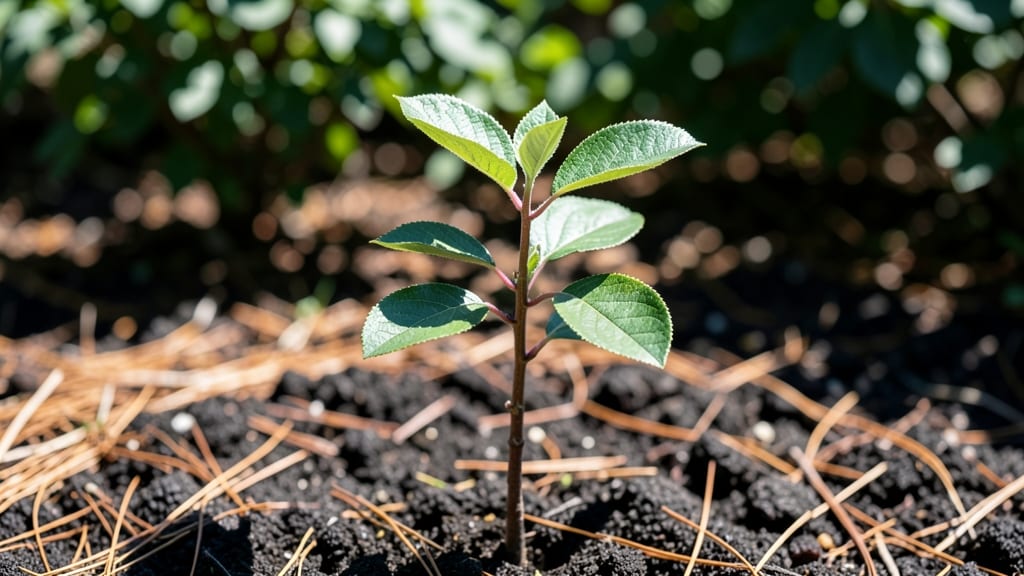
Healthy apple tree seedling leaves should be glossy, dark green, and oval-shaped with serrated edges, growing in a spiral pattern. Yellowing, curling, or spotted foliage signals stress or disease, requiring immediate inspection of soil, pests, or environmental conditions.
Healthy apple seedling leaves aren't just pretty—they're your first clue about the tree's overall vigor. 🌱 The glossy finish and deep green hue come from proper watering and sunlight exposure, while the serrated edges help the leaf maximize surface area for photosynthesis.
When you spot unusual patterns like yellowing or curling, it's often a sign of overwatering, nutrient deficiencies, or even fungal infections. I've seen seedlings recover quickly once I adjusted their care routine, so don't panic—just act fast!
Here's what to watch for beyond the basics: the spiral growth pattern (called phyllotaxy) should be consistent, and the veins should create a clear network without dark spots. Uneven growth or discoloration along the veins might indicate a more serious issue, like aphid infestations or root rot.
For example, I once had a batch of seedlings where the lower leaves turned brown while the new growth stayed green—that was a classic sign of overwatering combined with poor drainage.
💡 In This Article
- Key Characteristics of Healthy Apple Seedling Leaves
- Common Apple Seedling Leaf Problems and Solutions
Key characteristics of healthy apple seedling leaves
Healthy apple seedling leaves have a deep, vibrant green color due to high chlorophyll content, which captures sunlight for photosynthesis. The leaves typically measure 1-4 inches long and 0.5-2 inches wide, with a smooth, slightly waxy surface that repels water and reduces disease risk.
This glossy finish isn't just aesthetic—it's a protective adaptation that minimizes water loss while maintaining optimal gas exchange through tiny pores called stomata.
The oval shape with serrated (toothed) edges maximizes surface area for light absorption, a critical factor in the seedling's early growth stages. You'll notice these edges are evenly spaced, about 0.1-0.2 inches apart, creating a saw-like pattern.
The vein structure forms a pinnate pattern (one central vein with smaller branches), which efficiently transports water and nutrients from the roots to the leaf's surface. 🌿 This vascular network becomes more pronounced as the leaf matures, developing a slightly raised texture along the veins.
The spiral growth pattern—where each new leaf emerges at about a 137.5-degree angle from the previous one—isn't random. This mathematical arrangement, called phyllotaxy, allows maximum sunlight exposure for each leaf while minimizing shading from others.
In healthy seedlings, you'll see this pattern consistently along the stem, with each leaf slightly larger than the one below it as the plant grows upward. This gradual size progression indicates balanced growth and proper nutrient distribution.
One often-overlooked detail is the leaf's texture and flexibility. Healthy leaves should feel firm yet slightly pliable when gently touched, almost like high-quality parchment paper. If they feel brittle or overly soft, it's a sign of either drought stress or overwatering.
The underside of the leaf is usually lighter green and may appear slightly fuzzy due to fine trichomes (hair-like structures) that help regulate moisture and temperature. These microscopic features play a crucial role in protecting the seedling from environmental stressors.
Color variations can reveal specific nutrient conditions. For instance, a lighter green hue often indicates nitrogen deficiency, while purplish tinges along the veins suggest phosphorus shortages. The veins themselves should be a slightly lighter green than the leaf surface, creating a natural contrast that enhances the leaf's structural integrity.
When all these elements—color, shape, vein pattern, and growth arrangement—work together harmoniously, you're looking at a seedling that's well on its way to becoming a thriving apple tree.
Here's what to compare against when inspecting your seedlings: healthy leaves should resemble the foliage of mature apple trees, just on a smaller scale.
For example, a Granny Smith variety's seedlings will have slightly darker green leaves with more pronounced serrations, while Honeycrisp seedlings tend to have a slightly lighter, more uniform green. These subtle differences become more apparent as the seedlings mature, but the fundamental characteristics remain consistent across most apple varieties.