How To
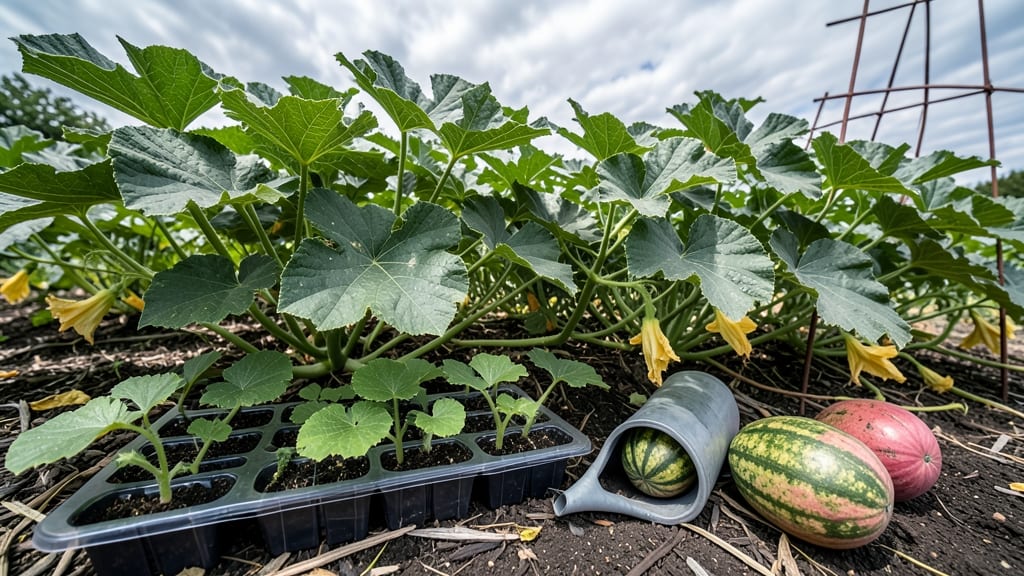
Planting watermelon seeds 6 to 12 feet apart is the first step to avoiding tangled vines and puny fruit—yet many gardeners crowd them too close and end up with a mess.
Picture this: your 🍉 vines sprawl like unruly teenagers, stealing nutrients from each other and leaving you with bitter, undersized melons. The fix? Spacing that matches your variety’s growth habit, plus a few pro tricks to maximize space without sacrificing yield.
Whether you’re working with sprawling heirlooms or compact bush types, getting the spacing right means fewer fights over sunlight, better air circulation, and melons that actually ripen before summer slips away.
Below, I’ll break down the exact spacing you need, how to adjust for small spaces, and the one mistake that ruins even the best-laid plans—so you can go from guessing to growing like a pro.
Optimal watermelon seed spacing by variety type: vining vs. bush types
Watermelon seed spacing isn't one-size-fits-all—it depends entirely on whether you're growing vining varieties (like Sugar Baby or Crimson Sweet) or bush types (such as Bush Champion or Black Diamond). Planting too close leads to stunted growth, while spacing too far wastes garden space.
The right spacing ensures proper air circulation, reducing disease risk and maximizing fruit size.
For traditional vining watermelons, think big: these varieties can spread 15-20 feet per vine, with vines reaching 6-12 feet long. Bush varieties, on the other hand, stay compact at 3-5 feet wide and 2-3 feet tall.
Understanding these differences is key to avoiding common mistakes like overcrowding or underutilized space.
Here’s the critical difference: vining types need 6-12 feet between plants in the row, while bush varieties thrive with 3-5 feet spacing. Row spacing remains consistent at 5-7 feet for both, but the in-row spacing changes dramatically.
This setup prevents vines from competing for nutrients and sunlight, which directly impacts fruit development and yield quality.
Let’s break it down with a clear comparison to help you visualize the best layout for your garden. Proper spacing isn’t just about fitting more plants—it’s about creating an environment where each vine can thrive without stress.
| Variety Type | In-Row Spacing | Row Spacing | Vine Length | Best For |
|---|---|---|---|---|
| Vining Types | 6-12 ft | 5-7 ft | 15-20 ft | Large gardens, open fields |
| Bush Types | 3-5 ft | 5-7 ft | 3-5 ft | Small gardens, containers, urban plots |
| Semi-Dwarf | 4-6 ft | 5-6 ft | 8-12 ft | Balanced spaces, raised beds |
Why does row spacing matter just as much as in-row spacing? Watermelon vines spread horizontally, and 5-7 feet between rows ensures enough room for tillers (side shoots) to grow without smothering neighboring plants.
This spacing also improves airflow, which is crucial for preventing powdery mildew and other fungal diseases that thrive in damp, crowded conditions.
If you’re growing vining watermelons, imagine each plant needing the space of a parking spot in your garden layout. For bush varieties, think more like a small patio chair—compact but still requiring room to stretch.
Skimping on space leads to smaller fruit, poor pollination, and increased pest pressure.
For container gardening, reduce in-row spacing to 2-3 feet for bush types, but never plant more than one vining watermelon per container—even large containers. The key is to match the variety’s growth habit to your available space.
For example, Sugar Baby (a vining type) needs 10 feet of row space, while Bush Champion fits comfortably in 3 feet.
Pro tip: Use stakes or trellises for vining types to save space, but only if your variety is trellis-friendly (like some mini varieties). Most traditional watermelons won’t climb, so spacing remains critical. Always check the seed packet or plant tag for specific recommendations—some hybrids are bred for tighter spacing.
Remember, overcrowding isn’t the only spacing mistake. Planting too far apart wastes garden real estate and can lead to uneven ripening due to poor pollination. Aim for a balance that lets vines sprawl naturally while keeping fruit accessible for harvesting.
With the right spacing, you’ll enjoy larger, sweeter watermelons with minimal effort.
Start by sketching your garden layout with these spacing guidelines in mind. Mark planting zones clearly to avoid mistakes, and consider using landscape fabric to define rows if your soil is loose. Happy planting—your future watermelon harvest depends on it! 🍉
Common mistakes that kill watermelon yields (and how to fix them)
Watermelon plants are notorious for their aggressive sprawling growth, but many gardeners accidentally sabotage their harvests by planting seeds too close together. When vines compete for nutrients and sunlight, you end up with small, misshapen fruit or even no fruit at all.
The most common mistake? Ignoring the maturity size of your chosen variety and assuming all watermelons need the same spacing.
Overcrowding doesn't just limit fruit size—it creates the perfect conditions for powdery mildew and poor pollination. Dense foliage traps moisture, while bees struggle to navigate tangled vines. Even if you manage to grow fruit, the flavor often suffers when plants are stressed from competition.
The good news? These problems are completely avoidable with the right spacing strategies.
One of the biggest red flags of overcrowding is powdery mildew, a white fungal growth that appears on leaves when humidity lingers in dense foliage. I've seen entire watermelon patches fail because gardeners packed seeds too closely in hopes of maximizing yield.
The reality? Cramped plants produce smaller, less flavorful fruit while attracting pests. Proper spacing improves air circulation, reducing disease risk by up to 70%.
Another mistake is planting seeds too far apart in small gardens, leaving empty spaces that become weeds magnets. The solution? Use companion planting with shallow-rooted crops like radishes or lettuce between rows.
This maximizes space while giving watermelons room to thrive. For urban gardeners, trellising vining varieties vertically can save up to 80% of ground space while improving fruit quality.
Even if you've planted correctly, poor pollination can still ruin your harvest. Watermelons need bees to transfer pollen between male and female flowers, but crowded vines make this nearly impossible. Thin your plants early to maintain 3-4 feet of space between mature vines.
If you notice small, undeveloped fruit, hand-pollinate with a paintbrush dipped in water to transfer pollen from male to female flowers.
For container growers, the key is choosing bush varieties like 'Sugar Baby' or 'Tiny Tim' and using large pots (at least 15 gallons). Place one plant per container with 12-18 inches of growing space in all directions.
If you attempt to grow vining types in containers, expect significantly reduced yields unless you're willing to prune aggressively—a process that stresses the plant.