Propagation
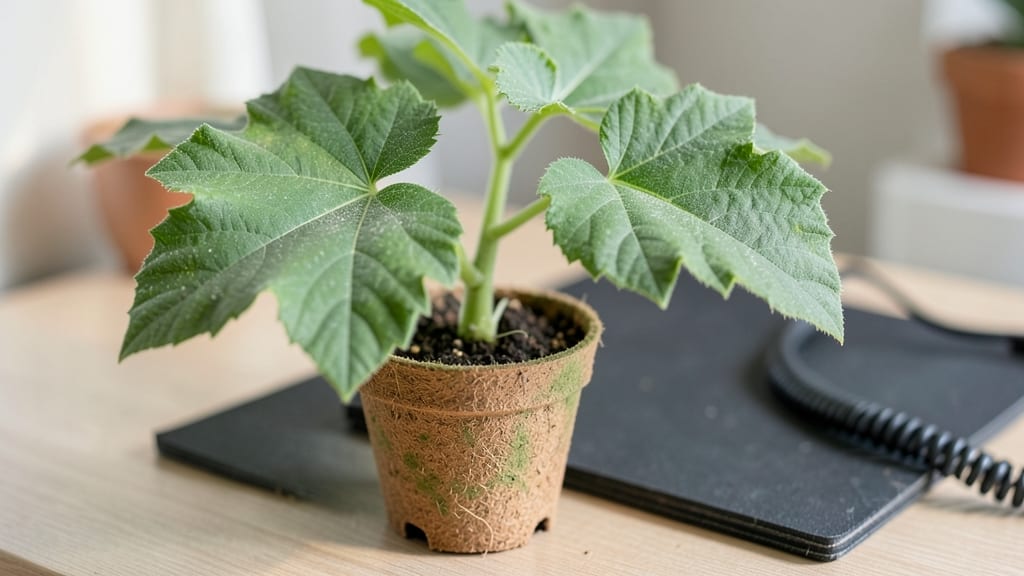
You can start cucumber seeds indoors, but success depends on mimicking their outdoor growing conditions—warm soil, consistent moisture, and bright light after sprouting. Plant them 3-4 weeks before your last frost date using a seed-starting mix and heat mats to maintain 75-85°F soil temperatures for faster germination.
Cucumber seeds need warmth to break dormancy, which is why indoor starting works best with heat mats or bottom heat. 💫 Once they sprout, seedlings crave 12+ hours of light daily—a south-facing window or grow lights prevent leggy, weak stems.
I’ve found that transplanting too early (before soil warms to 60°F) stresses seedlings, so hardening off for 7-10 days before moving them outside is key to survival.
Here’s the trick: cucumbers hate cold soil. Even if your last frost is weeks away, nighttime temps below 55°F can stunt growth. That’s why I wait until soil temperatures stabilize—using a soil thermometer helps avoid guesswork.
Pro tip: If your indoor space is dim, supplement with LED grow lights to prevent seedlings from stretching toward light sources.
💡 In This Article
- Ideal Indoor Germination Conditions for Cucumber Seeds
- Step-by-Step Indoor Cucumber Seed Starting Guide
Ideal indoor germination conditions for cucumber seeds
Cucumber seeds thrive when you replicate their natural tropical environment indoors. The key factor is maintaining 75-85°F soil temperatures—this warmth triggers enzymes that break seed dormancy. Without this, germination can take 10-14 days instead of the ideal 5-7 days.
The science is simple: cucumber seeds contain oils that need heat to activate, similar to how avocado pits require warmth to sprout. A heat mat set to 80°F creates this perfect zone, while cooler soils (60°F) slow metabolic processes.
Moisture plays an equally critical role—cucumber seeds need consistent humidity to prevent drying. Think of it like a mini greenhouse: cover seeds with 1/4-inch of moist seed-starting mix and place a humidity dome or plastic wrap over the container.
The goal is 80-90% humidity during germination, which mimics the damp conditions of their native growing regions. Too little moisture causes seeds to dry out; too much risks fungal growth (like Pythium), which can rot seedlings before they sprout. 💫
Light becomes crucial after germination, not before. Young seedlings need 12+ hours of bright light daily to prevent "leggy" growth—those weak, stretched stems that collapse under their own weight. A south-facing window provides 1,000-2,000 foot-candles of light, but most indoor spaces fall short.
Grow lights (LED or fluorescent) should be placed 2-3 inches above seedlings to deliver 3,000-5,000 foot-candles, mimicking full sun. Without enough light, chlorophyll production drops, and seedlings become pale and spindly.
Here’s what most people overlook: cucumbers are warm-season crops, meaning they’re sensitive to temperature swings. Even after germination, keep daytime temps between 70-80°F and nighttime temps above 60°F.
Below 55°F, growth stalls, and seedlings develop weak cell walls—this is why hardening off (acclimating to outdoor conditions) is essential before transplanting. A simple soil thermometer ($10) prevents costly mistakes by giving real-time data.
For extra insurance, use sterile seed-starting mix (not garden soil) to avoid damping-off disease, a fungal infection that kills seedlings at the soil line. The mix should be light, airy, and free of pathogens, with a pH between 6.0-6.8.
Add a 1/4-inch layer of perlite or vermiculite on top to retain moisture while allowing airflow—this two-layer system keeps roots oxygenated and prevents waterlogging, which cucumbers despise.
The payoff? Healthy seedlings with sturdy stems and vibrant green leaves that transplant beautifully. When done right, your indoor-started cucumbers will outperform direct-sown seeds by 2-3 weeks, giving them a competitive edge in the garden.
The secret isn’t just warmth or light—it’s the consistent replication of their ideal growing conditions from day one. 🌱