
Light Requirements
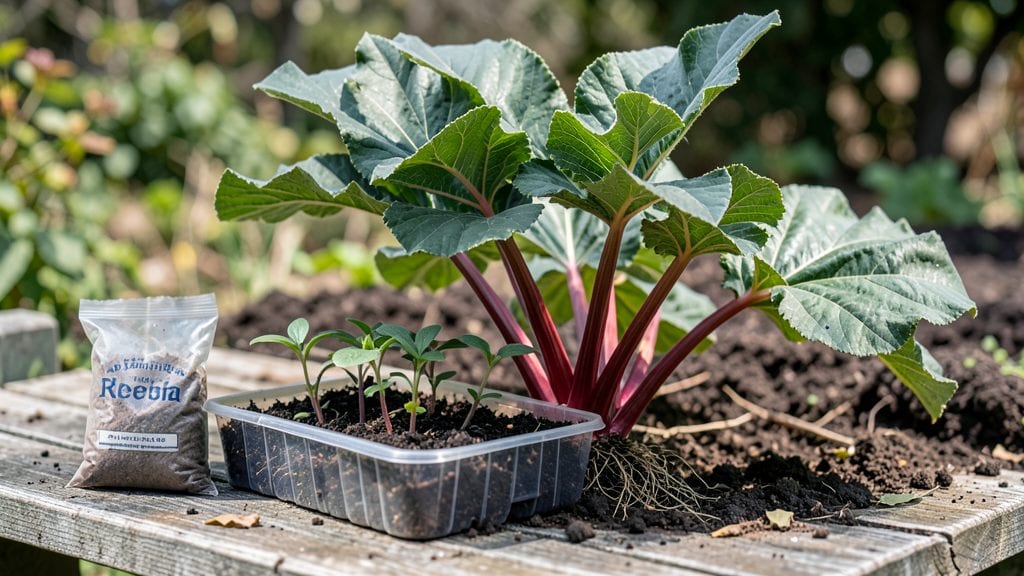
Rhubarb seeds do need cold stratification to break dormancy and germinate properly 🌱—skipping this step could leave you staring at a tray of dry soil for months.
Struggling to grow rhubarb from seeds? You might be missing a critical step—cold stratification—that could mean the difference between success and failure in your garden.
This simple process mimics winter's chill, tricking seeds into thinking they've survived the cold and it's safe to sprout. Without it, germination rates drop dramatically, and what should take weeks stretches into months—or never happens at all.
Below, I’ll walk you through exactly how to cold-stratify rhubarb seeds at home, when to do it for your USDA Zone 6a climate, and what to watch for when the first green shoots finally appear.
What is cold stratification and why it matters for rhubarb seeds
If you’ve ever tried growing rhubarb from seeds and wondered why they refuse to sprout, you’re not alone. Many gardeners overlook cold stratification, a natural process that mimics winter conditions to break seed dormancy.
For rhubarb seeds, this step isn’t just helpful—it’s often essential for successful germination. Without it, seeds may sit in your soil for months, waiting for conditions they’ll never find in a controlled environment.
Cold stratification tricks seeds into thinking winter has passed, signaling them to wake up and grow. In nature, rhubarb seeds rely on cold, moist conditions to soften their hard outer coats and kickstart metabolic activity.
Without this process, the seed’s natural defenses—like thick seed coats or chemical inhibitors—keep it dormant, leaving you staring at empty seed trays. Think of it as a biological reset button for seeds that evolved in temperate climates.
Rhubarb, specifically Rheum rhabarbarum, is a perennial plant that thrives in USDA zones 3-8, where winters are cold enough to naturally stratify seeds. If you’re growing rhubarb in warmer climates or starting seeds indoors, you’ll likely need to replicate these conditions artificially.
Skipping stratification can delay germination by 3-6 months, or worse, result in no sprouts at all.
Here’s the science behind it: During stratification, seeds absorb moisture and undergo biochemical changes that reduce abscisic acid (a dormancy hormone) while increasing gibberellins (growth-promoting hormones). For rhubarb seeds, this transition is critical because their thick, waxy seed coats block water and oxygen, preventing the germination process from starting.
Without cold stratification, these seeds may never get the cue they need to break free.
Now, you might wonder: Isn’t rhubarb usually grown from crowns or divisions? You’re right—most gardeners propagate rhubarb this way because it’s faster and more reliable. But if you’re experimenting with seeds (perhaps to grow a rare variety or for the challenge), understanding cold stratification is your key to success.
Even hybrid seeds can benefit from this process, though some modern varieties may have reduced dormancy requirements.
Let’s break down why this matters for your garden. Without stratification, your rhubarb seeds might sprout erratically, if at all. You could end up with a patchy, uneven crop or no harvest for years.
Worse, you might waste time and resources on seeds that were never going to germinate. Cold stratification ensures a more predictable and timely germination, giving you a head start on growing strong, healthy plants.
Another angle to consider is timing. If you plant rhubarb seeds in spring without stratification, they’ll likely sit dormant until fall—if ever. By then, the growing season is short, and seedlings may struggle to establish before winter.
Stratifying seeds in late winter or early spring aligns their germination with ideal planting conditions, giving them the best chance to thrive.
Let’s address a common misconception: some gardeners assume all seeds need stratification, while others think none do. The truth lies in the plant’s natural habitat. Rhubarb originates from cold, mountainous regions of Asia, where seeds experience long, cold winters before spring germination.
Replicating this cycle in your garden ensures your seeds behave as nature intended.
Here’s a quick analogy: Imagine your rhubarb seeds as a hibernating bear. Without the right cues (cold temperatures and moisture), the bear won’t wake up when you want it to.
Stratification is like giving that bear a gentle nudge to emerge from its den at the perfect time—ready to grow and thrive.
To summarize, cold stratification is a game-changer for rhubarb seeds because it mimics the natural conditions these seeds evolved to rely on. Without it, you’re essentially asking your seeds to guess when spring is, which they’re not equipped to do.
Let’s dive into the specifics with this quick reference table to clarify whether your rhubarb seeds need this critical step.
Now that you understand why cold stratification is crucial for rhubarb seeds, let’s explore what happens when you skip it. Without stratification, seeds may remain dormant indefinitely or sprout erratically, leading to a weak, inconsistent crop.
This is especially true for heirloom or wild-type rhubarb varieties, which often have stronger dormancy mechanisms than hybrid seeds. Even if a few seeds do germinate, they’ll likely be smaller and less vigorous, setting your plants up for struggles later.
One of the biggest myths is that all seeds need stratification. In reality, many tropical or subtropical plants don’t require it at all. But rhubarb, being a cold-hard
Step-by-step guide to cold stratifying rhubarb seeds for faster germination
Cold stratification is a game-changer for rhubarb seeds, breaking their natural dormancy and mimicking winter conditions to trigger germination. Without it, your seeds may sit in the soil for months—or never sprout at all.
Rhubarb seeds, like many perennials, rely on this process to signal the right time to grow, so skipping it often leads to slow or inconsistent results. If you’ve ever planted rhubarb seeds and waited impatiently for sprouts, you know how frustrating this can be!
Fortunately, cold stratification is simple to do at home with just a few supplies and a little patience. The process involves exposing seeds to moist, cold conditions for several weeks before planting. This method not only speeds up germination but also ensures healthier, more vigorous seedlings.
For rhubarb, which can take 60-90 days to germinate without stratification, this step can cut that time nearly in half. Let’s walk through the exact steps to get your rhubarb seeds ready for planting.
How to Cold Stratify Rhubarb Seeds
-
Step 1: Gather Supplies
You’ll need rhubarb seeds, a paper towel or moistened peat moss, a ziplock bag, and a refrigerator (or outdoor cold frame). Avoid plastic containers, as they can trap too much moisture.
-
Step 2: Moisten the Medium
Place the paper towel or peat moss in a shallow dish and dampen it with water until evenly moist but not soggy. Excess water can cause mold. Spread the rhubarb seeds evenly over the surface.
-
Step 3: Seal and Store
Fold the paper towel or peat moss over the seeds and place them in the ziplock bag. Seal it loosely to allow some airflow, then store it in the refrigerator (or a cold frame outdoors in winter).
-
Step 4: Stratify for 6-8 Weeks
Keep the seeds in the refrigerator for 6-8 weeks at a consistent 35-40°F. Check them weekly to ensure the medium stays moist but not damp. If mold appears, discard the batch and start over.
-
Step 5: Test for Germination Readiness
After stratification, remove a few seeds and place them in a warm, sunny spot (like a seedling tray). If they sprout within 7-14 days, your seeds are ready to plant. If not, return them to the fridge for 2 more weeks.
-
Step 6: Plant Stratified Seeds
Once ready, sow the seeds 1/4 inch deep in well-draining soil in full sun. Keep the soil consistently moist until germination, which should occur within 2-4 weeks.
One of the biggest mistakes gardeners make is skipping the moisture check during stratification. Seeds left in dry conditions won’t break dormancy, while overly wet seeds risk mold. Another common error is using a freezer instead of a fridge—the extreme cold can damage the seeds.
Stick to the 35-40°F range for best results. If you’re in a warmer climate, consider using an outdoor cold frame instead of your fridge.
To confirm your stratification was successful, look for tiny white roots or a slight swelling in the seeds before planting. This visual cue means the seeds are ready to grow. Once planted, keep the soil warm (around 70°F) to encourage fast germination.
With this method, you’ll see sprouts in as little as 2 weeks, compared to the months it might take without stratification.
Cold stratification isn’t just for rhubarb—it works wonders for other perennial seeds like peonies, delphiniums, and even some herbs. Once you master the technique, you’ll wonder why you didn’t try it sooner. Your future rhubarb patch will thank you with lush, early growth and a bountiful harvest.