
Pests and Diseases
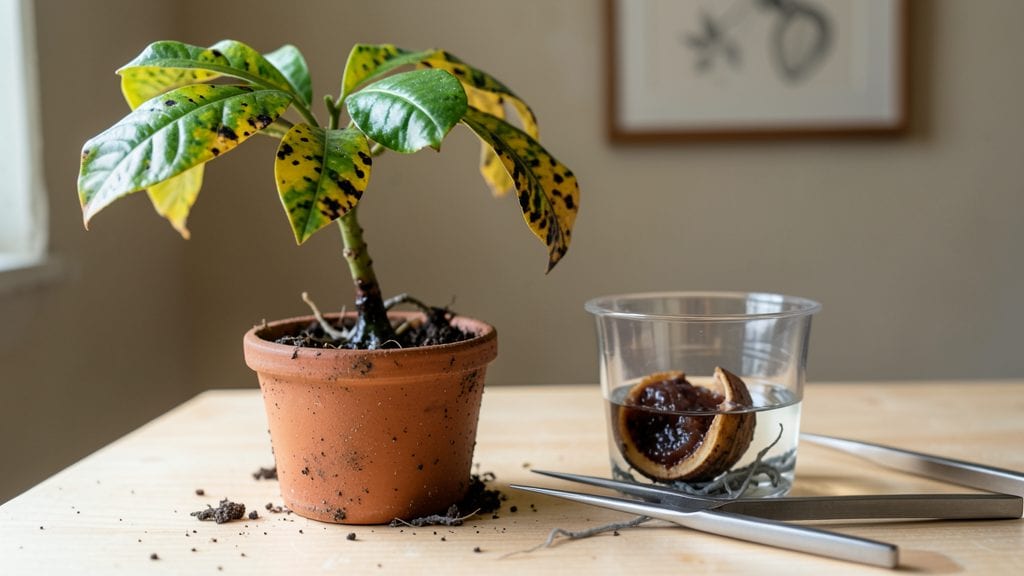
Mango seed rot turns your young tree into a mushy disaster before it even gets a chance to grow. I’ve watched this fungal nightmare spread through my own seedlings—starting with blackened tips on the seed, then creeping upward until the entire stem collapses.
The worst part? By the time you notice the wilting leaves, it’s often too late to save the plant.
This rot thrives in damp, poorly drained soil where fungal spores fester. Overwatering, crowded containers, or using contaminated soil mixes creates the perfect breeding ground. Even a single infected seed can contaminate an entire batch, and once established, the fungus spreads faster than you can say "lost tree."
The key to stopping it is acting fast—before the rot reaches the root collar where the real damage begins.
You’ll learn to spot the early warning signs: soft, discolored seeds, slow germination, or a foul smell around the soil line. With the right soil prep, seed selection, and a few simple organic treatments, you can prevent this from happening again.
Trust me, your next batch of mango seedlings will thank you.
We’ll cover everything from sanitizing your tools to choosing the right growing medium, so you can focus on watching those first true leaves unfurl instead of mourning another failed seedling. Let’s get those trees growing strong and healthy from day one.
Root Causes Of Decay In Seeds
When your mango seeds turn mushy, discolored, or emit an unpleasant odor, it’s often a sign of seed rot—a fungal or bacterial infection that thrives in the right conditions.
Understanding the why behind this decay is the first step to preventing it. Below, we break down the most common culprits and their scientific triggers.
Fungal pathogens like Fusarium and Pythium love damp environments. When mango seeds (or their surrounding soil) stay too wet for too long, these fungi multiply rapidly, breaking down seed tissues.
- Why it happens: Seeds absorb water like sponges, and if drainage is poor, excess moisture lingers in the seed coat or planting medium.
- Key triggers:
- Overwatering or heavy rainfall during germination.
- Compacted or clay-heavy soil that doesn’t drain well.
- Planting seeds too deep, trapping moisture around them.
- Actionable fix: Use well-draining soil mixes (e.g., perlite + coco coir) and ensure containers have drainage holes.
Pathogens don’t just appear—they infect. Bacterial seed rot (often caused by Erwinia or Pseudomonas) and fungal rot (like Rhizoctonia) attack weakened seeds, especially if they’re injured or stressed.
- Why it happens:
- Bacteria: Thrives in warm, humid conditions (68–86°F). They produce enzymes that dissolve seed cell walls.
- Fungi: Spread via spores in contaminated soil, tools, or even water. They secrete acids that soften seeds.
- Key triggers:
- Using infected seeds or soil from previous crops.
- High humidity (e.g., greenhouses or tropical climates).
- Physical damage to seeds (e.g., rough handling during planting).
- Actionable fix: Sterilize tools with rubbing alcohol, use fresh potting mix, and avoid overcrowding seedlings.
Seeds need a balance of warmth and moisture to germinate—but too much of either can backfire. Extreme heat or cold stress weakens seeds, making them vulnerable to rot.
- Why it happens:
- Too hot: Speeds up microbial activity, causing seeds to "cook" in their own moisture.
- Too cold: Slows germination, leaving seeds in a "suspended" state where fungi can colonize.
- Key triggers:
- Planting in soil temps below 60°F or above 95°F.
- Storing seeds in damp, unventilated containers.
- Actionable fix: Aim for soil temps of 75–85°F for germination and use shade cloth in hot climates.
Seeds rely on stored energy (endosperm) to sprout, but poor soil health can starve them—or worse, invite rot-causing microbes.
- Why it happens:
- Low nitrogen or phosphorus weakens seed vigor, making them susceptible to pathogens.
- Excessive salts or chemical fertilizers burn seed tissues, creating entry points for fungi.
- Key triggers:
- Using tap water high in chlorine/fluoride (can alter soil chemistry).
- Planting in reused soil without compost or amendments.
- Actionable fix: Test soil pH (ideal: 6.0–7.0) and amend with organic matter like worm castings.
💡 Pro Tip: If you’re saving seeds from store-bought mangoes, surface-sterilize them in a 10% bleach solution (1 part bleach to 9 parts water) for 1 minute to kill surface pathogens before planting.
Effective Ways to Treat and Prevent Fruit Decay
Now that you understand the causes behind mango seed rot (or fungal decay in your fruit), it’s time to take action. The good news? Most solutions are simple, cost-effective, and can save your harvest.
Below, we break down practical fixes for each root cause—plus prevention tips to keep your mango tree healthy for years.
If your tree is drowning in soggy soil, the first step is correcting watering habits and improving drainage.
How to Fix It:
- 🔥 Adjust Watering Schedule
- Water deeply 2–3 times per week (depending on climate) but never let the soil stay waterlogged.
- Test soil moisture by sticking your finger 2 inches into the soil—if it’s damp, wait before watering again.
- Morning watering (6–9 AM) is best—it reduces fungal growth by allowing foliage to dry quickly.
- 🏗️ Improve Soil Drainage
- Mix organic matter (compost, coconut coir, or well-rotted manure) into heavy clay soil to loosen it.
- Raise the tree’s base slightly by mounding soil around the trunk (but not against it) to prevent water pooling.
- If planting a new tree, amend the hole with sand or perlite (20–30%) before backfilling.
- 🚰 Install Drainage Solutions
- For container-grown trees, drill drainage holes in the pot if missing.
- Use drip irrigation instead of overhead sprinklers to keep leaves dry.
💡 Pro Tip: If your tree is already infected, reduce watering immediately and let the top 4–6 inches of soil dry out before resuming a normal schedule.
Fungi thrive in warm, humid conditions. If you spot blackened spots, moldy growth, or mushy fruit, act fast with fungicides and cultural controls.
How to Fix It:
- 🧴 Apply Fungicidal Sprays
- Copper-based fungicides (like Bordeaux mixture or copper hydroxide) are effective against anthracnose.
- Neem oil (1–2% solution) is a natural fungicide—spray on leaves and fruit every 7–10 days during humid seasons.
- Systemic fungicides (e.g., propiconazole) can be used for severe infections (follow label instructions).
- 🍃 Prune Infected Areas
- Remove and destroy (do not compost) infected leaves, fruit, and branches.
- Sterilize pruning tools with rubbing alcohol between cuts to prevent spreading spores.
- 🌡️ Reduce Humidity Around the Tree
- Space trees properly (15–20 feet apart) for airflow.
- Thin out dense foliage to improve sunlight penetration.
- Use shade cloth (30–50%) if your tree gets too much direct sun + high humidity.
⚠️ Warning: Avoid overusing chemical fungicides—rotate between copper, neem, and biological controls (like Trichoderma fungus) to prevent resistance.
Pests create entry points for fungi. If you see sticky residue (honeydew), wilting leaves, or sawdust-like frass, pests may be the culprit.
How to Fix It:
- 🔍 Inspect & Remove Pests Manually
- Scale insects (brown bumps on branches) and mealybugs (white cottony clusters) can be wiped off with soapy water (1 tsp mild soap per gallon of water).
- Handpick larger pests (like fruit flies) with a drop cloth and sticky traps.
- 🦟 Use Natural or Chemical Controls
- Horticultural oil (dormant season) or insecticidal soap (active season) works well for soft-bodied pests.
- Beneficial insects (ladybugs, lacewings) can be introduced to control mealybugs and aphids.
- For borers, inject systemic insecticides (like imidacloprid) into the trunk (follow label rates).
- 🌿 Strengthen Tree Health
- Fertilize with balanced NPK (10-10-10) twice a year (spring and early summer) to boost immunity.
- Avoid over-fertilizing with nitrogen—it encourages soft, pest-attracting growth.
💡 Pro Tip: Yellow sticky traps placed near the tree can monitor and reduce fruit fly populations before they damage fruit.
Poor soil health weakens trees, making them susceptible to decay. If leaves are yellowing, curling, or dropping prematurely, a nutrient imbalance may be the issue.
How to Fix It:
- 📊 Conduct a Soil Test
- Send a soil sample to a local extension office to check pH (ideal: 6.0–7.0 for mangoes) and nutrient levels.
- Adjust pH with lime (to raise) or sulfur (to lower) as needed.
- 🍃 Apply the Right Fertilizers
- Potassium-rich fertilizers (like potassium sulfate) help strengthen cell walls against fungal attacks.
- Magnesium (Epsom salt spray) can prevent yellowing between leaf veins.
- Micronutrients (zinc, manganese) may be needed if leaves show interveinal chlorosis.
- 🌱 Mulch Properly
- Apply 2–4 inches of organic mulch (straw, wood chips) away from the trunk to retain moisture and regulate soil temp.
- Avoid plastic mulch—it traps heat and encourages fungal growth.
✨ Bonus Tip: Compost tea (brewed from well-aged compost) can be sprayed on leaves to provide quick nutrients and beneficial microbes.
To keep mango seed rot at bay, follow this seasonal maintenance plan:
| Season | Task | Frequency |
|---|---|---|
| Early Spring | Prune dead/diseased branches, apply copper fungicide, fertilize. | Once |
| Growing Season | Neem oil sprays, monitor pests, thin fruit for airflow. | Every 2–4 weeks |
| Monsoon/Humid | Reduce watering, use fungicidal sprays, improve drainage. | Weekly if needed |
| Late Fall | Deep water, apply potassium-rich fertilizer, mulch. | Once |
| Winter | Dormant spray (horticultural oil), check for overwintering pests. | Once |
Final Thought: The key to stopping mango seed rot is early detection + consistent care. By fixing water issues, treating fungi, controlling pests, and boosting tree health, you’ll protect your harvest and keep your tree thriving for decades.
Need a quick reference? Bookmark this guide and check it before symptoms worsen! 🌿🍈
Frequently asked questions about mango seed rot
What are the first signs of mango seed rot in my seedlings?
Look for soft, discolored seeds (brown or black spots) and a foul odor around the soil line. The seed may also feel mushy when touched, and nearby seedlings might wilt suddenly. Early detection is key—act before the rot reaches the stem.
Can I save a seedling already showing signs of seed rot?
It depends on how far the rot has spread. If only the seed is affected and the stem is still firm, you might salvage it by removing the infected seed and repotting the seedling in fresh, sterile soil. However, if the stem is soft or discolored, the seedling is likely beyond saving. Preventing spread is your best bet.
How do I sterilize my tools to prevent spreading rot?
Wipe tools with 70% rubbing alcohol or a 10% bleach solution (1 part bleach to 9 parts water) between uses. Let them air-dry completely before touching another seedling. Sterilizing containers with boiling water or a 1% hydrogen peroxide solution also helps.
Is there a natural remedy to treat seed rot?
Yes! A neem oil spray (1 tsp neem oil + 1 tsp mild soap per quart of water) applied to seeds and soil can help. For prevention, soak seeds in warm water with a pinch of cinnamon (natural antifungal) for 10 minutes before planting.
Why does seed rot happen more in humid climates?
High humidity creates the perfect environment for fungal spores to thrive. Warm, moist air slows evaporation, keeping seeds damp longer—ideal conditions for pathogens like Pythium and Fusarium. Improve airflow and reduce watering frequency during humid seasons.