
Watering
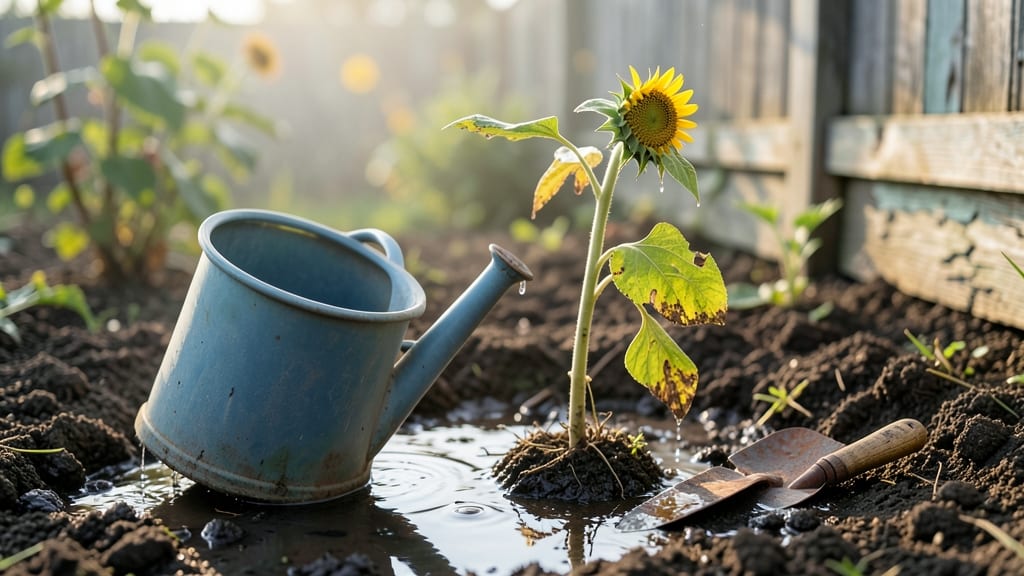
When your sunflower seedlings look more like sad, droopy weeds than vibrant future giants, you're probably dealing with overwatering. 🌱 I’ve nursed back more than my share of waterlogged sunflowers, and the key is acting fast before root rot sets in for good.
The first sign? Leaves turn yellow or develop a mushy texture, while the soil smells sour rather than fresh.
Start by letting the soil dry out completely—this might take 3-5 days depending on humidity. Gently loosen compacted soil around the base to help roots breathe, and avoid watering until the top inch feels dry to the touch.
If mold appears on the soil surface, sprinkle a thin layer of perlite or coarse sand to improve drainage.
The real fix comes from adjusting your watering routine: sunflowers need deep but infrequent watering, about 1 inch per week once they’re established. Use your finger to check moisture levels before watering, and always plant in well-draining soil with organic matter mixed in.
Prevention is easier than rescue—space seedlings 6-12 inches apart to reduce competition for water, and choose containers with drainage holes if growing indoors. With the right balance, those leggy seedlings will soon stand tall, reaching for the sun.
Root Causes Of Soggy Seedlings
Sunflowers may seem like hardy giants, but their seedlings are delicate—especially when it comes to water. Overwatering isn’t just about too much H₂O; it’s a cascade of environmental and biological factors that drown young roots before they can thrive.
Understanding these causes is the first step to saving your sunflower babies. Let’s break down why they’re struggling.
Sunflower seedlings hate soggy feet—literally. If the soil doesn’t drain well, water pools around the roots instead of seeping away. This creates an oxygen-starved zone (anoxia), where roots suffocate and can’t absorb nutrients. Common culprits include:
- Clay-heavy soil: Tiny particles pack tightly, trapping water like a sponge. Test your soil by squeezing a handful—if it forms a hard clump that doesn’t crumble, drainage is likely poor.
- Compacted soil: Foot traffic, heavy rain, or poor aeration compresses soil, reducing pore space for water escape. Roots in compacted soil can’t spread, leading to waterlogging.
- Over-potting without drainage holes: Containers without exits turn into water traps. Even "breathable" pots can fail if they lack holes or wicking material.
Pro tip: 💡 Amend clay soil with perlite, coarse sand, or compost to improve aeration. For containers, use a mix of 50% potting soil + 50% perlite/pumice and always check for drainage holes.
Sunflowers need moisture, but seedlings are especially sensitive to frequency over volume. Here’s how overwatering sneaks up on growers:
- Watering on a schedule: Seedlings don’t need daily drinks—especially in humid climates. Check soil moisture by sticking your finger 1 inch deep; if it’s damp, wait.
- Using the "top-down" method: Pouring water directly onto seedlings can dislodge soil, creating air pockets that trap moisture. Instead, water at the base or use a spray nozzle for gentle hydration.
- Ignoring weather conditions: Rain + overhead watering = double the drowning risk. If rain is forecast, skip watering for 24–48 hours.
Pro tip: 🌡️ Use a moisture meter or the "squeeze test": Grip soil gently—if water drips out, it’s too wet.
Sunflowers thrive in warmth, but cool nights + high humidity create a recipe for disaster. When temperatures dip below 60°F (15°C), seedlings slow down, and their roots can’t keep up with water uptake. Meanwhile, humid air slows evaporation, leaving soil saturated longer.
Watch for these red flags:
- Condensation on pots: A foggy greenhouse effect traps moisture, preventing soil from drying.
- Yellowing leaves with crisp edges: A sign of transpiration stress—roots can’t supply enough water to evaporating leaves.
- Fungal growth: Mold or mildew on soil or stems thrives in damp, cool conditions.
Pro tip: ✨ For cool climates, use black plastic mulch to absorb heat and improve soil warmth. In humid areas, space seedlings widely to boost air circulation.
When soil stays soggy for more than 48 hours, harmful fungi and bacteria move in, attacking roots. The most common offenders:
| Pathogen | Signs | Risk Factors |
|---|---|---|
| Pythium (Water Mold) | Dark, mushy roots; seedlings collapse suddenly. | Overhead watering, dense soil, cool temps. |
| Fusarium | Wilting despite wet soil; roots turn brown/black. | Poor drainage, contaminated soil, stress. |
| Phytophthora | Lesions on stems; soil smells sour. | Heavy clay, standing water, high humidity. |
Pro tip: 🔥 If you suspect rot, remove affected seedlings immediately and treat remaining soil with hydrogen peroxide (1 tbsp per gallon of water) or copper fungicide.
Now that you know why your sunflower seedlings are struggling, the next step is reviving them—but first, fix the root causes above! 🌻
Revive and Prevent Overly Wet Seedlings
Now that you know the signs and causes of an overwatered sunflower seedling, it’s time to take action! The good news? With the right steps, you can often bring your little plant back to health—and even prevent future mishaps.
Below, we’ll tackle how to fix the problem based on the root cause, plus prevention tips to keep your sunflowers thriving.
Cause: Excess moisture suffocates roots, cutting off oxygen and nutrients. Fix:
- Stop watering immediately—let the soil dry out naturally. 🌱
- Repot if needed: If the soil is compacted or waterlogged, gently transplant the seedling into fresh, well-draining potting mix. Use a container with drainage holes to prevent future sogginess.
- Check root health: Gently remove the seedling from its pot and inspect the roots. If they’re mushy or black, trim the damaged parts with sterilized scissors. Healthy roots should be firm and white or pale yellow.
- Revive with care: Place the repotted seedling in a shady spot for 2–3 days to reduce stress, then gradually reintroduce sunlight.
💡 Pro Tip: Mix perlite or sand into your soil (10–20%) to improve drainage and aeration. This helps prevent future waterlogging!
Cause: Overwatering creates a damp, fungus-friendly environment. Fix:
- Remove affected foliage—snip off any yellow, brown, or moldy leaves with clean scissors. 🔪
- Apply a fungicide: Use a copper-based or neem oil spray (follow label instructions) to kill fungal spores. For organic options, mix 1 tsp baking soda + 1 quart water + a drop of dish soap, then spray lightly.
- Improve airflow: Space seedlings at least 6 inches apart to reduce humidity around the stems.
- Disinfect tools and pots: Wash containers with a 10% bleach solution (1 part bleach to 9 parts water) to prevent reinfection.
✨ Prevention: Water in the morning so foliage dries quickly. Avoid overhead watering—use a drip irrigation system or water at the base instead.
Cause: Overwatering disrupts nutrient uptake, leading to weak stems. Fix:
- Test soil moisture: Stick your finger 1–2 inches deep into the soil. If it’s damp, wait before watering again. Sunflower seedlings prefer soil that’s dry to the touch between waterings.
- Water deeply but less often: Instead of daily light sprinkles, give seedlings a slow, thorough soak once every 5–7 days (adjust for climate).
- Use the right container: Ensure pots have drainage holes and are made of terracotta or fabric (which dries faster than plastic).
- Fertilize lightly: Once roots recover, add a balanced, water-soluble fertilizer (like 10-10-10) at half strength to boost growth.
🎯 Prevention: Group seedlings in a tray with pebbles—this lifts roots slightly, improving drainage and airflow.
Cause: Overwatering in cool temps slows evaporation, keeping roots too wet. Fix:
- Move to a warmer spot: Place seedlings near a sunny window or under a grow light (if indoors). Aim for 65–75°F during the day.
- Reduce humidity: Use a small fan on low speed to circulate air around seedlings. This mimics outdoor conditions and speeds up drying.
- Insulate pots: Wrap the bottom of containers with bubble wrap or foam to protect roots from cold soil.
💡 Pro Tip: If seedlings are in a greenhouse or cold frame, ventilate daily to prevent condensation buildup.
Need a fast reference? Here’s how to match symptoms to solutions:
| Symptom | Likely Cause | Immediate Fix | Prevention Tip |
|---|---|---|---|
| Yellow leaves | Waterlogged roots | Stop watering, repot in dry soil | Use well-draining mix + perlite |
| Black/mushy roots | Fungal infection | Trim roots, apply fungicide | Water at base, avoid overhead spraying |
| Stunted, weak stems | Nutrient starvation | Fertilize lightly, water less often | Test soil moisture before watering |
| Drooping, cold leaves | Chilled roots | Move to warmth, improve airflow | Use a fan or heat mat for seedlings |
Once your seedlings recover, keep them on track with these golden rules: - Water when the top 1–2 inches of soil are dry (stick your finger in to check!). - Rotate pots occasionally so all sides get even sunlight. - Thin seedlings if overcrowded—give each plant 12+ inches of space to prevent competition. - Monitor weather: After repotting, keep an eye on forecasts.
Heavy rain can undo progress!
With these steps, your sunflower seedlings will bounce back stronger—and you’ll be a watering pro in no time. 🌻💦
Frequently asked questions
How can I tell if my sunflower seedlings are overwatered instead of underwatered?
Look for yellowing leaves (especially lower ones) and a mushy stem when pressed. Unlike underwatered seedlings, overwatered ones stay droopy even when soil is wet, and the roots may smell sour or look black. Healthy seedlings have crisp leaves and firm, white roots.
Can I save a sunflower seedling with black, mushy roots?
You might! Gently rinse the roots, trim away the blackened parts with sterilized scissors, and replant in dry, well-draining soil. Keep it in shade for 2-3 days to recover, then gradually reintroduce sunlight. If most roots are healthy, it can bounce back with proper care.
Why does my sunflower soil stay wet for days after watering?
This usually means poor drainage. Clay-heavy soil or containers without holes trap moisture. Fix it by amending soil with perlite or sand (20% mix) or repotting into terracotta containers. Always check for drainage holes before planting!
Is it better to underwater than overwater sunflower seedlings?
No—both extremes stress seedlings, but overwatering is more dangerous as it causes root rot and fungal diseases. Sunflowers prefer dry soil between waterings. The key is consistency: water deeply when the top 1 inch feels dry, then let it dry out completely before watering again.
How long does it take for overwatered sunflower seedlings to recover?
With immediate action (stopping water, improving drainage, and trimming damaged roots), you’ll see improvement in 3-5 days. Full recovery depends on root health—healthy roots regrow in 1-2 weeks, but severely damaged seedlings may take longer or not recover at all.