
Size
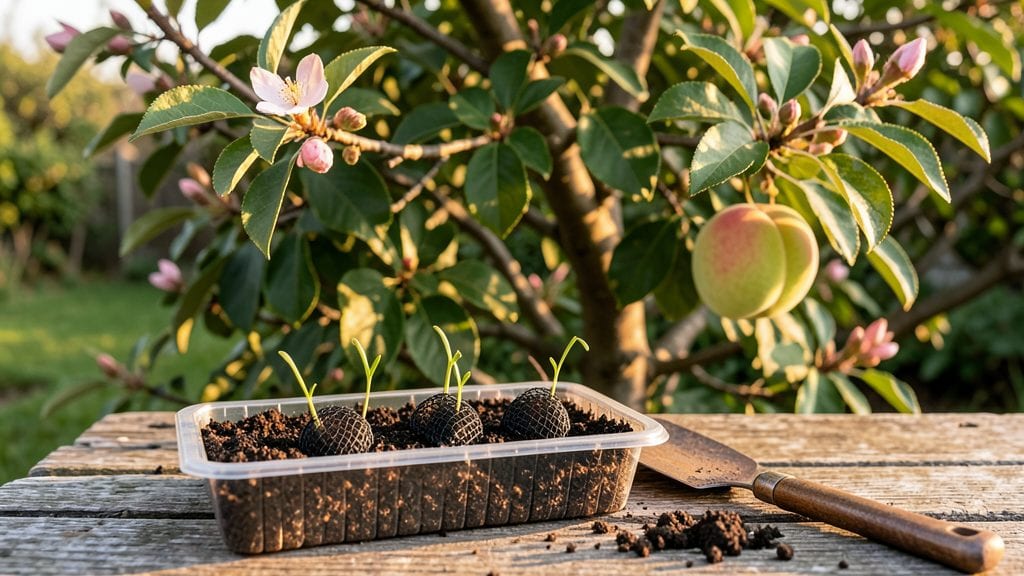
Transform your garden with a peach seed—grow a garden privacy screen that begins as a delicate sapling and flourishes into a dense, evergreen barrier in just three years. 🌱 The process starts with a simple soak and cold treatment, then moves to planting. in well-drained soil where it’ll grow into a sturdy, shade-providing tree—even if the fruit won’t match store-bought peaches.
You’ll need a sunny spot with at least 6 hours of light daily, a 5-gallon pot for early growth, and a little patience—germination can take 2-3 months.
The first year focuses on strong root development, while years two and three bring rapid height gains, with some varieties reaching 15-20 feet by maturity.
This isn’t about perfect peaches—it’s about creating a fragrant, evergreen hedge that blocks noise, filters wind, and adds value to your property. Prune in late winter to shape growth, and watch your seedling transform into a privacy powerhouse that outperforms plastic fences in both looks and longevity.
Even if the fruit stays small or tart, the tree’s disease-resistant foliage and fast growth make it a standout choice for urban lots or tight spaces. Ready to turn a bare spot into a living screen? Let’s get those seeds started.
📚 In This Guide
- What you need
- Instructions
- Tips and common mistakes
- Wrapping up and next steps
What you need
- ● Peach seeds: 50–100 fresh, viable seeds (harvested from organic, non-hybrid peaches for best results).
- ● Seed-starting mix: 5–10 lbs of sterile, well-draining potting soil (avoid garden soil—it can harbor diseases).
- ● Growing containers: 3–5 inch pots (1–2 per seedling) or a seed tray with individual cells.
- ○ Peat pellets or coconut coir: 10–20 pellets (optional but great for easy transplanting).
- ● Mulch: 2–3 cubic feet of organic mulch (straw, wood chips, or shredded leaves) for moisture retention.
- ● Compost: 5–10 lbs of well-aged compost to enrich planting beds.
- ● Pruning shears: Sharp, sterilized shears for trimming saplings.
- ● Trowel or hand shovel: For planting seeds and transplanting seedlings.
- ● Watering can or hose with a gentle spray nozzle: To avoid disturbing seedlings.
- ● Spray bottle: For misting seeds during germination.
- ● Garden stakes or labels: To mark seedlings and track growth.
- ○ Greenhouse or cold frame (optional): To extend the growing season in cooler climates.
- ○ pH testing kit (optional): To ensure soil pH is between 6.0–7.0 (peaches prefer slightly acidic to neutral soil).
- ● Sunlight: A location with full sun (6+ hours daily) for at least 6–8 hours.
- ● Space: Plan for a 10–15 foot wide planting area (peach trees can grow 15–20 feet tall).
- ● Well-draining soil: Amend heavy clay soil with sand or compost to improve drainage.
- ● Patience: Peach trees from seed take 3–5 years to bear fruit and mature into a privacy screen!
How to grow a peach tree from seed for a privacy screen
Here's how to turn a single peach pit into a sturdy, year-round privacy screen in just three years.
🌱 Step 1: Stratify the Seed for Successful Germination
Peach seeds need a cold period to break dormancy—this mimics winter in nature. Place the seed in a small plastic bag with a damp paper towel, then refrigerate for 6-8 weeks. Check weekly to ensure the towel stays moist but not soggy; condensation signals it's too wet. This stratification period is critical—skipping it results in seeds that either fail to sprout or produce weak, slow-growing seedlings.
Once the seed shows signs of sprouting (a tiny root breaking through the seed coat), it's ready for planting. Here's the thing—don't rush this step. Patience now means a stronger tree later. If your kitchen fridge runs cooler, germination may take up to 10 weeks instead of 6.
🪴 Step 2: Plant in a Well-Draining Container
Fill a 6-inch diameter container with a mix of 50% potting soil and 50% perlite to ensure excellent drainage—peach trees hate soggy roots. Plant the seed 1 inch deep, pressing the soil lightly around it to remove air pockets. Place the container in a warm, sunny spot where temperatures stay between 65-75°F during the day.
Keep the soil consistently moist but never waterlogged. You'll know it's right when the top inch feels cool to the touch but not damp. Germination typically takes 2-4 weeks after removing from cold storage. Once the first true leaves appear (not the initial seed leaves), it's time to transplant to a larger container or directly into the ground if you're in a warm climate.
☀️ Step 3: Transplant to a Permanent Location
Choose a sunny spot with at least 6 hours of direct sunlight daily—peach trees need full sun to develop strong branches and fruit. Dig a hole twice as wide as the root ball but no deeper. Amend the native soil with compost to improve drainage and fertility. Plant the seedling at the same depth it was growing in the container, then water deeply to settle the soil.
Mulch around the base with 2-3 inches of organic mulch to retain moisture and suppress weeds. Here's what I do: I keep the mulch 6 inches away from the trunk to prevent rot. Water every 2-3 days until new growth appears, then taper off to weekly waterings once established. The first year focuses on root development—you'll see minimal top growth, but that's normal.
✂️ Step 4: Prune and Train for a Dense Screen
In the second year, prune to encourage a bushy, multi-stemmed tree. Remove any vertical "water sprouts" that grow straight up—they weaken the tree. Instead, focus on branches that grow at 45-degree angles from the trunk. Prune in late winter or early spring before new growth begins. You'll want to shape the tree into a rounded form, which creates a natural privacy screen.
By year three, your peach tree should have a sturdy trunk and multiple branches. Thin out any crowded branches to improve airflow and reduce disease risk. Real talk: peach trees grown from seed may not fruit reliably for 5-7 years, but their dense foliage will provide excellent privacy long before then. Fertilize lightly in spring with a balanced 10-10-10 fertilizer to support growth.
Tips & tricks for growing a peach tree privacy screen
Transforming a simple peach pit into a lush privacy screen takes patience and precision—here's how to maximize your success at every stage.
Stratification Success: The 6-8 week cold period in Step 1 is non-negotiable for breaking seed dormancy. I learned this the hard way: seeds that skip stratification often sprout weak or fail entirely. Place your seed bag in the crisper drawer of your fridge where temperatures stay consistently around 40°F. If you're impatient, you can speed up germination by transferring the stratified seed to a warm spot (75°F) immediately after sprouting appears—just don't rush the cold period itself.
Container Selection: While the instructions call for a 6-inch container, I recommend using a slightly larger 8-inch pot if possible. This gives roots more room to establish before transplanting. The 50/50 soil-perlite mix is perfect—just avoid garden soil which compacts too easily. Pro tip: Add a small handful of worm castings to the mix for extra nutrients during this critical early growth phase.
Transplanting Timing: The 6 hours of daily sunlight requirement in Step 3 is your minimum—more is better for a denser screen. I've found that transplanting in early spring (when soil temps reach 60°F) gives seedlings a head start. Watch for the first true leaves (not the initial seed leaves) before transplanting—this signals the seedling has enough energy for the move. Water deeply immediately after transplanting to eliminate air pockets in the soil.
Pruning Strategy: When shaping your tree in Step 4, focus on creating a vase shape rather than a perfect dome. This natural form allows sunlight to penetrate all branches, preventing fungal issues. I prune in late winter when the tree is still dormant but just before buds begin to swell. Use sharp pruners to make clean cuts at a 45-degree angle just above outward-facing buds—this encourages new growth in the right direction.
Pro Tips for Peach Seed Grow A Garden
- Transforming a simple peach pit into a lush privacy screen takes patience and precision—here's how to maximize your success at every stage.
- Stratification Success: The 6-8 week cold period in Step 1 is non-negotiable for breaking seed dormancy.
- Container Selection: While the instructions call for a 6-inch container, I recommend using a slightly larger 8-inch pot if possible.
Frequently asked questions
Got questions about growing a peach seed privacy screen? You’re not alone—this project takes patience and care! Below are answers to the most common queries to help you grow a lush, fast-moving hedge with confidence.
Can I grow a peach seed into a full-sized tree?
Yes! Peach seeds (Prunus persica) can grow into trees, but they may not produce fruit identical to the parent plant—expect variations in size, shape, or flavor. For a uniform privacy screen, grafted peach trees (like ‘Bonanza’ or ‘Elberta’) are better choices. If you’re growing from seed, be patient: it can take 5–10 years for the tree to mature.
How long does it take for a peach seed to sprout?
Peach seeds need stratification (cold treatment) to break dormancy. Soak the seed in water for 24 hours, then refrigerate it in a damp paper towel for 4–6 weeks. Once planted, germination typically takes 2–4 weeks in warm soil (60–70°F). Keep the soil moist but not soggy—patience is key!
What’s the fastest way to grow a peach seed hedge?
For a year-round privacy screen in 3 years, start with grafted peach trees (faster-growing and more reliable) or propagate cuttings from an existing tree. Plant seeds 1–2 feet apart in rows, thin to 6–8 feet apart as they grow. Prune regularly to encourage bushier growth—aim for 3–4 feet tall in the first year.
Are peach seeds cold-hardy? Will they survive winter?
Peach trees thrive in USDA Zones 5–9 but need protection in colder climates. Young seedlings (1–2 years old) may need mulch or frost cloth in winter. Mature trees handle frost well, but late spring frosts can damage blossoms. Choose late-blooming varieties (like ‘Redhaven’) for better cold tolerance.
Why isn’t my peach seed sprouting? Troubleshooting tips
No germination after 6 weeks?
The seed may not be viable—try a fresh one or check if it’s fully plump (shriveled seeds won’t sprout).
Seedlings wilting?
Overwatering or poor drainage could be the culprit. Ensure pots/direct soil has drainage holes and use well-draining potting mix.
Yellow leaves?
Too much sun or fertilizer burn. Acclimate seedlings gradually to full sun and use a balanced 10-10-10 fertilizer lightly.
Can I grow peach seeds indoors first?
Start seeds indoors 8–10 weeks before last frost in small pots with seed-starting mix. Keep soil warm (70°F) with a heat mat if needed. Once seedlings have 2–3 sets of leaves, transplant outdoors after hardening off (gradually expose them to outdoor conditions for 1–2 weeks).
Wrapping up and next steps
Growing a peach seed privacy screen is a rewarding journey that combines patience with nature’s beauty! 🌱 With the right preparation—like selecting healthy seeds, understanding climate needs, and planning your layout—you can enjoy a lush, fragrant hedge in just three years. Start small, stay consistent, and soon you’ll have a thriving, year-round green oasis that’s all yours.
Ready to take the next step? Sketch your garden layout today—mark where your peach seeds will go, and gather your supplies. Your future privacy screen (and future peach treats!) is just a seed away. 🌿