
Aphids
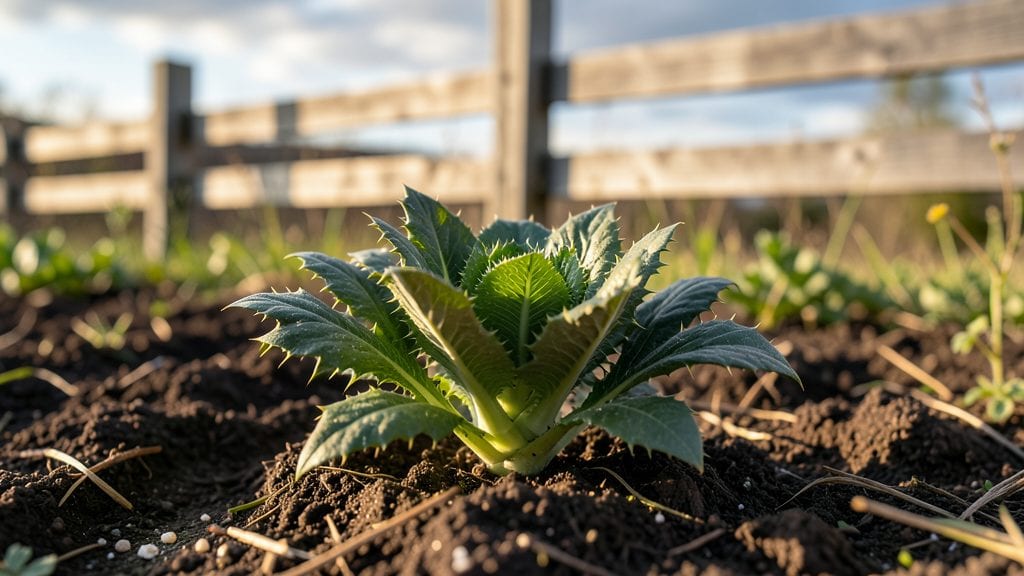
Prickly lettuce seedlings aren't a dealbreaker—they're just tough little survivors. 🌱 I've wrestled with these spiky babies more times than I can count, and I learned their prickles are a sign of stress, not failure.
The key is understanding what triggers them and how to coax your seedlings back to smooth, edible perfection.
Cold stress is the usual culprit, especially when nighttime temps dip below 40°F. Those tiny spines form as a defense mechanism, but with the right adjustments—like moving trays to warmer spots, using row covers, or even a heat mat—you can prevent them.
The good news? Prickly lettuce still grows into tasty, bolt-resistant plants; you're just dealing with a textural quirk, not a crop killer.
Once you spot the prickles, act fast: increase warmth, ensure consistent moisture (not soggy soil), and shield seedlings from wind. Within a week, you'll see fresh, smooth growth pushing through.
The payoff is worth it—these hardy transplants thrive in heat better than most lettuce varieties, giving you harvests when other greens bolt.
This works for both edible and ornamental varieties, and the same tricks apply whether you're starting seeds indoors or direct-sowing in cooler climates. Let's turn those spiky seedlings into thriving plants that actually make it to your plate—or your garden's centerpiece.
Root Causes Of Stunted Growth
When your prickly lettuce seedlings struggle to thrive, the issue often boils down to a few key environmental and biological factors. Understanding these causes helps you take precise corrective action—before the problem spirals out of control.
Below, we break down the real culprits behind weak, stunted, or prickly seedlings, with clear explanations and actionable insights.
Lettuce is a cool-season crop, but extreme cold or sudden temperature swings can trigger survival mode—leading to prickly, bitter leaves and stunted growth. Here’s why:
- Cold Shock Response: When seedlings experience temperatures below 40°F (4°C), their metabolic processes slow dramatically.
Cells produce abscisic acid (ABA), a stress hormone that hardens leaves (making them prickly) and halts growth to conserve energy. - Day-Night Swings: A 10°F (5°C) or greater difference between daytime highs and nighttime lows confuses seedlings.
They can’t adapt quickly, leading to compensatory spikiness as a defense mechanism. - Frost Damage: Even light frost can crystalize cell walls, causing irreversible damage. Affected seedlings may survive but grow slowly and abnormally.
Actionable Fix:
- Use row covers or cloches to maintain stable temps between 50–65°F (10–18°C).
- Plant in microclimates (e.g., near south-facing walls) to buffer cold air.
- Avoid transplanting seedlings when night temps drop below 50°F (10°C).
If seedlings were direct-sown or transplanted too early without proper acclimation, they’re vulnerable to stress. The hardening-off phase is critical—skipping it forces seedlings into survival mode prematurely.
- Unprepared Root Systems: Seedlings grown in cozy indoor conditions (high humidity, warm temps) develop delicate root hairs.
When exposed to outdoor elements too soon, roots struggle to absorb water, triggering stress responses like prickliness. - Light Shock: Moving from indoor grow lights to direct sunlight without gradual exposure causes photoinhibition—where chlorophyll production stalls, leading to stunted, tough growth. - Wind & Desiccation: Unexposed seedlings can’t regulate transpiration (water loss), causing leaves to thicken and develop spines as a moisture-conservation tactic.
Actionable Fix:
- Harden off for 7–10 days before transplanting:
- Day 1–3: Move outdoors for 1–2 hours, then return inside.
- Day 4–7: Extend time to 4–6 hours, shielding from direct wind.
- Final 2–3 days: Leave out overnight (if temps stay above 50°F/10°C).
- Use shade cloth (30–50%) for the first week post-transplant to ease sun shock.
When seedlings are planted too closely, they compete aggressively for light, water, and nutrients—leading to malnourished, prickly growth as a survival tactic.
- Light Starvation: Shaded seedlings stretch (etiolation) and develop thicker, more fibrous leaves to maximize sunlight capture. This often results in bitter, prickly textures. - Root Bound Stress: Overcrowded roots tangle and suffocate, reducing nutrient uptake.
The plant responds by hardening cell walls to prevent further damage. - Fungal Pressure: Dense foliage traps moisture, creating ideal conditions for powdery mildew or downy mildew, which can cause leaves to pucker and harden.
Actionable Fix:
- Thin seedlings to 12–18 inches apart (varies by variety).
- Use mulch (straw or grass clippings) to suppress weeds and retain moisture without crowding.
- Side-dress with compost tea or fish emulsion to boost root health in stressed seedlings.
Water stress—whether drought or over-saturation—forces lettuce seedlings into survival mode, leading to prickly growth.
| Issue | Cause | Seedling Response |
|---|---|---|
| Underwatering | Soil dries out, roots can’t absorb moisture efficiently. | Leaves thicken to reduce water loss. |
| Overwatering | Poor drainage or soggy soil drowns roots, cutting off oxygen. | Cells harden to prevent further damage. |
| Inconsistent Moisture | Alternating dry and wet spells shocks roots. | Abscisic acid (ABA) triggers prickliness. |
Actionable Fix:
- Water deeply but infrequently: Aim for 1 inch of water per week (adjust for clay/sandy soil).
- Use drip irrigation or soaker hoses to deliver water directly to roots (avoid wetting leaves).
- Test soil moisture: Stick your finger 1 inch deep—if dry, water; if muddy, hold off.
Aphids, slugs, and fungal pathogens don’t just eat seedlings—they stress them, leading to compensatory prickliness.
- Aphid Saliva: These pests inject toxins that disrupt plant hormones, causing stunted, distorted growth.
- Slug/Snail Feeding: Irregular feeding creates jagged edges, prompting the plant to thicken remaining tissue for protection.
- Fungal Infections: Pathogens like downy mildew clog stomata (leaf pores), forcing the plant to reinforce cell walls to limit damage.
Actionable Fix:
- Neem oil spray (1 tsp/quart water) to deter aphids and prevent fungal spores.
- Beer traps (bury a cup filled with beer) to catch slugs.
- Remove infected leaves immediately to stop pathogen spread.
Lettuce is a light feeder, but too much or too little of certain nutrients can cause prickly growth.
- Excess Nitrogen (N): While nitrogen promotes leafy growth, too much leads to soft, weak stems that overcompensate by hardening leaves.
- Calcium Deficiency: Without enough calcium (Ca), cell walls weaken, and leaves develop prickly, corky textures.
- Magnesium (Mg) Deficiency: Causes interveinal chlorosis, and the plant reinforces remaining tissue for survival.
Actionable Fix:
- Soil Test First: Check pH (ideal: 6.0–7.0) and nutrient levels.
- Balanced Fertilizer: Use a low-nitrogen (5-10-10) formula or compost tea for gentle nutrition.
- Epsom Salt (Magnesium): Mix 1 tbsp/gallon water and spray foliage weekly if deficiency is suspected.
Quick Fixes for Stressed Seedlings
When your prickly young lettuce plants start showing signs of cold stress or pest damage, acting fast can mean the difference between a thriving garden and lost seedlings. Below are practical, step-by-step solutions tailored to the most common causes—plus prevention tips to keep your greens growing strong.
If your seedlings look wilted, yellowed, or stunted from chilly temperatures:
🌡️ Warm Them Up Gradually
- Move containers to a sheltered spot (like a sunny windowsill, greenhouse, or under a cloche) where temps stay above 50°F (10°C).
- Avoid sudden heat spikes—let them acclimate over 3–5 days to prevent shock.
- Use a heat mat (set to 60–65°F / 15–18°C) if nighttime temps drop below freezing.
💡 Protect with Mulch or Row Covers
- Spread straw or burlap around the base to insulate roots from frost.
- Lay a lightweight frost blanket over seedlings if nights dip below 32°F (0°C).
- Secure edges with bricks or soil to prevent wind from tearing the cover.
🌱 Boost Growth with Fertilizer
- Dilute a balanced liquid fertilizer (5-5-5 or 10-10-10) to half-strength and water at the base.
- Add compost tea for a gentle nutrient boost without burning roots.
- Avoid high-nitrogen feeds—stick to low-dose, frequent applications to prevent leggy growth.
If aphids, spider mites, or other pests are making your seedlings prickly or deformed:
🔪 Manual Removal First Strike
- Rinse plants with a strong spray of water (use a hose or spray bottle) to dislodge pests.
- Wipe leaves with a soapy cloth (mix 1 tsp mild dish soap in 1 quart water).
- Check undersides of leaves—this is where pests hide!
🌿 Natural Pest Control
- Spray with neem oil (1 tbsp neem oil + 1 tsp mild soap + 1 quart water). Reapply every 5–7 days.
- Introduce beneficial insects: Ladybugs, lacewings, or parasitic wasps eat aphids naturally.
- Try garlic or chili spray: Blend 1 garlic bulb + 1 tbsp cayenne pepper + 1 quart water, strain, and spray (test on a few leaves first).
🛡️ Prevent Future Infestations
- Isolate new seedlings for 1–2 weeks before planting near mature crops.
- Rotate crops yearly to disrupt pest life cycles.
- Plant companion crops like marigolds or basil to repel pests naturally.
If compacted soil or over/under-watering is causing stress:
💧 Fix Watering Woes
- Water deeply but infrequently—lettuce prefers 1 inch (2.5 cm) per week, but check soil moisture first.
- Use drip irrigation or soaker hoses to keep leaves dry (prevents fungal issues).
- Avoid soggy soil: If roots are waterlogged, amend with perlite or coarse sand to improve drainage.
🌿 Loosen Compacted Soil
- Gently fork the soil around seedlings with a small hand trowel to aerate roots.
- Mix in compost (1 part compost to 2 parts soil) to improve structure.
- Avoid tilling—it can damage delicate roots.
- 🌡️ Monitor microclimates: Even in cold regions, south-facing beds warm faster—plant there first.
- ⏰ Time it right: Start seeds 4–6 weeks before your last frost date for transplant-ready seedlings.
- 🌱 Harden off properly: Before moving outdoors, gradually expose seedlings to wind and sun over 7–10 days.
- 🎯 Thin seedlings early: Overcrowding stresses plants—snip (don’t pull) weak seedlings at soil level to avoid disturbing roots.
If your lettuce is severely stunted, blackened, or covered in pests despite treatment, it’s often better to pull and replant. Cold-damaged seedlings rarely recover fully, and pests can spread quickly. Save time and effort by starting fresh with healthy seeds!
Frequently asked questions
Why do my prickly lettuce seedlings develop spines?
Those tiny spines appear as a natural defense when seedlings experience stress—usually from cold temperatures below 40°F, sudden temperature swings, or poor growing conditions. Think of it like a survival mechanism: the plant hardens its leaves to protect itself from damage.
Can I still eat prickly lettuce if it grows into maturity?
Yes! While the spines may be unpleasant to chew, prickly lettuce remains perfectly edible once mature. The texture softens as the plant grows, and the flavor is still excellent. Just trim off any particularly rough leaves before eating.
How can I prevent prickly growth in my seedlings?
Keep seedlings warm (between 50–65°F), protect them from wind with row covers, and ensure consistent moisture without overwatering. Harden off seedlings gradually before transplanting, and avoid planting too early in cold climates.
Will prickly lettuce bolt faster than regular lettuce?
No—prickly lettuce varieties are actually more heat-tolerant than many traditional lettuces. The spines don't affect bolting (flowering) speed. In fact, these hardy plants often thrive in summer when other greens fail.
Can I transplant prickly seedlings without harming them?
Handle seedlings by their leaves (not stems) and transplant on a cloudy day or late afternoon to reduce stress. Water thoroughly after transplanting, and use shade cloth for the first few days to help them recover.