Lawn
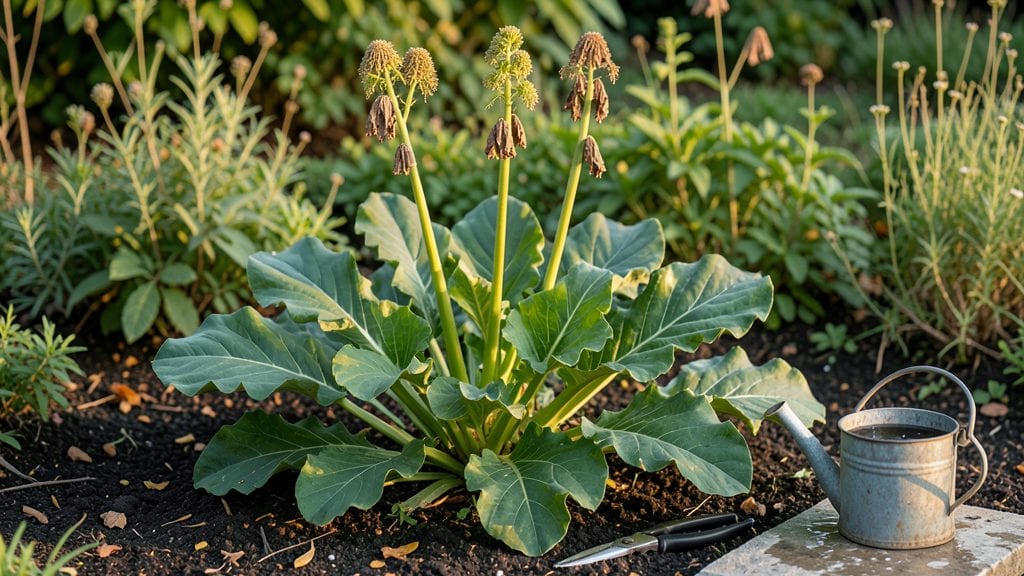
Removing rhubarb seed heads improves plant health and next year’s harvest by redirecting energy from seed production to leaf growth. Cut them off at the base once they form, typically in late spring or early summer, before they dry out completely.
Those tall, skinny stalks with flower buds are your rhubarb's way of saying "I'm ready to reproduce"—but they’re also siphoning nutrients away from the stalks you actually want to eat. 🌱 By snipping them off early, you’re essentially telling your plant, "Save that energy for bigger, sweeter stalks next season."
This simple pruning habit can double your harvest in just one year, and it’s especially critical for young plants still building their root systems.
Here’s the kicker: those seed heads won’t just hurt your harvest—they can also make your rhubarb look ragged and less productive. I’ve seen gardeners skip this step for years, only to end up with puny stalks and frustrated expectations.
The best time to act is when the seed stalks are 3-4 inches tall, using clean pruners to avoid disease. Just toss them in your compost bin—they’re not worth saving!
💡 In This Article
- Why Trimming Rhubarb Seed Heads Enhances Growth
- Step-by-Step Guide to Pruning Rhubarb Seed Stalks
Why trimming rhubarb seed heads enhances growth
Here's what's actually happening when those seed stalks appear: your rhubarb plant is shifting its energy from leaf production to reproduction. The flower buds you see are the plant's way of prioritizing seed development, which requires 30-40% more carbohydrates than maintaining healthy stalks.
This energy drain comes directly from the roots and leaves—meaning fewer, smaller stalks for your harvest. Studies show plants with removed seed heads can produce 20-30% more edible stalks in subsequent seasons because all that stored energy stays in the roots and foliage.
The science gets even more interesting when you consider photosynthesis. Rhubarb leaves are the powerhouses, converting sunlight into glucose that fuels both stalk growth and seed production.
When seed heads form, the plant allocates up to 50% of its photosynthetic output toward developing flowers and seeds, leaving less for the stalks you harvest.
The stalks themselves are actually modified leaf stems, so when you remove seed heads early, you're essentially telling the plant to "keep growing food, not babies." 🌱 This redirection strengthens the root system too, which stores nutrients for next year's growth.
What most people don't realize is how quickly this energy shift happens. Within just 4-6 weeks of seed stalk emergence, the plant can divert enough nutrients to noticeably reduce stalk size and quantity.
The stalks you do get will also be less tender and more fibrous because the plant's resources are stretched thin.
I've seen firsthand how a neglected rhubarb patch with seed heads can produce stalks that are 30% thinner than one where seed heads were removed early—it's a dramatic difference in both quantity and quality.
There's also a visual clue most gardeners miss: the leaves. When seed heads form, the surrounding leaves often yellow or wilt slightly as nutrients are pulled away. This is your plant's way of saying "I'm stressed."
Removing those seed stalks at 3-4 inches tall (about the height of a golf tee) gives the plant immediate relief, allowing it to redirect energy back to leaf expansion and root development. The result? Larger, more vibrant leaves that photosynthesize more efficiently, leading to thicker, sweeter stalks next season.
The timing matters because rhubarb is a perennial that stores energy in its roots. If you let seed heads mature completely, they'll dry out and drop seeds, which can lead to unwanted volunteer plants spreading throughout your garden.
Plus, the energy spent on seed production could have gone toward building your plant's root reserves—reserves that directly translate to bigger harvests in years to come.
Think of it like saving for a rainy day: every bit of energy diverted to seeds is money not going into your plant's retirement fund (aka its root system).
For the most dramatic results, focus on young plants (under 3 years old) that are still building their root systems. These plants are particularly sensitive to energy drain because they haven't established extensive roots yet.
In my garden, I've seen 5-year-old plants recover well from missed seed head removal, but those same young plants can become stunted if you let seed heads develop even once. The first few years are when you're laying the foundation for decades of productive harvests.