
Trees
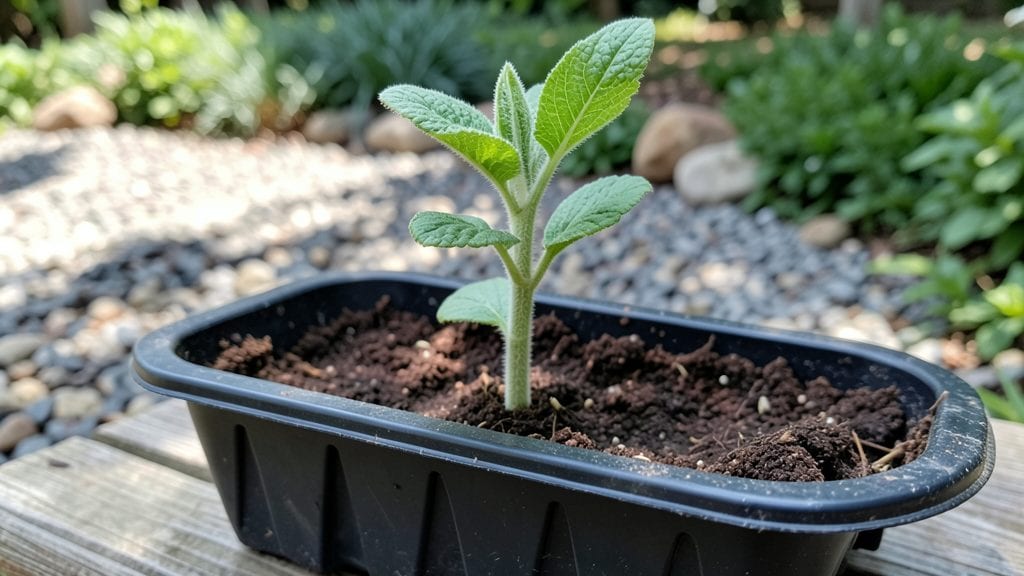
Mastering borage seedling identification begins with those fuzzy, starry-haired leaves and delicate flowers—my first sprouts looked like little aliens until I spotted the key clues. 🌱 to the touch, while the stems stay thick and sturdy even at the seedling stage.
Young borage seedlings often confuse gardeners with other plants like comfrey or forget-me-nots, but the key difference is the bright blue flower buds that form within weeks. These buds appear long before the plant reaches 6 inches tall, while similar plants wait months or never produce such vivid color.
Healthy seedlings also develop a slightly woody base as they mature.
Once you spot those hairy, lobed leaves and blue flower spikes, you’ll know it’s borage—no more guessing. The plants thrive in full sun to partial shade, so if your seedlings are stretching too tall or turning pale, they need more light.
Early care is simple: keep soil moist but not soggy, and pinch off early blooms to encourage bushier growth.
This method works for both garden beds and containers, making it perfect for small spaces or urban gardens. With these clues, you’ll never mistake borage for another plant again—and you’ll have fresh flowers and edible leaves by midsummer.
Common Mistakes in Seedling Recognition
Identifying borage seedlings can be tricky, especially for beginners, but understanding the root causes behind misidentification helps you avoid costly errors. Below, we break down the most frequent reasons why gardeners struggle to recognize young borage plants—and how to correct them.
Borage seedlings are often overlooked because their first true leaves (the second set of leaves after the initial cotyledons) closely resemble those of other common weeds or garden plants. Here’s why this happens:
- Cotyledons vs. True Leaves: The initial leaves (cotyledons) of borage seedlings are small, rounded, and hairless—similar to those of chickweed or purslane.
Many gardeners mistake them for weeds and pull them out before the plant develops its distinctive star-shaped leaves. - Actionable fix: Wait 10–14 days after germination before making judgments.
True borage leaves will emerge with deeply lobed, hairy edges and a slightly fuzzy texture. - Slow Emergence: Borage seeds germinate slowly (often taking 7–21 days), and seedlings may appear weak or stunted in cool or damp conditions.
This makes them easy to overlook or confuse with dandelion sprouts or mustard greens. - Pro tip: Use a seedling heat mat (set to 70–75°F) to speed up germination and ensure stronger, easier-to-identify seedlings.
One of the most reliable borage identification markers—bright blue star-shaped flowers—doesn’t appear until the plant is 4–6 weeks old. Before then, gardeners often rely on leaf shape alone, leading to mistakes.
- Purple or White Flowers: Some borage varieties (like Borago officinalis ‘Alba’) produce white flowers, while others may show pink or lavender hues in early blooming stages.
This variability can cause confusion with cornflowers (Centaurea cyanus) or forget-me-nots (Myosotis). - Key detail: Borage flowers always have five petals with a dark center and grow on hairy stems.
Cornflowers, by contrast, have thin, papery petals and lack the fuzzy texture. - Leaf Resemblance to Other Boraginaceae: Plants in the borage family (e.g., comfrey or hound’s tongue) share similar leaf structures but differ in flower shape and growth habit.
Comfrey, for example, has larger, more robust leaves and bell-shaped flowers, while borage stays compact and bushy. - Visual cheat sheet: | Feature | Borage (Borago officinalis) | Comfrey (Symphytum) | |------------------|-------------------------------|-----------------------| | Leaf Shape | Deeply lobed, fuzzy edges | Broad, smooth edges | | Flower Color | Blue, white, or purple | Bell-shaped, yellow/pink | | Growth Habit | Bushy, 1–3 ft tall | Tall, clumping |
Borage seedlings are sensitive to temperature, moisture, and soil conditions, which can alter their appearance and make identification harder.
- Overwatering or Poor Drainage: If seedlings sit in soggy soil, their leaves may turn yellow or mushy, mimicking damping-off disease or fungal infections.
This often leads gardeners to discard them prematurely. - Fix: Use well-draining soil (a mix of 50% potting soil + 50% perlite) and water only when the top inch is dry. - Cool Soil Temperatures: Borage seeds won’t germinate below 50°F (10°C).
If planted too early, seedlings may emerge weak, pale, and stunted, resembling legume sprouts (like peas or beans). - Solution: Start seeds indoors 6–8 weeks before the last frost or use black plastic mulch outdoors to warm the soil. - Pests or Disease: Aphids, spider mites, or fungal spores can distort borage leaves, making them look crinkled, spotted, or deformed.
This can lead to confusion with damaged basil or parsley seedlings. - Prevention: Spray seedlings with neem oil (1 tsp per quart of water) every 7–10 days to deter pests.
Even experienced gardeners sometimes miss borage’s unique characteristics because they focus on the wrong features.
- Hairy Stems and Leaves: Borage is covered in fine hairs (trichomes), which help distinguish it from smoother-leaved plants like mallow or okra.
If you’re not looking closely, these hairs can be missed in low light. - Trick: Rub a leaf between your fingers—borage feels slightly rough, while similar plants (like purslane) feel slippery or waxy. - Strong Anise-Like Scent: Mature borage leaves and stems emit a distinctive cucumber-anise fragrance when crushed.
Young seedlings may not smell as strongly, but sniffing can still help differentiate them from mustard greens (which smell peppery) or spinach (earthy). - Bonus: This scent repels pests like tomato hornworms, making borage a great companion plant!
Sometimes, the issue isn’t the plant itself—it’s poor record-keeping.
- Mixing Seed Varieties: If you planted multiple boraginaceae seeds (e.g., borage + comfrey) in the same pot or bed, seedlings may cross-pollinate or grow too close, making identification difficult. - Fix: Label each seed packet and plant varieties in separate containers until they’re established. - Ignoring Seed Packet Details: Some borage seeds are treated or coated, which can delay germination or alter appearance.
Always check the packet for specific care instructions. - Example: Organic borage seeds may germinate slower than pre-treated ones, leading to confusion if you expect faster sprouting.
The biggest mistake? Assuming a seedling is a weed before confirming. Borage’s slow start and subtle early traits make it easy to overlook—until those iconic blue flowers appear. By focusing on leaf texture, growth habit, and environmental clues, you’ll spot borage seedlings with confidence. 🌿✨
Quick Fixes for Borage Seedling Confusion
Got tangled in borage seedling identification? Don’t worry—here’s how to untangle the chaos with practical, step-by-step solutions. Whether your seedlings look squishy, leggy, or just plain mysterious, these fixes will help you spot them like a pro. Let’s dive in!
Problem: Your borage seedlings blend in with volunteer mustard greens or chickweed, making identification a guessing game.
Fix It:
- 🌱 Pull and Compare: Snag a few suspect seedlings and compare their leaves side by side. Borage seedlings have hairy, jagged-edged leaves (like tiny starbursts), while weeds like lamb’s quarters have smoother, more rounded leaves.
- 🌿 Check the Stem: Borage stems are slightly fuzzy and square-shaped when young. Weeds usually have rounder, smoother stems.
- 🌸 Wait for Flowers: If you’re still unsure, let a few grow a bit. Borage’s star-shaped blue flowers are unmistakable—even tiny buds will give it away!
Prevention Tip: 💡 Plant in containers first if weeds are a problem. This keeps your borage isolated until you’re 100% sure what’s what.
Problem: Your borage seedlings are slow to grow, yellowing, or collapsing—signs of overwatering, underwatering, or disease.
Fix It:
- 💧 Water Check: Stick your finger 1 inch into the soil. If it’s soggy, you’re overwatering (borage hates wet feet!). If it’s bone-dry, give it a light drink—don’t drown them.
- ☀️ Light Test: Are they leggy and stretching? Move them to a sunnier spot (borage loves 6+ hours of sun). If they’re crispy, they’re getting too much heat—provide afternoon shade with a sheer curtain.
- 🍄 Fungal Foes: Yellow spots or mold? Stop watering from above (use a drip system or water at the base). Spray with a 1:10 ratio of hydrogen peroxide to water to fight fungus.
Prevention Tip: ✨ Use well-draining soil (mix in perlite or sand) and space seedlings 12 inches apart to improve airflow.
Problem: You’re sure it’s borage… but the flowers aren’t blue, or the leaves look all wrong.
Fix It:
- 🔵 Color Clues: True borage flowers are vibrant blue, but young buds can look purple or white. If you see yellow or white flowers, it might be a cross-pollinated hybrid or a different plant (like comfrey).
- 🍃 Leaf Shape Deep Dive:
- Borage leaves: Hairy, deeply lobed (like a jagged star), and alternate (one leaf per stem node).
- False positives: Dill or fennel have feathery leaves, while basil has oval, smooth edges.
- 🌼 Root Test: Gently dig up a seedling (if it’s small) and check the taproot. Borage develops a thick, white main root—weeds usually have fibrous roots.
Prevention Tip: 🌡️ Take photos of your seedlings at each stage (leaves, buds, flowers) to compare later.
Problem: Your borage is either bolting (flowering too early) or lingering as a tiny sprout for weeks.
Fix It:
- ⏳ Slow Starters? They need more warmth (borage loves temps above 50°F). Try a heat mat or move pots to a warmer spot.
- 🚀 Bolting Too Soon? Harvest leaves regularly to encourage bushier growth. Avoid nitrogen-heavy fertilizers—they speed up flowering.
- 🌱 Transplant Shock: If seedlings are stunted after moving, water deeply and keep them in shade for 3 days to recover.
Prevention Tip: 🎯 Start seeds indoors 4-6 weeks before last frost, then harden them off gradually.
Problem: Bugs (like aphids) or pests are munching on your seedlings, or you spot strange spots.
Fix It:
- 🐜 Common Pests:
- Aphids: Blast off with a strong spray of water or use neem oil (mix 1 tbsp neem oil + 1 tsp mild soap per quart of water).
- Caterpillars: Handpick them (they’re fuzzy—easy to spot!) or use BT (Bacillus thuringiensis) spray.
- 🍄 Fungal Issues: If leaves have black or brown spots, remove affected leaves and improve airflow (prune nearby plants).
- 🕷️ Slugs/Snails: Set up beer traps (bury a cup filled with beer) or use copper tape around pots.
Prevention Tip: 🔥 Inspect seedlings daily and remove pests early before they spread.
- 📸 Keep a plant journal with photos and notes on leaf shape, stem texture, and flower color.
- 🌿 Label seedlings with toothpicks and masking tape as soon as they sprout.
- 🌱 Grow a "test batch" in a separate pot if you’re unsure—let it flower to confirm before transplanting.
With these fixes, you’ll go from "Is this borage or a weed?" to "Ah yes, classic borage—time to harvest!" in no time. Happy gardening! 🌱💙
Frequently asked questions
How do I tell borage seedlings apart from chickweed or purslane?
Look for hairy, jagged-edged leaves that resemble tiny starbursts—borage’s true leaves develop 10-14 days after germination. Chickweed has smooth, oval leaves, while purslane stays low to the ground with thick, succulent stems. Rub a leaf between your fingers: borage feels slightly rough, while weeds feel slippery.
Why do my borage seedlings look like weeds but won’t grow?
Slow germination (7-21 days) and cool soil (below 50°F) stunt growth. Use a seedling heat mat set to 70-75°F to speed things up. If they’re yellowing, you’re overwatering—let the top 1 inch of soil dry between waterings. Leggy seedlings need more sunlight (6+ hours daily).
Can I still identify borage if the flowers aren’t blue yet?
Focus on the deeply lobed, fuzzy leaves and square stems. Even before flowering, borage has a distinctive anise-cucumber scent when crushed. Compare with comfrey (larger leaves, bell-shaped flowers) or forget-me-nots (smaller, rounder leaves).
What’s the fastest way to confirm it’s borage?
Wait for flower buds—they appear in 4-6 weeks and are unmistakable with their five-petal star shape. If you’re impatient, dig up a small seedling and check the thick taproot (weeds have fibrous roots). For instant ID, crush a leaf: borage smells like cucumber and anise.
Why do some borage seedlings have white flowers instead of blue?
That’s likely the ‘Alba’ variety, which produces white blooms. Other borage types may show purple or lavender hues in early stages. The key difference from cornflowers or forget-me-nots is the hairy stems and five-petal structure—even white borage flowers have dark centers.