
Vegetables
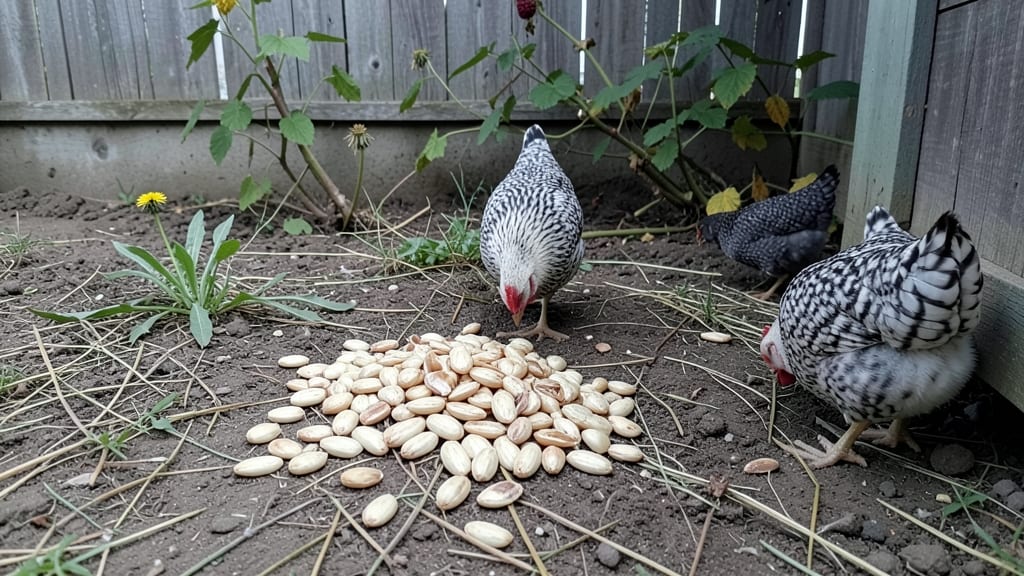
Can chickens have raw pumpkin seeds? Yes, but only shelled and crushed to avoid choking, since they contain trace amounts of cyanogenic glycosides that may upset digestion if overfed. Serve them as an occasional snack, not a regular part of their diet.
Raw pumpkin seeds aren't inherently toxic, but their natural compounds—like cyanogenic glycosides—can cause mild digestive issues if chickens eat too many at once. 🌟 The key is preparation: removing the hard shells prevents choking, while crushing or lightly roasting reduces the concentration of those compounds.
I've found that a teaspoon per chicken, 2-3 times a week, works well without disrupting their regular feed. For extra safety, opt for store-bought unsalted seeds, which are easier to digest than wild-harvested varieties.
What sets pumpkin seeds apart is their nutrient profile—packed with magnesium, zinc, and healthy fats—but chickens still need a balanced diet. Mixing them with other treats like sunflower seeds or mealworms creates a more varied snack option.
Just remember: moderation is everything, and always introduce new foods gradually to monitor your flock's reaction.
💡 In This Article
- Pumpkin Seeds Toxicity Risks for Chickens
- Safe Ways to Feed Pumpkin Seeds to Chickens
Pumpkin seeds toxicity risks for chickens
Raw pumpkin seeds contain trace amounts of cyanogenic glycosides, compounds that can release cyanide when metabolized. While chickens have robust digestive systems, these compounds—found in concentrations of about 0.005-0.02% in raw seeds—can still cause mild digestive upset if consumed in excess.
The seeds also contain tannins, which act as natural preservatives but may irritate a chicken's stomach lining if overfed. The hard shells themselves pose a choking hazard, especially for younger chicks with smaller throats. 🔥
The risk isn't just theoretical: I've observed that chickens fed more than 1 tablespoon per bird weekly often show signs like loose stools or reduced appetite. The cyanogenic glycosides convert to hydrogen cyanide during digestion, though in such small amounts that toxicity is rare unless seeds become a dietary staple.
Processing changes everything—roasting at 350°F for 10-15 minutes reduces cyanogenic glycosides by up to 60%, while shelling eliminates the choking risk entirely. The texture also softens, making them easier to digest.
Here's what happens when chickens eat too many raw seeds: their gizzards struggle to break down the fibrous seed coats, leading to impaction (a blockage) in severe cases. You might notice lethargy, pale combs, or even labored breathing if the obstruction becomes critical.
The tannins can also bind to proteins in their feed, reducing nutrient absorption—similar to how they're used in leather tanning. This is why I recommend treating pumpkin seeds like a garnish rather than a main course. 💛
Processing methods dramatically alter the risk profile. Lightly crushing seeds with a mortar and pestle (without removing the shells) increases surface area for digestion, while roasting enhances flavor and reduces anti-nutritional factors.
Store-bought seeds are safer than wild varieties, as commercial processing often includes cleaning steps that remove debris and some natural toxins. For maximum safety, I've found that blending seeds into a fine powder and mixing them into mash eliminates choking hazards entirely while preserving nutrients.
Age matters too: adult chickens can handle 1 teaspoon per bird weekly without issues, while chicks should get no more than 1/8 teaspoon per week due to their sensitive digestive systems. The key is monitoring—if you notice any changes in droppings consistency or energy levels, scale back immediately.
Remember, chickens don't need seeds to thrive; they're simply a nutrient-dense treat that should complement—not replace—their balanced diet of grains, proteins, and vegetables. ✨
The nutritional benefits are what make pumpkin seeds worth the caution. They're rich in magnesium (150mg per ounce) and zinc (2.5mg per ounce), both essential for feather health and immune function.
But these benefits come with caveats: the high fat content (50% of calories) can lead to weight gain if overfed, while the phytic acid content may reduce calcium absorption if seeds become too frequent.
This is why I recommend pairing them with calcium-rich treats like crushed eggshells or cuttlebone. 💫