
Watering
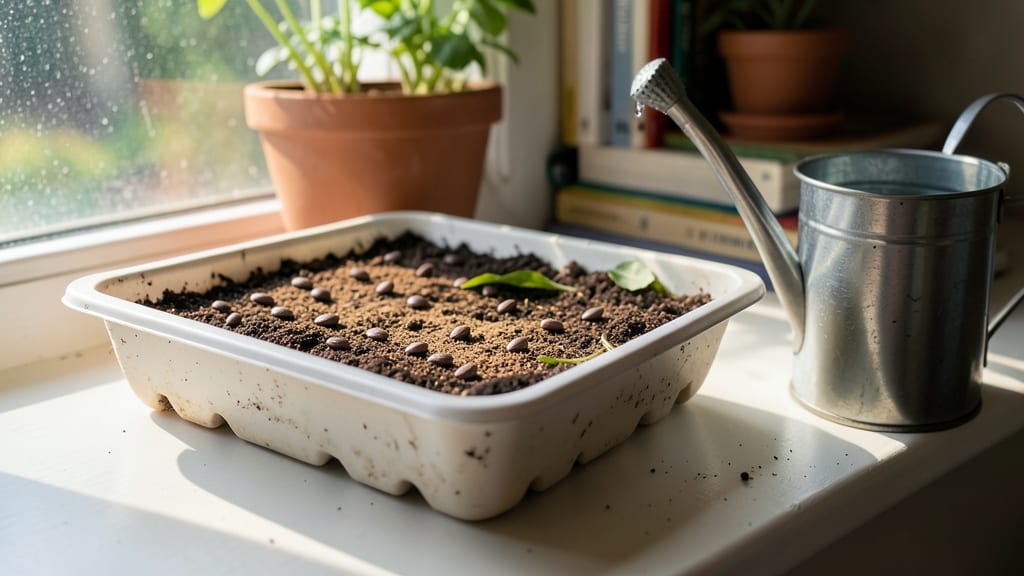
You can overwater seeds, which leads to rot, mold, or failed sprouting by cutting off oxygen to roots and creating anaerobic conditions. Maintain barely damp soil and use well-draining containers to prevent soggy conditions.
Overwatering seeds creates a suffocating environment where roots can't breathe, leading to fungal infections and seed death.
The soil's moisture balance is delicate—too much water displaces oxygen, while too little prevents hydration. 💫 I recommend using a spray bottle for gentle moisture and checking soil moisture by touching it; if it feels damp but not wet, you're on the right track.
For containers, ensure they have drainage holes to prevent waterlogging, which is a common mistake even among experienced gardeners.
Signs of overwatering include yellowing leaves, mushy stems, or a foul smell from the soil. If you notice these, stop watering immediately and let the soil dry out slightly before trying again. The key is consistency—seeds need just enough moisture to stay hydrated without drowning.
💡 In This Article
- How Overwatering Damages Seed Germination
- Proper Watering Techniques for New Seedlings
How overwatering damages seed germination
When seeds sit in overly wet soil, they suffocate because water displaces the oxygen roots need to breathe. This creates anaerobic conditions—environments without oxygen—which triggers a biological stress response in seeds.
The root tips, designed to absorb water and nutrients, instead drown, releasing harmful enzymes that break down cellular structures. This process is called hypoxia, and it effectively starves the seed of the energy it needs to break dormancy and sprout.
The damage doesn't stop at oxygen deprivation. Excess moisture also alters soil chemistry, creating the perfect breeding ground for fungal pathogens like Pythium or Rhizoctonia. These fungi thrive in waterlogged conditions and release toxins that inhibit germination.
You'll often see fuzzy white or black mold appearing on the soil surface—this is a clear sign the environment has become hostile. Even without visible mold, the soil's pH can shift toward acidity, which further stresses delicate seedling roots.
Here's what's happening at the cellular level: seeds rely on a process called imbibition to activate germination, where water enters the seed and triggers metabolic reactions. But when soil stays saturated for more than 24-48 hours, these reactions stall.
The seed's food reserves (like starches and proteins) can't convert into energy because the roots can't function properly. In extreme cases, seeds may even rot internally, turning mushy and unable to develop shoots or roots.
Consider this comparison: healthy soil for germination should feel like a damp sponge—moist but not dripping. Overwatered soil, however, becomes a soggy, compacted mess that blocks air pockets. Think of it like trying to breathe through a wet towel—no matter how hard you try, oxygen can't reach your lungs.
The same principle applies to seeds: without proper aeration, their development grinds to a halt.
What most people don't realize is how quickly this damage occurs. Seeds can start showing signs of distress within just 6-12 hours of excessive moisture. The first visible clue is often yellowing or wilting of the seed coat, followed by a foul, sour smell from the soil.
This isn't just a minor setback—it's a full-blown biological crisis that can kill seeds before they even emerge.
To put it simply: seeds need water to wake up, but too much water smothers them before they can grow. The balance is delicate—like walking a tightrope between hydration and suffocation. 💫