Watering
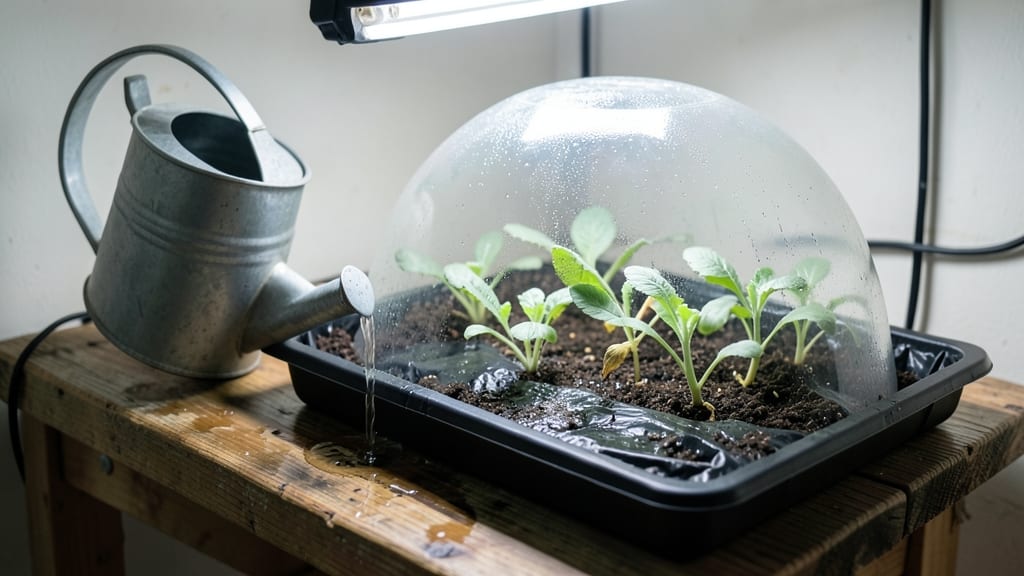
You can absolutely overwater seeds, which leads to suffocation of delicate roots, fungal rot, and failed germination. Instead, opt for a gentle misting approach or bottom-watering, while always using well-draining soil to prevent soggy conditions.
Overwatering creates a suffocating environment where seeds can't breathe, cutting off the oxygen they need to develop roots. 🌱 The excess moisture also creates the perfect breeding ground for mold and bacteria, which can attack seeds before they even sprout.
I've seen many gardeners accidentally drown their seedlings by keeping soil constantly wet—even just a few extra minutes of standing water can be enough to kill them.
Instead of drowning them, focus on keeping the soil consistently moist but never soggy. A simple spray bottle or bottom-watering tray works perfectly—just enough to keep the top inch of soil damp.
Most seed packets recommend watering only when the top layer feels dry to the touch, which prevents both underwatering and overwatering.
💡 In This Article
- How Overwatering Damages Seed Germination
- Proper Watering Techniques for New Seeds
How overwatering damages seed germination
Seed germination begins when water activates enzymes inside the seed, triggering metabolic processes that break down stored nutrients for root growth. However, too much water creates a waterlogged environment that suffocates the seed's delicate radicle (the first root) by displacing oxygen from the soil pores.
Oxygen levels below 10% by volume (normal air contains 21%) can halt respiration, starving the seed of the energy it needs to sprout. This is why seeds planted in constantly wet soil often fail to break through—even if they've absorbed enough water to start the process.
The damage doesn't stop at oxygen deprivation. Excess moisture also triggers anaerobic conditions, where harmful bacteria and fungi like Pythium and Fusarium thrive. These pathogens release toxins that weaken cell walls, causing seeds to rot before germination.
You'll often see this as a foul, musty smell or a dark, slimy coating on seeds—signs the soil has become a microbial soup. 🌱 Even worse, some seeds (like beans or peas) produce ethylene gas when stressed, which can further inhibit their own growth if trapped in saturated soil.
Nutrient leaching is another silent killer. Water-soluble vitamins and minerals—like potassium and phosphorus—dissolve and drain away when soil stays too wet. Seeds require these nutrients to fuel their early growth stages, and without them, even properly oxygenated seeds may fail to develop strong roots.
For example, a tomato seed needs consistent access to phosphorus to form its root hairs, which are critical for water and nutrient absorption. If the soil is waterlogged, these essential nutrients get washed away before the seedling can establish itself.
Visually, you can spot overwatered seeds by their grayish, mushy appearance rather than the firm, white radicles of healthy seeds. The seed coat may also split unevenly or develop fuzzy mold growth within 2-3 days of constant moisture.
This is your body telling you the soil's oxygen levels have dropped dangerously low. The key factor here is soil aeration—healthy soil maintains 40-60% porosity, allowing both water and air to reach roots.
When you overwater, you're essentially replacing air pockets with water, creating a suffocating blanket over your seeds.
What most people don't realize is that seeds have a critical oxygen threshold for germination. For example, lettuce seeds require at least 12% oxygen in the soil to germinate successfully, while cucumber seeds need even more (15%).
When soil moisture exceeds 60% of its water-holding capacity, oxygen levels can drop below these thresholds, triggering dormancy or death. This explains why some seeds germinate fine in damp paper towels (where oxygen is plentiful) but fail in overwatered soil trays.
To put it simply: water is the seed's first meal and last breath. Too much of it drowns the seed before it can even take its first sip of nutrients.
The balance between hydration and aeration is delicate—like walking a tightrope between suffocation and starvation. 💫 Understanding this biological dance helps explain why even experienced gardeners sometimes struggle with seedling mortality, despite their best efforts.