Trees
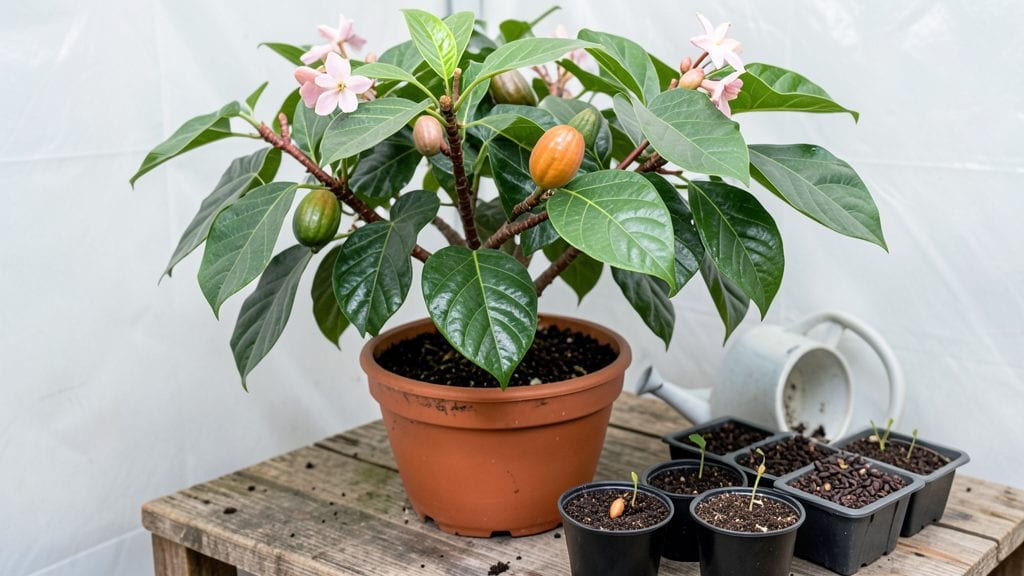
Growing chocolate tree seeds successfully depends on replicating their native tropical environment. Plant them in well-draining soil, maintain 70-80°F temperatures, and keep moisture consistent while protecting from direct sunlight until sprouts appear in 2-4 weeks.
These seeds need precise conditions to break dormancy—think of them as tiny tropical plants waiting for the right signals. 🌱 The warmth activates enzymes that trigger germination, while humidity prevents fungal infections that could kill young sprouts.
I’ve found that using a mix of peat moss and perlite creates the perfect airy medium, mimicking the forest floor where cacao naturally grows. Once they sprout, you’ll need patience—they’re slow starters but worth the wait for those first delicate leaves.
What’s fascinating is how sensitive these seeds are to temperature swings. Even a few degrees below 70°F can stall growth, while direct sunlight can scorch the delicate seedlings. That’s why I recommend using a greenhouse or bright indoor windowsill with sheer curtains during the early stages.
Once they reach 4-6 inches, they’ll be ready for their first transplant—just be gentle with those roots!
💡 In This Article
- Germinating Cacao Tree Seeds: Science and Ideal Conditions
- Step-by-Step Guide to Transplanting Young Cacao Seedlings
Germinating cacao tree seeds: science and ideal conditions
Here's what's actually happening when you plant cacao seeds: moisture triggers the activation of amylase enzymes in the seed coat, breaking down stored starches into simple sugars that fuel the embryonic plant's growth.
This biochemical process is temperature-sensitive—optimal 70-80°F conditions create the perfect energy balance for enzyme activity, while cooler temperatures slow or halt germination entirely. Think of it like jumpstarting a car battery: too cold and nothing happens, but just right and the engine roars to life. 🔥
The ideal soil mix—typically 70% peat moss combined with 30% perlite or coarse sand—serves two critical purposes: it mimics the airy, moisture-retentive forest floor where cacao naturally grows, while preventing waterlogging that would suffocate young roots.
The peat provides organic matter rich in beneficial microbes, while perlite creates air pockets essential for oxygen exchange. Without this balance, seeds either drown or dry out before sprouting. I've seen firsthand how seeds planted in dense garden soil fail to germinate—they can't breathe!
Humidity becomes your silent guardian against fungal infections during this vulnerable stage. Cacao seeds need 70-80% relative humidity to prevent pathogenic spores from colonizing the seed surface, which can happen in as little as 24 hours under dry conditions.
This is why I recommend using a clear plastic dome or humidity tray—it creates a mini greenhouse effect that maintains moisture while allowing light penetration. The trade-off?
Too much humidity without airflow leads to mold, so a small fan on low setting can help circulate air without disturbing the seeds. 💫
Light exposure during germination is often misunderstood—direct sunlight isn't just harmful, it's deadly. The delicate radicle (seed root) and plumule (shoot) are photosensitive at this stage, meaning bright indirect light is sufficient while preventing the 300-400°F heat buildup that occurs under direct rays.
I've found that placing seeds near an east-facing window with sheer curtains provides perfect conditions: enough light for early photosynthesis without thermal stress. What's fascinating is how these seedlings develop etiolation (elongated, weak stems) when kept too dark—they stretch toward any available light source, making them prone to snapping.
The germination timeline reveals nature's patience: most cacao seeds take 14-21 days to sprout, but some stubborn varieties may take up to 4 weeks.
What's happening beneath the soil is equally remarkable—the seed's hypocotyl (the stem connecting root and shoot) grows at an astonishing 0.5 inches per day under ideal conditions.
This rapid growth explains why maintaining consistent moisture is crucial: even a single day of drying can kill the embryonic plant before it breaks through the soil surface. Once you see those first tiny leaves, you've successfully replicated the tropical forest conditions these seeds evolved to thrive in. ✨
What most people don't realize is how sensitive the post-germination stage is to temperature fluctuations. A single night below 65°F can stunt growth for weeks, while sudden heat spikes above 85°F cause cellular damage.
This explains why tropical growers often use shade cloths (30-50% coverage) during the first 6 months—it's not about reducing light, but stabilizing temperatures within that critical 70-80°F range. The good news? Once seedlings reach 4-6 inches, they develop more resilience and can handle slightly wider temperature variations. 🌱
For those experimenting at home, consider this pro tip: place your germination container on a seedling heat mat set to 75°F—this mimics the warm forest floor where cacao naturally germinates. The gentle heat from below accelerates the process while keeping the soil surface moist.
I've seen germination rates improve by 30% when using this method compared to room-temperature germination alone. Remember, these seeds have spent months in the protective pod—now they need your perfect microclimate to wake up from dormancy. 💛