
Vegetables
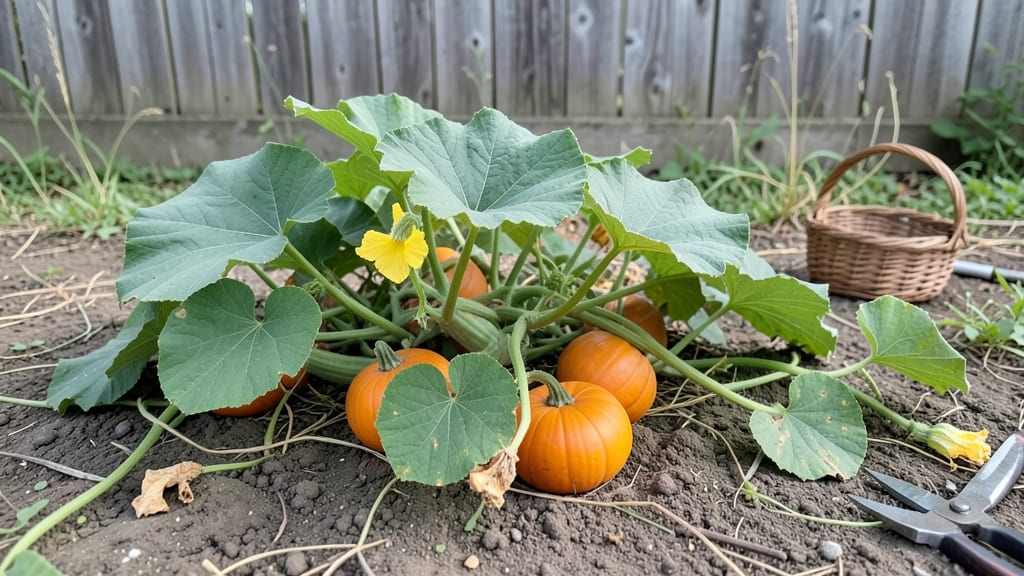
Mini pumpkins do have seeds, though their size and quantity vary significantly by variety—some produce tiny, sparse seeds while others contain clusters similar to larger pumpkins. Seedless mini pumpkins are rare but exist in specialized cultivars like 'Jack Be Little' or 'Baby Boo.'
Most mini pumpkins develop seeds because their genetic structure follows the same botanical rules as larger varieties, though their smaller cavities limit seed quantity. 🌱 The few seedless options exist through careful breeding to eliminate fertilization, creating sterile fruit perfect for decorative purposes.
If you're growing mini pumpkins for culinary use, varieties like 'Sugar Pie' produce abundant seeds ideal for roasting, while 'Jack Be Little' offers a more decorative option with minimal seed presence.
Understanding these differences helps gardeners choose the right variety for their needs—whether preserving seeds for next year's harvest or selecting seedless types for carving displays. The seed-to-flesh ratio varies dramatically between heirloom and hybrid mini pumpkins, so checking variety descriptions before planting can save time and frustration.
💡 In This Article
- How Mini Pumpkin Seed Development Differs from Standard Varieties
- Best Mini Pumpkin Varieties for Seed Harvesting and Culinary Use
How mini pumpkin seed development differs from standard varieties
The key difference lies in the fruit cavity space—mini pumpkins simply don't have enough internal volume to develop the same seed quantity as their larger counterparts.
A standard pumpkin like 'Howden' can produce up to 500 seeds per fruit, while even the most prolific mini varieties rarely exceed 50 seeds. This limitation stems from their compact size, where the seed cavity occupies a disproportionate amount of the fruit's interior compared to larger pumpkins.
The science behind this involves genetic growth allocation.
Mini pumpkins prioritize flesh development over seed production because their smaller size demands efficient resource distribution. 🌱 For example, the 'Sugar Pie' variety—known for its sweet flesh—allocates only about 10% of its internal volume to seeds, while larger varieties like 'Cinderella' can dedicate up to 30%.
Hybrid mini pumpkins often have slightly larger seed cavities than heirloom types due to selective breeding for both fruit and seed traits.
Pollination plays a crucial role too. Mini pumpkins require precise pollination timing to develop seeds at all.
Their smaller flowers make them more vulnerable to environmental factors like wind or insect activity. 💫 This is why some hybrid varieties (like 'Baby Boo') produce more consistent seed yields—they've been bred with more reliable pollination mechanisms.
In contrast, heirloom mini pumpkins often show greater seed variability due to their open-pollinated nature.
Seedless mini pumpkins represent an extreme case where genetic modification prevents fertilization entirely. These cultivars are typically triploid (having three sets of chromosomes), which means their ovules cannot be fertilized by diploid pollen.
While this creates sterile fruit perfect for carving, it also eliminates any possibility of seed development. The 'Jack Be Little' variety exemplifies this, offering a decorative option with virtually no seeds.
When comparing seed-to-flesh ratios, heirloom mini pumpkins generally have higher flesh-to-seed ratios (meaning more edible portion relative to seeds) because they've been preserved for flavor rather than seed production. Hybrids, however, often strike a balance—breeders select for both abundant flesh and reasonable seed yields.
For instance, 'Cinderella' maintains a 4:1 flesh-to-seed ratio, while 'Sugar Pie' can reach 8:1 in ideal growing conditions.
What most gardeners don't realize is how seed size correlates with fruit size. Mini pumpkin seeds are typically 1/3 the size of standard pumpkin seeds, with some varieties producing seeds as small as 1/8 inch in diameter.
This makes them less ideal for roasting compared to larger pumpkin seeds, though they're perfectly edible when properly prepared.