Vegetables
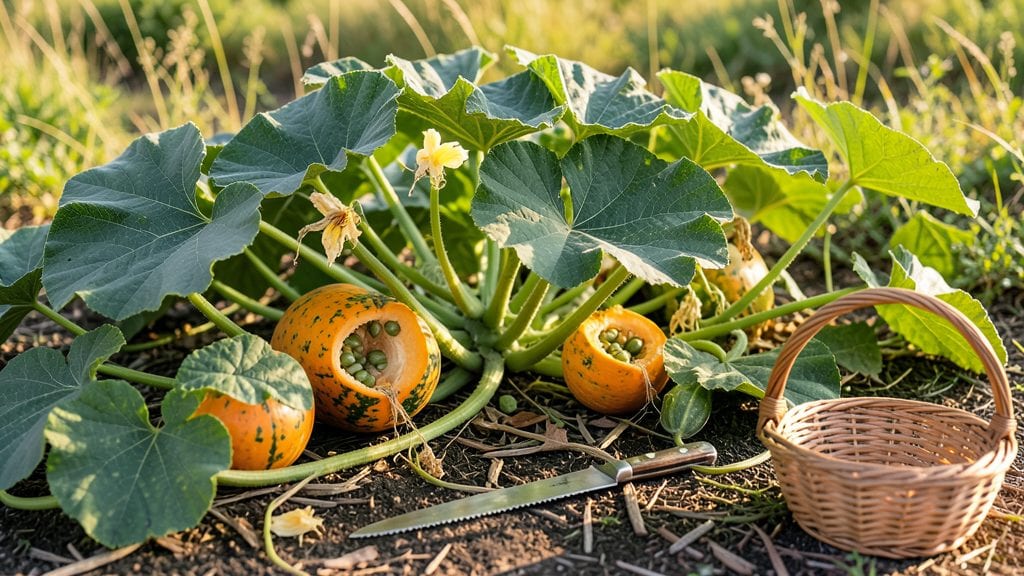
Some pumpkin seeds appear green because chlorophyll remains trapped inside during early development, especially when seeds are harvested prematurely or from immature fruits. This natural pigment fades as seeds mature and dry, turning the familiar tan or white.
Green pumpkin seeds aren't a defect—they're a sign of early harvesting or immature fruit. 🌱 Chlorophyll stays active in seeds when photosynthesis hasn't fully shut down, often due to cooler temperatures or shorter growing seasons.
These seeds are perfectly safe to eat, though they may have slightly different nutrient profiles compared to fully mature ones. The green hue disappears naturally as seeds dry and the chlorophyll breaks down over time.
This phenomenon isn't limited to pumpkins—you'll see similar green seeds in squash and gourds. The key difference between green and tan seeds lies in their development stage: green seeds are essentially "frozen" in an earlier phase of maturation.
For gardeners, this visual clue can help determine whether pumpkins were harvested too early or if environmental factors played a role in seed development.
💡 In This Article
- Chlorophyll’s Role in Pumpkin Seed Color
- When and Why Green Seeds Appear in Harvests
Chlorophyll’s role in pumpkin seed color
Here's what's actually happening inside those green seeds: chlorophyll isn't just a leaf pigment—it's a photosynthetic powerhouse that remains active in developing seeds until maturation fully shuts down photosynthesis. During early seed development, the seed coat is still semi-permeable, allowing chlorophyll molecules to persist inside.
This happens because the seed's metabolic processes haven't completely transitioned from energy production to storage mode. In mature seeds, the seed coat becomes less permeable, and chlorophyll breaks down as the seed focuses on storing fats and proteins instead.
The key difference lies in seed coat permeability and biochemical timing. Green seeds typically have moisture levels around 40-50% compared to mature seeds at 10-15%. This higher moisture preserves chlorophyll's green color, similar to how spinach stays vibrant when fresh-cut but wilts to yellow as it dries.
The chlorophyll concentration in green seeds can reach 0.5-1.0 mg/g of seed tissue, while mature seeds contain negligible amounts (0.01 mg/g). This pigment breakdown occurs through a process called chlorophyllase activity, which becomes dominant as the seed dries.
What most people don't realize is that this chlorophyll persistence is an evolutionary safeguard. Plants produce seeds with residual photosynthetic capability as a backup energy system when environmental conditions are less than ideal. Cooler temperatures (60-70°F) or shorter growing seasons prevent complete maturation, leaving chlorophyll intact.
This explains why green seeds appear more frequently in northern climates or when pumpkins are harvested early for fresh consumption rather than storage.
The biochemical transition from green to tan involves more than just chlorophyll loss. As seeds mature, carotenoids (yellow pigments) become more prominent, eventually masked by the seed's outer coat turning white or tan.
This color change coincides with increased levels of tryptophan and arginine—amino acids that become more concentrated as the seed prepares for dormancy.
The seed's internal pH also shifts from slightly acidic (pH 6.0-6.5) in green seeds to more neutral (pH 7.0-7.5) in mature ones, further facilitating chlorophyll degradation.
Consider these key factors when evaluating seed color:
- Harvest timing: Seeds turn tan when pumpkins reach full maturity (90-120 days after pollination)
- Environmental stress: Drought or temperature fluctuations can lock chlorophyll in place
- Genetic factors: Some heirloom varieties naturally produce more green seeds than hybrids
- Storage conditions: Green seeds left in humid environments may stay green longer
The most fascinating aspect is how this chlorophyll persistence affects seed nutrition. Green seeds contain slightly higher levels of vitamin K (from chlorophyll) and magnesium compared to mature seeds, though the difference is minimal for human consumption.
The trade-off is that green seeds may have slightly lower fat content (30-35% vs 40-50% in mature seeds), which affects their roasting characteristics. 💫