
Vegetables
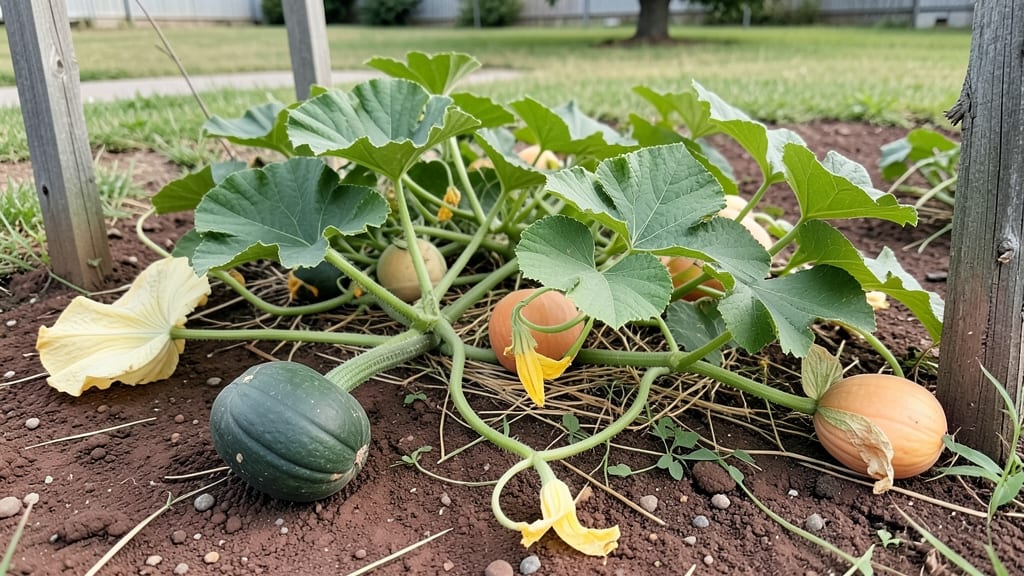
Small pumpkins do have seeds, though their quantity and size vary significantly compared to larger varieties. Miniature pumpkins often contain 50-100 tiny, hard seeds clustered tightly in their centers.
Even the tiniest pumpkins pack a surprising number of seeds relative to their size. 🌱 These miniature varieties focus their energy on seed production rather than flesh development, which is why you’ll find more seeds per bite than in a giant carving pumpkin.
The seeds themselves are harder and denser than those in larger pumpkins, making them perfect for roasting or saving for next year’s garden. What’s fascinating is how genetics play a role—dwarf varieties naturally produce more seeds per unit of fruit because their growth patterns prioritize seed clusters over pulp expansion.
If you’ve ever wondered why small pumpkins seem "seed-heavy," it’s because their compact structure allocates resources differently. 💫 Larger pumpkins spread their energy across more flesh, diluting the seed-to-pump ratio.
This biological trade-off explains why a 4-inch pumpkin might yield just as many seeds as a 12-inch one—just in a more concentrated form. The next time you carve a mini pumpkin, take a closer look at those seeds—they’re nature’s way of packing efficiency into a tiny package.
💡 In This Article
- How Pumpkin Size Affects Seed Development
- Harvesting and Using Seeds from Mini Pumpkins
How pumpkin size affects seed development
Here's what's actually happening biologically: pumpkin plants allocate nutrients based on genetic programming. Miniature varieties like 'Jack Be Little' or 'Munchkin' prioritize seed production because their growth cycles are shorter.
These dwarf plants invest energy into developing 50-100 seeds in a 3-inch diameter fruit, while giant varieties like Atlantic Giants spread their resources across 500+ seeds in a 1,500-pound pumpkin.
The key factor is the plant's energy budget—smaller pumpkins can't afford to grow large flesh volumes, so they maximize seed density instead. 🌱
The science involves hormone regulation during fruit development. Gibberellins (growth hormones) promote flesh expansion in large pumpkins, while auxins (seed development hormones) dominate in miniature varieties. This creates a trade-off: larger pumpkins develop more total seeds but with 30-50% less seed density per pound of flesh.
For example, a 10-pound mini pumpkin might contain 80 seeds (8 seeds per pound), while a 20-pound carving pumpkin averages only 5 seeds per pound. The seed-to-flesh ratio becomes the defining difference.
What most people don't realize is how seed size varies too. Mini pumpkin seeds measure just 0.25-0.35 inches long—about half the size of jack-o'-lantern seeds—and have 1.5-2 times the hardness rating due to thicker seed coats. This adaptation protects the genetic material in compact fruits where space is limited.
The hard outer shell also means they roast faster (15-20 minutes at 325°F) than larger seeds, making them ideal for quick snacking. 🔥
Comparing to jack-o'-lanterns reveals the extremes: a 15-pound carving pumpkin may produce 300-400 seeds spread throughout its cavity, while a 2-pound mini pumpkin contains 60-80 seeds in a tightly packed central cluster.
The difference isn't just quantity but distribution—mini seeds occupy 25% of the fruit's volume compared to just 5-10% in larger varieties. This concentration makes them easier to harvest but harder to separate cleanly.
Geneticists explain this through the "seed-flesh balance" principle: plants with Cucurbita pepo genetics (like most mini pumpkins) naturally favor seed production when grown in constrained conditions. Even when given ample nutrients, these varieties won't produce giant fruits—their growth patterns are hardwired to prioritize seed viability over size.
This is why you'll never find a 500-pound mini pumpkin, no matter how well you fertilize it. 💫
For gardeners, this means seed-saving from mini pumpkins is more efficient. Since the seeds are 80% smaller by volume but contain the same genetic material, you can store 4-5 times more seeds per ounce of space compared to giant pumpkin seeds.
The trade-off? Their tiny size makes them trickier to handle during cleaning—you'll need fine mesh screens (0.125-inch openings) to avoid losing seeds down drains. This biological efficiency is what makes mini pumpkins the gardener's secret weapon for seed propagation.