Pruning
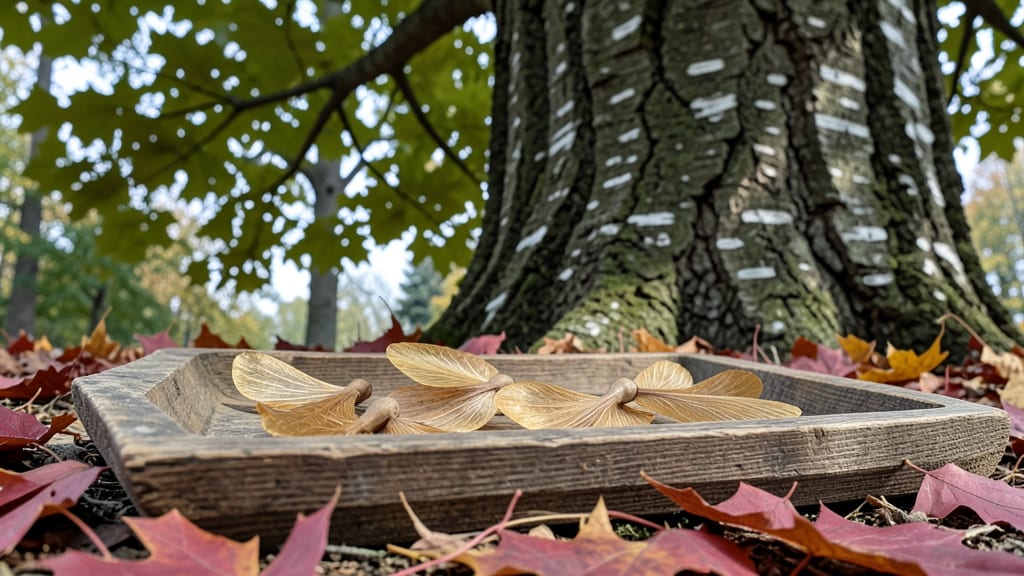
Identifying tree seeds turns every autumn walk into a treasure hunt. 🌿 The first time I spotted a cluster of maple samaras spiraling down like tiny helicopters, I realized how many different seeds were hiding in plain sight.
Many people overlook them, but learning to recognize these seeds unlocks a world of free, native trees for your landscape.
Start with the obvious: acorns, walnuts, and pinecones are easy to spot, but the real fun comes with less familiar seeds like hickory shucks or ash "keys." Pay attention to size, shape, and whether the seed is encased in a wing, shell, or fuzzy coat.
A simple magnifying glass helps reveal details that make identification straightforward—like the distinctive ridges on a black walnut or the papery husk of a butternut.
Once you can ID them, collecting becomes a game. Fill a mesh bag with seeds in fall, then separate them by type before storing in a cool, dry place. Viable seeds sink in water, while hollow ones float—this quick test saves you from planting duds.
By spring, you'll have a stash ready to grow everything from towering oaks to delicate birches.
This skill works for urban yards, rural forests, or even container growing. Whether you're restoring a wildlife habitat or just adding shade trees, knowing your seeds gives you the power to shape your land with nature's own nursery stock.
The Hidden Triggers Behind Seed Confusion
Identifying tree seeds can feel like solving a botanical puzzle—especially when similar-looking specimens throw you off. But why does this happen? The answer lies in a mix of natural adaptations, human error, and environmental quirks.
Let’s break down the key reasons why seeds are so hard to pinpoint, even for experienced gardeners or foresters.
Many tree seeds evolve to mimic other objects or blend into their surroundings to survive. This isn’t just random—it’s a survival strategy. Here’s how nature plays tricks:
- 🎭 Seed Mimicry: Some seeds resemble insects, nuts, or even animal droppings to attract dispersers (like birds or squirrels). For example:
- Horse chestnut seeds look like polished brown marbles with a spiky husk—easy to mistake for acorns or other round seeds.
- Maple "helicopters" (samaras) can be confused with ash or elm seeds due to their winged shape, even though their veins differ.
- 🌿 Camouflage Colors: Seeds often match their forest floor backdrop—think browns, tans, and grays that blend into leaf litter. A beech nut might look like a dried leaf at first glance, while a hickory nut could be mistaken for a tiny rock.
- 🔄 Seasonal Changes: Seeds don’t stay static. A walnut in summer is green and fuzzy; by fall, it’s hard and brown. If you’re used to one stage, the other might throw you off.
Pro Tip: 🔍 Examine the seed’s texture and attachment point—these rarely mimic anything else!
Even with a sharp eye, our brains can lead us astray. Here’s how:
- 🖼️ The "Similar Shape" Trap: Humans categorize by shape first. A black walnut seed looks like a butternut until you crack it open—the hull color and scent differ drastically.
- 📏 Size Distortions: A pinecone "seed" (pine nut) might seem tiny next to a oak acorn, but both can vary 3x in size depending on the tree’s age and health.
- 🌪️ Wind and Transport: Seeds don’t stay where they fall. A sycamore seed (fluffy and cottony) might end up far from its parent tree, making it harder to trace back to the source.
Pro Tip: 📸 Take a photo from multiple angles—lighting changes can make a seed look entirely different!
The forest itself can make seeds harder to spot or study:
- 🍂 Leaf Litter and Debris: Seeds get buried under fallen leaves, twigs, or moss. A birch seed (winged samara) might be hidden under a pile of oak leaves, making it look like a different species.
- 🐛 Insect Damage: Beetles, ants, or fungi can alter seed appearance. A hazelnut with holes won’t match reference images of intact ones.
- 🌧️ Weathering: Rain, frost, or sun exposure can bleach, shrink, or crack seeds. A cherry stone might look dull and gray instead of its usual glossy red-brown.
Pro Tip: ✂️ Collect fresh seeds when possible—weathered ones lose key identifying features.
Not all seed guides are created equal, and outdated or incomplete info can cause confusion:
- 📖 Inaccurate Field Guides: Some books or apps lump similar seeds together (e.g., confusing elm and hackberry samaras). Always cross-reference with multiple sources.
- 🌍 Regional Variability: A red maple seed in the Northeast might look different from one in the Southeast due to climate and soil differences.
- 🔬 Scientific Naming Changes: Trees get reclassified (e.g., Ulmus americana vs. Ulmus rubra), but old guides may not update. Always check current taxonomy (e.g., USDA databases).
Pro Tip: 🌍 Use region-specific guides—what grows in California won’t match a New England field manual!
Now that you know why seeds are tricky to ID, the next step is learning how to spot the differences—like checking for seed coat texture, internal structure, or growth patterns. Stay tuned for our visual breakdown of 50 forest seeds!
Master Seed Identification Easily
Struggling to tell an oak acorn from a maple samara or a pinecone from a walnut? Don’t worry—with the right tools and techniques, you can confidently identify tree seeds like a pro.
Below, we break down practical solutions tailored to common challenges, from visual clues to hands-on methods, plus prevention tips to avoid future mix-ups.
Many tree seeds share broadleaf or winged traits, making them hard to distinguish at first glance. Here’s how to tell them apart:
📏 Step 1: Measure & Compare
- Use a ruler or caliper to note length, width, and thickness (e.g., a black walnut is ~1.5 inches long, while a butternut is smaller and flatter).
- Pro tip: 💡 Photograph seeds against a white background for side-by-side comparisons later.
🌿 Step 2: Check for Distinctive Features
| Seed Type | Key Traits | How to Spot It |
|---|---|---|
| Oak Acorns | Cap covers 1/3 to 1/2 of nut | Look for a scaly "hat" and glossy shell. |
| Maple Samaras | Double-winged, helicopter-like | Hold up to light—wings should be symmetrical. |
| Pinecones | Woody, scaly, or papery | Shake gently—pine seeds are tiny and dust-like. |
| Hickory/Nut Seeds | Ridged, pointed, or grooved | Run fingers along the shell for texture clues. |
⚠️ Prevention Tip:
🌡️ Collect seeds in season: Oak acorns ripen in fall, maple samaras in late summer, and pinecones open in early spring. Timing reduces confusion with immature or hybrid seeds.
No field guide? No problem. Leverage technology and environmental cues to identify tree seeds accurately.
📱 Step 1: Snap & Search
- Take a close-up photo of the seed (include a coin for scale).
- Use apps like PictureThis or LeafSnap to upload images for instant ID.
- Pro tip: ✨ Search "seed tree name + diagram" on Google Images for labeled examples.
🌳 Step 2: Observe the Parent Tree
- Leaf shape: A seed near a tree with lobed leaves (e.g., oak) is likely an acorn.
- Bark texture: Smooth bark (birch) suggests birch seeds; furrowed bark (walnut) hints at walnut seeds.
- 🔥 Warning: ⚠️ Avoid touching poison ivy or box elder seeds—some mimic edible varieties but cause rashes.
📊 Step 3: Test Float or Sink
- Drop seeds in water:
- Floats: Likely a maple samara or ash key.
- Sinks: Probably an oak acorn or hickory nut.
- Pro tip: 🎯 Note buoyancy—some seeds (like water locust) float briefly before sinking.
Moldy, cracked, or partially eaten seeds can still reveal their identity with these tricks:
🔪 Step 1: Examine Internal Structure
- Cut open the seed with a sharp knife (wear gloves!).
- Look for:
- Cotyledons (seed leaves): Two large ones = dicot (e.g., oak); one small = monocot (e.g., corn).
- Endosperm: Starchy white center = likely a nut (walnut, hickory).
🕵️♂️ Step 2: Trace Back to the Source
- Check nearby trees or fallen debris for fruit clusters (e.g., mulberries, elderberries).
- Pro tip: 💡 Sketch the seed’s shape and color before it decomposes—details fade fast!
🚫 Prevention Tip:
🌡️ Store seeds properly: Use airtight containers with silica gel packets to prevent mold. Label each with the collection date and location.
With these methods, you’ll go from guessing to identifying tree seeds with confidence—whether you’re foraging, gardening, or just satisfying curiosity. Happy seed sleuthing! 🕵️♀️🌿
Frequently asked questions
What are the easiest tree seeds to identify for beginners?
Start with oak acorns, maple samaras (helicopters), and pinecones—they have the most distinctive features. Acorns have their signature scaly caps, maple seeds have symmetrical wings, and pinecones release tiny seeds when shaken. These are hard to confuse with other species once you know what to look for.
How do I tell the difference between black walnut and butternut seeds?
Black walnuts have a rough, deeply ridged shell and release a strong, unpleasant odor when cracked. Butternuts are smaller, smoother, and have a sweeter scent when fresh. Another clue: black walnut hulls are dark brown to black, while butternuts are lighter tan. Always check both shell texture and scent!
Can I identify tree seeds without seeing the parent tree?
Yes! Use a float test (maple samaras float, acorns sink) and examine the seed's shape, texture, and attachment point. Apps like LeafSnap can help match photos to species. For tricky cases, compare your seed to online databases with labeled examples. A magnifying glass reveals hidden details like vein patterns on wings.
Why do some seeds look identical but come from different trees?
This happens when trees evolve similar seed adaptations—like winged samaras for wind dispersal. For example, maple and ash seeds both have wings, but maple wings are more symmetrical and lighter. The key is checking leaf shape near the seed source or examining the seed's internal structure (e.g., cotyledon count). Nature loves efficiency!
What's the fastest way to tell if a seed is viable before planting?
For most hard seeds (acorns, nuts), the water test works best: fill a glass with water, add seeds, and wait 24 hours. Viable seeds sink; hollow ones float. For soft seeds (like maple samaras), check for firmness—squishy seeds won't sprout. Store potential seeds in a cool, dry place until ready to plant.