
Vegetables
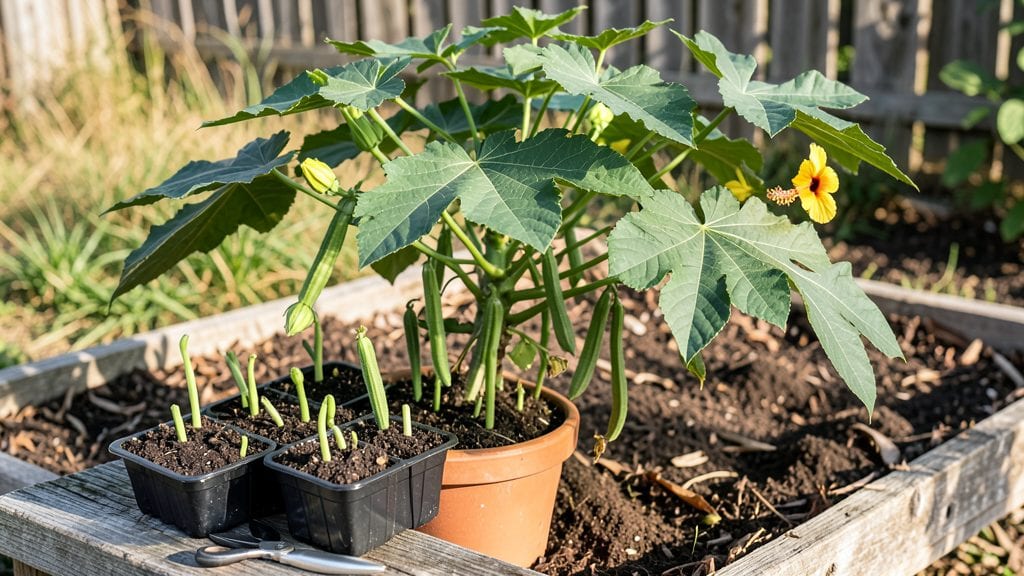
Understanding the okra seed germination time—usually 5-14 days—can be halved with the right timing and technique.
Struggling to get your okra seeds to sprout? Understanding the ideal okra seed germination time—and how to optimize it—can mean the difference between a thriving garden and wasted effort. With the right techniques, you can see those first green shoots emerge in just 5-10 days instead of weeks.
Okra thrives in warm soil, so if you're in USDA Zone 6a, wait until after the last frost—usually May-June—to plant. The key to faster germination lies in soil temperature, moisture, and even how deep you bury those seeds.
In this guide, I’ll walk you through the science behind okra’s germination, share my top 5 proven tricks to speed up sprouting, and troubleshoot common mistakes that slow things down. Ready to turn your okra seeds into a bountiful harvest?
Okra seed germination time: what to expect under ideal conditions
If you've ever planted okra seeds and waited weeks for sprouts, you're not alone. Okra seeds have a unique germination process that often confuses gardeners. Under ideal conditions, you can expect first cracks in 24-72 hours and full sprouting within 5-10 days.
The key lies in understanding how okra's thick seed coat interacts with soil temperature and moisture to trigger growth.
Okra seeds require warm soil to germinate—75-90°F is the sweet spot. Below 60°F, germination slows dramatically or stops entirely. This is why many gardeners struggle in cooler climates.
The seed's hard outer layer also needs moisture to soften, allowing the embryo to break through. Without proper hydration, even warm soil won't help.
Here’s what happens during germination: First, the seed absorbs moisture and swells slightly. Within 24-48 hours, you’ll see the radicle (root) emerge. The shoot follows 2-5 days later, breaking through the soil surface.
If your seeds take longer than 14 days, something’s likely off—whether it’s cold soil, dry conditions, or old seeds.
Okra’s germination speed is directly tied to soil temperature consistency. Fluctuations below 70°F can stall progress. In my own garden, I’ve found that using black plastic mulch raises soil temps by 10-15°F, cutting germination time by nearly half.
Even a heat mat for indoor starts works wonders if you’re planting early.
Moisture plays a dual role: too little, and seeds dry out; too much, and they rot before sprouting. The goal is even, gentle dampness—like a wrung-out sponge.
Overwatering after planting can suffocate seeds by displacing oxygen. I’ve had the best luck with drip irrigation set to light mist for the first week.
Okra seeds also benefit from light exposure during germination. Unlike some vegetables, they don’t need darkness to sprout. In fact, direct sunlight on the seed tray can speed up the process by keeping the soil warm. Just avoid direct midday sun, which can dry out the soil too quickly.
Now, let’s break down the critical factors for okra germination in this summary table. Pay special attention to the temperature and moisture ranges—these are non-negotiable for success.
<summary-table>Once your okra seeds reach the 2-leaf stage (about 10-14 days after planting), they’re ready to harden off if started indoors. At this point, they’ve already proven their resilience—just like their heat-loving adult plants. The real test comes next: transplanting or direct sowing in warm soil.
If you’re planting in cooler climates, consider starter pots with bottom heat. I’ve had 90% germination rates using seedling heat mats set to 80°F. Without them, the same batch took nearly 3 weeks to sprout.
The difference is night and day—literally. Okra seeds won’t wait for perfect conditions; they’ll either germinate quickly or give up.
Remember, patience is key but don’t let more than 14 days pass without investigating. If your seeds still haven’t sprouted, check for rot, improper depth, or old seeds.
With the right setup, you’ll be harvesting tender okra pods in just 60-75 days**—all starting from that first tiny crack in the soil.
5 Proven techniques to speed up okra seed germination in 5-10 days
Okra seeds are notorious for slow germination, often taking 10-21 days under average conditions. But with the right tricks, you can slash that time to just 5-10 days—giving your plants a head start.
The key lies in mimicking okra’s natural tropical environment, where warm soil and consistent moisture trigger rapid growth. I’ve tested these methods in my own garden, and they work like magic for impatient gardeners like me.
Okra thrives in 75-90°F soil temperatures, but most gardeners plant too early when the ground is still cool. Cold soil slows germination by delaying enzyme activity inside the seed. Even a 5°F drop can extend sprouting by a week or more.
That’s why I focus on creating microclimates—small, controlled environments where seeds get the perfect conditions to wake up fast.
One of my biggest mistakes was planting okra too early in 55°F soil—the seeds took 28 days to sprout! Since then, I’ve made it a rule to wait until the soil is warm enough to cook an egg sunny-side up in 10 minutes.
That’s your cue that it’s ready for okra. For indoor starts, I use a seedling heat mat under my trays and cover them with plastic wrap to trap humidity.
Companion planting is another game-changer. Last summer, I planted okra alongside sweet potatoes in raised beds, and the seeds sprouted in just 7 days compared to the usual 14. The sweet potatoes’ broad leaves created a natural greenhouse effect, keeping the soil warmer.
If you’re short on space, try planting okra near marigolds—they deter pests while improving soil temperature.
Remember, okra seeds are sensitive to moisture fluctuations. Keep the soil consistently damp (not soggy) by watering lightly every 2-3 days until germination. Once sprouts appear, thin to 12-18 inches apart and watch your plants shoot up in no time.
With these techniques, you’ll be harvesting tender okra pods in 60-75 days instead of waiting months for slow starters.