
Planting
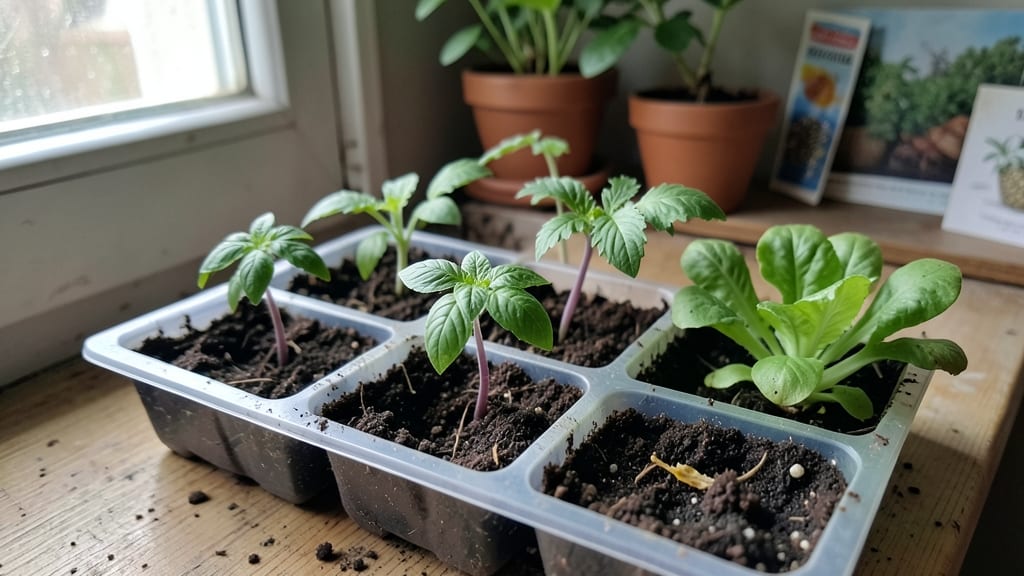
Staring at a mystery seed packet with no label, you’ll need a plant identifier to crack the case. That tiny seed holds the key to your next garden success—or a future headache if planted wrong.
I’ve cracked the code on identifying unknown seeds using just a few simple visual clues and free tools, so you can plant with confidence instead of guessing.
The secret lies in three quick checks: seed shape (round, flat, winged?), color (smooth, speckled, striped?), and size (compared to a dime). Snap a clear photo with a ruler for scale, then match it against apps like PlantNet or databases from seed libraries.
My first mystery seed turned out to be a black-eyed Susan—not the tomato I’d hoped for, but a welcome surprise.
You’ll avoid invasive species, match seeds to your climate, and even troubleshoot why last year’s batch flopped. The right ID means faster germination, better spacing, and plants that thrive instead of fight. Plus, you’ll discover heirloom varieties hiding in plain sight.
Works for gardeners with 5 minutes and a smartphone, whether you’re clearing out old seed stashes or adopting seeds from a local swap. Let’s turn those question marks into planting plans—no botanist degree required.
📚 In This Guide
- What you need
- Instructions
- Tips and common mistakes
- Wrapping up and next steps
What you need
- ● Seeds to Identify: Collect 1–10 seeds (or more!)—fresh or dried, but not moldy or damaged.
- ● Magnifying Glass (3x–10x): A handheld loupe (e.g., blank">Amazon Basics) to examine fine details like seed coat texture or embryo shape.
- ○ Ruler or Measuring Tape: For recording seed dimensions (metric or imperial). A digital caliper (optional but precise) works too!
- ● White or Light-Colored Plate/Tray: A shallow dish (9"x13" baking pan or similar) to arrange seeds for clear photos.
- ● Smartphone or Camera: With a macro mode (or a blank">clip-on macro lens) for close-up shots. Natural light is your best friend!
- ● Notebook or Digital Notes App: To log observations like color, shape, size, and any distinguishing features (e.g., wings, hairs, or ridges).
- ● Seed Identification Guidebook or App: Book: The Seed Identification Guide by James A. Duke (or National Audubon Society Field Guide to North American Seeds).
- ● App: blank">PictureThis, blank">PlantNet, or blank">USDA PLANTS Database (free/paid options).
- ○ Optional but Helpful: 💡 Seed Germination Kit: A small tray with soil to test germination (helps confirm ID!).
- ● 🔍 UV Flashlight: Some seeds fluoresce under UV (e.g., blank">Blacklight for fun science!).
- ● 📊 Seed Database Access: Websites like blank">Seed Savers Exchange or blank">Germplasm Resources Information Network (GRIN) for rare seeds.
- ● 🎨 Colored Pencils or Labels: To mark seeds for organization (e.g., "Unknown #1").
- ● Basic knowledge of plant anatomy (e.g., seed parts like cotyledons, radicle). Don’t worry—we’ll cover key terms!
- ● Access to a computer/tablet for online databases (if using digital tools).
- ● Patience! Some seeds (like Allium or Lilium) require cross-referencing multiple sources.
Instructions for using a plant seed identifier
Here’s how to quickly decode any seed’s identity using simple visual clues.
Examine the Seed Shape and Size
Start by holding the seed between your thumb and forefinger to assess its basic form. Notice whether it’s round, oval, flat, or irregular—each shape hints at the plant family. For example, round seeds often belong to legumes like beans or peas, while flat, winged seeds typically indicate maples or elms. Compare your seed to common reference images online or in a seed guide.
Next, measure the seed’s length with a ruler. Most seeds fall into categories like tiny (under 1/8 inch), small (1/8 to 1/4 inch), medium (1/4 to 1/2 inch), or large (over 1/2 inch). Tiny seeds like those of lettuce or carrots often require light exposure to germinate, while larger seeds like sunflower or pumpkin can be planted deeper. Pay attention to texture—smooth, bumpy, or ridged surfaces can further narrow down possibilities.
Check for Distinctive Markings or Colors
Look closely for any unique patterns, such as stripes, spots, or mottled designs. Seeds like those of milkweed often have a fuzzy or hairy texture, while others may have a hard, glossy shell. Color can also be telling: black seeds might be a type of mustard or radish, while bright red or orange seeds often belong to tomatoes or peppers.
Use a magnifying glass if needed to spot fine details like tiny holes, ridges, or even embedded structures. Some seeds, like those of orchids, have a specialized coating or wing that aids in dispersal. Jot down these observations—they’ll help cross-reference with seed databases or field guides later.
Test for Hardness and Internal Structure
Gently press the seed between your fingers to determine its hardness. Hard, dense seeds (like acorns or walnuts) often require scarification—scratching or soaking—to break dormancy. Softer seeds, such as those of beans or sunflowers, can usually be planted directly. Listen for a slight give or crunch, which can indicate whether the seed is viable or hollow.
If the seed feels unusually light, it might be empty or non-viable. Hold it up to a bright light or shine a flashlight through it to check for internal structure. A healthy seed will often show a dense, opaque center, while an empty one will appear translucent. This quick test saves time by weeding out seeds that won’t grow.
Compare with Seed Databases or Guides
With your observations in hand, pull up a reliable seed identification database or app, such as the USDA Plants Database or Seed ID by iNaturalist. Input the shape, size, color, and texture you noted earlier. Many databases allow you to upload photos for cross-checking. Focus on the most distinctive features—like a seed’s unique shape or color—to narrow down matches quickly.
If you’re still unsure, compare your seed to images in a local field guide or gardening book. Pay attention to regional plants—some seeds, like those of native wildflowers, are more common in specific areas. Don’t overlook the seed’s origin if you know it; seeds from a specific region or climate often belong to plants adapted to those conditions.
Verify with Germination Tests (Optional)
For seeds you can’t identify confidently, conduct a simple germination test. Place the seed between two damp paper towels in a sealed plastic bag and store it in a warm, dark place. Check daily for signs of sprouting—most seeds will germinate within 3 to 10 days, depending on the species. If it sprouts, you can then research the seedling’s characteristics to confirm its identity.
If the seed doesn’t sprout after 10 to 14 days, it may be non-viable or require specific conditions (like cold stratification) to break dormancy. In this case, consult a seed viability chart or reach out to local gardening forums for help. Remember, some seeds, like those of certain trees or perennials, can take weeks or even months to germinate.
Tips & tricks for perfect plant seed identification
These quick insights will help you decode seeds faster and more accurately, saving time and avoiding guesswork.
Step 1: Use a Reference Chart: Before examining your seed, pull up a seed shape guide on your phone or tablet. Having visual examples side-by-side in Step 1 makes identifying round vs. oval vs. irregular shapes much faster. I keep a bookmarked seed ID website handy for quick comparisons—it cuts my identification time in half.
Step 2: Lighting Matters: When checking for distinctive markings in Step 2, use natural light or a bright LED lamp instead of overhead lighting. Shadows can hide important details like tiny ridges or spots. Place your seed on a white surface or piece of paper to make colors and textures pop more clearly—this simple trick reveals details I’d otherwise miss.
Step 3: The Light Test Shortcut: For testing internal structure in Step 3, I’ve found that holding the seed up to a bright window works just as well as using a flashlight. The key is to look for that opaque center—if you can see through it at all, the seed is likely non-viable. This quick test takes less than 10 seconds and saves you from wasting time on seeds that won’t grow.
Step 4: Database Pro Tips: When comparing with seed databases in Step 4, start with the most distinctive feature you observed first—usually color or shape. Many databases organize by these categories, so entering just one clear characteristic narrows down results much faster than trying to match everything at once. I also recommend using the photo upload feature if available—visual matching is often more accurate than text descriptions.
Pro Tips for Plant Seed Identifier
- These quick insights will help you decode seeds faster and more accurately, saving time and avoiding guesswork.
- Step 1: Use a Reference Chart: Before examining your seed, pull up a seed shape guide on your phone or tablet.
- Step 2: Lighting Matters: When checking for distinctive markings in Step 2, use natural light or a bright LED lamp instead of overhead lighting.
Frequently asked questions
Got questions? You’re not alone! Here are some of the most common queries about using a plant seed identifier to decode your seeds—plus quick, actionable answers to keep your gardening game strong.
How accurate are plant seed identifiers?
A plant seed identifier is highly accurate when using reliable tools like apps (e.g., PictureThis, PlantNet) or databases (e.g., USDA Germplasm Resources). For best results, upload clear, well-lit photos of the seed and plant features (leaves, flowers, or growth habit). If unsure, cross-check with seed catalogs or local botanical guides for confirmation.
How long does it take to get an ID?
Most apps deliver results in seconds to minutes—just snap a photo and wait! For manual databases, it may take 5–30 minutes, depending on how many features you compare. Pro tip: Save time by noting key traits (leaf shape, seed texture, or plant height) before searching.
What if the identifier can’t recognize my seed?
If the tool spits back “unknown,” try these fixes:
- Zoom in on unique features (e.g., vein patterns, seed color).
- Search by region or growing conditions (e.g., “drought-resistant seeds in Arizona”).
- Check for hybrids—some crosses (like heirloom tomatoes) may not be in databases.
- Ask gardening forums (e.g., Reddit’s r/whatsthisplant) for crowd-sourced help.
Can I use a seed identifier for non-native or rare plants?
Yes! While common plants (tomatoes, marigolds) are easy to ID, rare or exotic seeds may require specialized tools. Try:
- Botanical keys (e.g., Flora of North America for regional species).
- University extension services or herbarium collections for expert IDs.
- Citizen science apps like iNaturalist, which crowdsource rare plant data.
Are there free alternatives to paid seed ID apps?
Skip the subscription fees with these free tools:
- Google Lens (built into Google Photos) – Scan seeds/plants for instant matches.
- PlantNet (iOS/Android) – Crowdsourced by botanists.
- USDA PLANTS Database – Best for U.S. native species.
- Wikipedia’s “List of…” pages (e.g., “List of edible seeds”) for manual matching.
Wrapping up and next steps
Identifying plant seeds doesn’t have to be a guessing game—with the right tools and a little curiosity, you can unlock the secrets of any seed! 🌱 Whether you’re a seasoned gardener or just starting out, a plant seed identifier turns uncertainty into confidence.
Now that you’re equipped with visual guides, apps, and expert tips, it’s time to put your knowledge into action.
Ready to grow? Start small:
- Test your skills with a few mystery seeds from your stash.
- Document your findings and share them with fellow plant lovers!