Trees
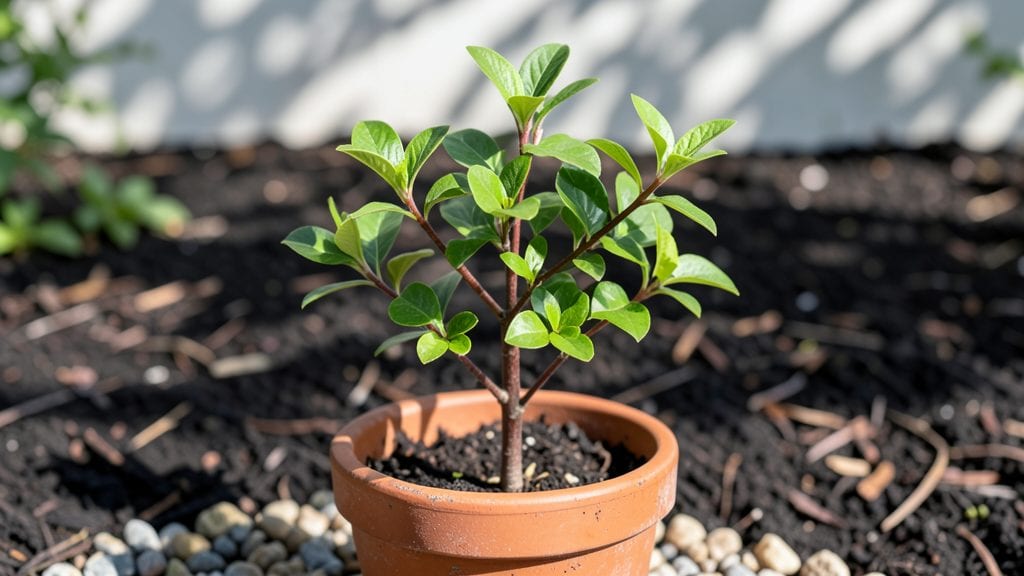
The identification of a redbud seedling begins with those telltale heart-shaped leaves and smooth, gray bark—I’ve spent years spotting these early signs in my own yard, and the key is knowing what to look for before the tree matures.
The leaves are the first clue—rounder at the base and tapering to a point, with a slightly fuzzy underside that feels almost velvet-like when you run your fingers over them.
Redbud seedlings also have a distinctive growth pattern: the bark stays smooth and silvery-gray even as the plant grows, while other seedlings like hawthorn develop rougher textures or thorns early on.
Dogwood seedlings, another common look-alike, have opposite branching and more oval-shaped leaves that don't have that classic heart shape. Pay attention to these details—they're what separates a redbud from its imposters.
Once you confirm those heart-shaped leaves and smooth bark, you'll know you're dealing with a true redbud. This matters because redbuds thrive in full sun to partial shade and develop those stunning pink blooms in early spring—something you won't get if you've mistakenly planted a look-alike.
The sooner you spot these seedlings, the sooner you can give them the right growing conditions for a showstopping tree.
If you're still unsure, compare your seedling side by side with a mature redbud or check the leaf arrangement—redbuds have alternate leaves, not the opposite pattern of dogwoods. With practice, you'll spot them in no time, and your yard will thank you with bursts of color every spring.
The confidence comes from knowing exactly what you're looking at from day one.
Why Redbud Seedlings Confuse Beginners
Identifying redbud seedlings can feel like solving a botanical puzzle—especially when they mimic other native trees. The mix-ups happen for three key reasons, rooted in biology, growth patterns, and environmental factors. Understanding these causes helps you spot the subtle (but critical) differences that set redbuds apart.
Young redbud seedlings (Cercis canadensis) often sport leaves that look suspiciously like those of hickory, ash, or even boxelder trees. Here’s why:
- Simple vs. compound confusion: Redbud leaves are simple (single, undivided blades), but their heart-shaped or oval forms can resemble the leaflets of compound-leaved trees (like ash or hickory) when viewed from a distance. Actionable tip: Look for a single central vein with side veins fanning out symmetrically—redbuds lack the multiple leaflets of compound leaves.
- Color and texture mimicry: New growth often emerges bronze-red or deep green, similar to boxelder’s purple-tinged leaves. Pro tip: Rub a leaf between your fingers—redbud leaves feel smooth and slightly waxy, while boxelder leaves have a rougher, sandpaper-like texture.
- Leaf arrangement tricks: Redbud leaves grow alternately along the stem (one leaf per node), but their staggered pattern can blur into the opposite arrangement of ash or maple seedlings if stems are crowded. Check this: Trace the stem upward—redbud leaves spiral counterclockwise (a classic trait of the Fabaceae family).
Redbud bark is a master of disguise, shifting from smooth to rough as the tree matures. This transformation is why seedlings often get overlooked:
- Juvenile vs. mature bark: Young redbuds have silvery-gray, peeling bark that resembles sycamore or birch seedlings. As they age, the bark develops furrowed ridges and darkens—features that mature redbuds share with hackberry or even some cherry trees. Key detail: Look for horizontal lenticels (tiny raised pores) on juvenile bark, a dead giveaway for redbud.
- Environmental stress factors: Drought or poor soil can accelerate bark roughening in seedlings, making them look older (and thus harder to ID). Test this: Scratch the bark—redbud’s inner layer is light tan or greenish, while sycamore’s is white and chalky.
- Root collar confusion: The base of a redbud seedling often has a flared, multi-lobed root collar that resembles hawthorn or crabapple roots. Distinguishing trait: Redbud’s root collar lacks the thorn scars common in hawthorn.
Redbud seedlings don’t grow in isolation—they adapt to their surroundings, making them harder to spot:
- Low, sprawling form: Unlike towering oak seedlings, redbuds often grow prostrate or in dense thickets, with stems hugging the ground. This habit mimics brambles or wild grapevines. Look for: Tiny purple-pink flowers emerging before leaves in early spring—a redbud’s signature trait.
- Variable leaf size: Seedling leaves can range from 1–3 inches long, depending on sunlight and moisture. Smaller leaves (<1 inch) might resemble wild cherry or serviceberry seedlings. Measure this: Compare leaf width to length—redbuds are almost as wide as they are long.
- Seed pod deception: Mature redbuds produce flat, pea-like seed pods that split open to reveal bright red seeds. Seedlings near parent trees may have lingering pods that look like locust or mesquite debris. Clue: Redbud pods are 1–2 inches long and flattened like a butterfly wing.
Remember: The best way to avoid confusion is to examine all three clues together—leaves, bark, and growth habit. Redbuds are consistent in their quirks once you know where to look!
Quick Fixes for Common Redbud Seedling Confusion
Confusing a redbud seedling with other trees? Don’t worry—these practical solutions will help you spot the key differences and avoid mix-ups. Below, we’ve mapped common identification challenges to easy fixes, plus prevention tips to keep your spotting skills sharp.
Cause: Young redbuds (Cercis canadensis) share traits with dogwood, hawthorn, or even cherry seedlings, making them hard to distinguish at first glance. Fix:
- Check the leaves first 🍃: Redbud leaves are heart-shaped with a slightly notched tip, while dogwood leaves are oval with smooth edges. Hold a seedling up to natural light—redbud leaves often have a slightly velvety texture when young.
- Compare bark patterns 🌲: Scratch or peel back a small section of bark. Redbud bark is smooth and grayish when young, but it develops a scaly, patchy texture with age. Dogwood bark, however, stays smoother and more uniform.
- Observe the growth habit 🌿: Redbud seedlings often sprout in clusters or "patches" along fences or forest edges, while dogwoods tend to grow more upright from the start.
Prevention Tip: 💡 Carry a small field guide or use a phone app (like iNaturalist or LeafSnap) to cross-reference leaves and bark. Snap a photo and compare it to known redbud traits—this builds muscle memory over time!
Cause: Redbud leaves turn vibrant pink or purple in spring, but if you spot them in winter or fall, their lack of color can throw you off. Fix:
- Look for bud shapes 🌱: In late winter, redbud buds are plump and rounded, while hawthorn buds are pointier. Press gently—redbud buds often ooze a sticky sap when disturbed.
- Spot the flowers (if available) 🌸: If flowers are present, redbuds bloom before leaves appear in early spring, with clusters of pink or purple blossoms. No flowers? Check for the telltale heart-shaped leaves emerging soon after.
- Examine the seed pods 🌰: In summer or fall, redbuds develop flat, brown seed pods that resemble flattened beans. Hawthorns have smaller, spiky fruit clusters—this is a dead giveaway!
Prevention Tip: ✨ Plan your spotting trips for early spring (March–April) when redbuds are at their most distinctive with flowers and fresh leaves. If you’re in a region with mild winters, late winter is also ideal for bud inspection.
Cause: Invasive trees like Cercis siliquastrum (Judas tree) or ornamental hybrids can mimic redbuds but have subtle differences. Fix:
- Leaf undersides 🌿: Native redbuds have hairless leaf undersides, while Judas trees often have fine, fuzzy hairs. Run your finger along the underside—smooth = native redbud.
- Flower clusters 🌸: Native redbud flowers grow in dense, rounded clusters along branches. Judas trees have more spaced-out, smaller flowers.
- Root system 🌱: If you’re transplanting, dig carefully. Redbuds have a shallow, wide root system, while invasives may have deeper, more aggressive roots.
Prevention Tip: 🎯 Always note your location. Native redbuds thrive in the eastern U.S., while Judas trees are common in urban landscapes. If you’re unsure, consult a local arboretum or university extension service for regional comparisons.
- Use a magnifying glass 🔍: Examining leaf veins or bark texture up close reveals hidden clues (e.g., redbud leaves have prominent veins that fork near the edges). - Compare with mature trees 🌳: If possible, find a nearby adult redbud and compare its leaves, bark, and flowers to your seedling.
Size matters—juvenile traits often mimic adults! - Test the soil 🌍: Redbuds prefer well-drained, slightly acidic soil. If your seedling is in rocky or alkaline soil, it’s less likely to be a true redbud.
Final Reminder: 🌟 The more you practice, the easier it gets! Grab a notebook and jot down key traits (leaf shape, bark, growth habit) each time you spot a seedling. Over time, your "redbud radar" will become unstoppable. Happy spotting!
Frequently asked questions
How can I tell if a seedling is a redbud vs. a dogwood?
Redbud seedlings have heart-shaped leaves with a slightly fuzzy underside, while dogwoods have oval, smooth-edged leaves arranged opposite each other along the stem. Check the bark too—redbud bark stays smooth and silvery-gray, while dogwood bark remains smoother and more uniform as it matures.
What’s the best time of year to identify redbud seedlings?
Early spring (March–April) is ideal! That’s when redbuds bloom with pink-purple flowers before their leaves emerge. If you’re spotting in winter, look for plump, rounded buds that ooze sticky sap when pressed—unlike hawthorn buds, which are pointier.
Can I use a phone app to confirm my redbud seedling?
Apps like iNaturalist or LeafSnap let you upload photos and compare traits. Snap close-ups of leaves (focus on the heart shape and veins), bark, and growth habit for instant verification. Just avoid relying solely on color—juvenile leaves can vary widely.
What if my seedling has fuzzy leaves—is it still a redbud?
Probably not! Native redbuds have smooth, hairless leaf undersides. Fuzzy leaves suggest it might be a Judas tree (Cercis siliquastrum) or another hybrid. Run your finger along the underside—if it feels rough or downy, it’s not a true redbud.
How do I know if a seedling is healthy enough to transplant?
Look for vibrant green leaves, no visible pests, and a shallow, wide root system. Avoid seedlings with yellowing leaves or signs of stress (like curled edges). Transplant in early spring or fall, and water thoroughly after moving to help it establish.