
Flowers
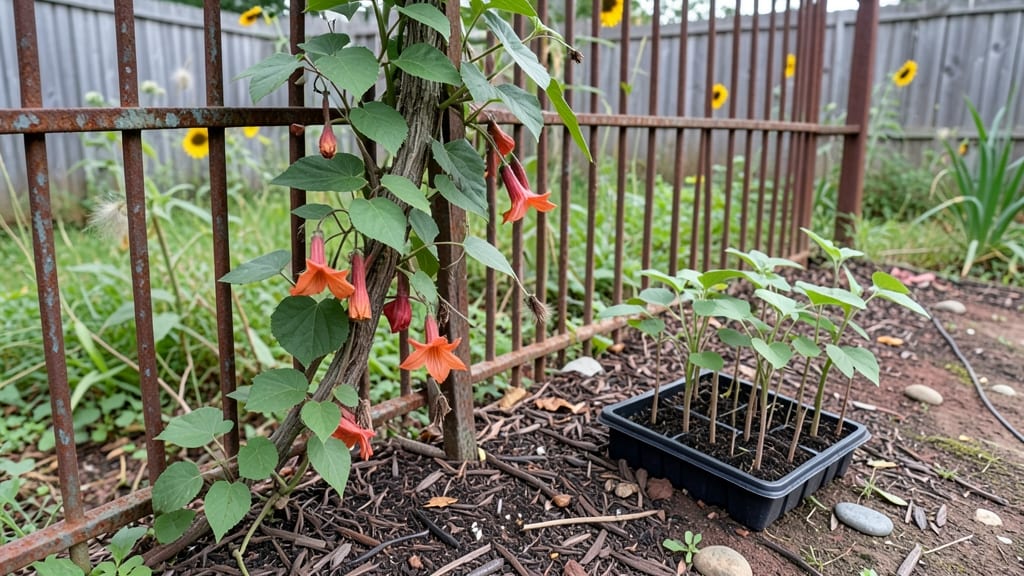
Growing trumpet flowers from seeds delivers bold, tropical blooms in just a few months—if you prep them right. 🌿 I’ve learned the hard way that skipping the cold stratification step means waiting twice as long for those showstopping orange trumpets to appear.
The key lies in mimicking their natural dormancy cycle before planting.
Start with fresh seeds in a damp paper towel inside a sealed bag, then refrigerate for 4-6 weeks. This breaks their dormancy so they sprout faster once planted in well-draining soil with morning sun.
Most gardeners overlook this step, leading to slow germination or weak seedlings—don’t let that be you.
Within 8-10 weeks of proper prep, you’ll see those first glossy leaves unfurl, followed by vibrant blooms by midsummer. The flowers attract hummingbirds and thrive in heat, making them a standout in any garden bed or container. Here’s how to avoid the common pitfalls that trip up even experienced growers.
This method works equally well for in-ground planting or container gardens, though containers need slightly more frequent watering. Whether you’re a first-timer or refining your technique, these steps guarantee stronger, faster-growing trumpet flowers that outperform store-bought transplants.
The Hidden Reasons Seeds Fail
Trumpet flower seeds (Campsis radicans) are resilient, but even the hardiest can struggle to sprout or thrive. Understanding the root causes—literally—helps you troubleshoot with precision. Here’s why germination and growth might go awry, broken down into actionable science-backed explanations.
Fresh trumpet flower seeds have a higher germination rate (often 60–80%) within their first year, but viability drops sharply after 12–18 months. If your seeds are older or stored improperly (e.g., in damp, warm conditions), their internal structures degrade.
Why it happens:
- Enzyme breakdown: Seeds rely on enzymes like α-amylase to convert stored starches into sugars for energy. Over time, these enzymes degrade, starving the embryo.
- Membrane leakage: The seed coat’s semi-permeable layers lose integrity, causing osmotic imbalance—the embryo can’t absorb water efficiently.
- Fungal invasion: Stored seeds attract mold (e.g., Aspergillus), which consumes nutrients and releases toxins like afatoxins, killing the embryo before germination.
Actionable fix:
- Test viability: Cut open 2–3 seeds—look for a plump, white embryo (not shriveled or discolored). If >50% fail, source fresh seeds.
- Stratify or scarify: Older seeds may need nickel scarification (lightly sanding the coat) or cold stratification (40°F for 4–6 weeks) to mimic natural conditions.
Trumpet flowers are warm-season climbers, but their seeds need specific temperature cues to break dormancy. Too hot or too cold can stall germination.
Why it happens:
- Below 55°F (13°C): Metabolic activity halts. The seed’s gibberellin hormones (which trigger root growth) remain dormant, and ethylene gas (a stress signal) isn’t produced.
- Above 90°F (32°C): Enzymes denature, and the seed’s respiration rate spikes, burning through limited energy reserves without sprouting.
- Fluctuating temps: Daily swings confuse the seed’s internal clock, delaying the hydrolytic phase (when water activates enzymes).
Actionable fix:
- Use a heat mat: Maintain 70–80°F (21–27°C) soil temperature for consistent germination.
- Bottom heat + humidity: Place seeds in a clear plastic bag with a damp paper towel and a seedling heat mat (65–75°F).
- Timing matters: Sow seeds indoors 8–10 weeks before last frost or directly after soil warms (60°F+).
Trumpet flower seeds are not drought-tolerant during germination but also rot if overwatered. The balance is delicate.
Why it happens:
- Underwatering: Seeds need constant moisture to swell and activate enzymes. Without it, the radicle (first root) fails to emerge due to desiccation stress.
- Overwatering: Excess water displaces oxygen, leading to anaerobic conditions. The seed suffocates, and ethanol (a byproduct of fermentation) builds up, poisoning the embryo.
- Poor drainage: Compacted or clay soil traps water, creating hypoxic zones where roots can’t develop.
Actionable fix:
- Mist, don’t drown: Use a spray bottle to keep soil evenly moist (like a wrung-out sponge). Avoid standing water.
- Well-draining mix: Combine 50% peat moss, 30% perlite, and 20% vermiculite for airflow.
- Clear lid trick: Cover trays with plastic wrap (poke holes for airflow) to retain humidity without soggy soil.
Trumpet flower seeds are not light-dependent for germination (they’re skotoblasts), but post-germination light needs are critical.
Why it happens:
- Too little light: Seedlings stretch (etiolation) toward any light source, weakening stems and causing leggy, floppy growth prone to snapping.
- Too much direct sun: Young seedlings’ chlorophyll production can’t handle intense UV, leading to sunburn (white/yellow patches) or oxidative stress.
- Artificial light missteps: Grow lights too far away (e.g., >12 inches) provide insufficient blue spectrum, stunting growth.
Actionable fix:
- Indirect bright light: Place trays near east-facing windows or under LED grow lights (12–14 hours/day, 6–8 inches away).
- Gradual hardening: After 2 weeks, expose seedlings to 2–3 hours of direct sun daily, increasing by 1 hour weekly.
- Reflective surfaces: Use white trays or aluminum foil under containers to maximize light reflection.
Fungal infections and insects can sabotage germination before you even notice.
Why it happens:
- Fungal invaders: Pythium or Phytophthora thrive in moist conditions, causing damping-off (seedlings collapse at soil level). Symptoms include mushy stems and gray mold.
- Insect damage: Seed corn maggots or fungus gnats lay eggs in soil, and their larvae eat seedlings from the inside out.
- Bacterial soft rot: Erwinia bacteria enter through microscopic wounds (e.g., from rough handling), turning seeds into a smelly, mushy pulp.
Actionable fix:
- Sterilize soil: Mix 1 part hydrogen peroxide (3%) with 10 parts water, soak soil for 10 minutes, then drain.
- Neem oil spray: Apply 1 tsp neem oil + 1 tsp mild soap per quart of water to deter pests before sowing.
- Row covers: Use fine mesh fabric over trays to block fungus gnats while allowing light.
Trumpet flowers prefer slightly acidic to neutral soil (pH 6.0–7.0), but imbalances can block nutrient uptake.
Why it happens:
- Too acidic (pH <5.5): Aluminum and manganese toxicity occurs, stunting root growth. The seed can’t absorb phosphorus (critical for ATP energy).
- Too alkaline (pH >7.5): Calcium and iron become unavailable, causing chlorosis (yellow leaves) and weak stems.
- Compacted soil: Lack of aeration reduces oxygen diffusion, slowing cellular respiration.
Actionable fix:
- Test your soil: Use a DIY pH kit or send a sample to a local extension office.
- Amend as needed:
- For acidity: Mix in crushed limestone (to raise pH).
- For alkalinity: Add sulfur or peat moss (to lower pH).
- Loosen soil: Add compost or coconut coir to improve structure before planting.
Some trumpet flower seeds sold as "heirloom" or "hybrid" may be sterile, F1 hybrids, or mislabeled.
Why it happens:
- F1 hybrids: First-generation hybrids (e.g., disease-resistant varieties) often don’t produce viable seeds because their genes are heterozygous.
- Misidentified species: Seeds labeled as Campsis radicans might actually be non-viable crosses (e.g., with Bignonia).
- Self-pollination failure: Trumpet flowers are self-incompatible; if grown from seed, they may not true to type (color/shape variations).
Actionable fix:
- Buy from reputable sellers: Look for open-pollinated (OP) seeds from specialists like Southern Exposure Seed Exchange.
- Cross-pollinate manually: If growing from cuttings isn’t an option, transfer pollen with a paintbrush between flowers.
- Grow from cuttings: If seeds fail, root semi-hardwood cuttings in spring for guaranteed plants.
Fixing Common Trumpet Flower Growing Issues
Growing trumpet flowers (like Allamanda or Campsis radicans) from seeds can be rewarding, but a few common challenges may slow down your progress. Whether it’s slow germination, weak seedlings, or pests, these practical solutions will help you nurture healthy blooms in no time. 🌱✨
If your trumpet flower seeds aren’t sprouting within 2–4 weeks, they might need a little extra encouragement.
✅ Fix It:
- Pre-soak seeds (🍳) – Place them in a damp paper towel for 24 hours to soften the outer shell.
- Use bottom heat (🔥) – Place the seed tray on a heating mat (70–75°F) to mimic tropical conditions.
- Try scarification (🔪) – Gently sand the seed coat with fine-grit sandpaper to help water penetrate.
- Check moisture levels (💧) – Keep soil consistently damp (not soggy) to prevent drying out.
💡 Prevention Tip: Store seeds in a cool, dry place before planting to maintain viability.
If your trumpet flower seedlings stretch tall and weak, they’re likely not getting enough light.
✅ Fix It:
- Move to brighter light (☀️) – Place near a south-facing window or under grow lights (12–14 hours/day).
- Thin seedlings (🌱) – If overcrowded, transplant the healthiest ones to larger pots (3–4 inches deep).
- Use a balanced fertilizer (💪) – Once true leaves appear, feed with a diluted 10-10-10 fertilizer every 2 weeks.
💡 Prevention Tip: Start seeds in small pots (2–3 inches) to avoid overcrowding early on.
Aphids, spider mites, or fungal gnats can attack young trumpet flower seedlings.
✅ Fix It:
- Spray with neem oil (🌿) – Mix 1 tsp neem oil with 1 quart water and spray on affected leaves.
- Introduce beneficial insects (🐞) – Ladybugs or lacewings eat aphids naturally.
- Improve airflow (💨) – Space plants apart to reduce humidity-related pests.
💡 Prevention Tip: Inspect new plants before bringing them indoors to avoid introducing pests.
If your trumpet flower seeds develop fuzzy mold or black spots, fungal growth is likely the culprit.
✅ Fix It:
- Reduce watering (💧) – Let the top inch of soil dry out between waterings.
- Apply fungicide (🛡️) – Use a copper-based spray or baking soda solution (1 tsp baking soda + 1 quart water).
- Repot affected seedlings (🌱) – Remove moldy soil and replant in fresh, sterile potting mix.
💡 Prevention Tip: Sterilize tools and containers with rubbing alcohol before use.
If seedlings sprout but grow sluggishly, they may need better nutrients or care.
✅ Fix It:
- Transplant to nutrient-rich soil (🌿) – Use a well-draining mix with compost or worm castings.
- Increase sunlight gradually (☀️) – Harden off seedlings by moving them outside for short periods.
- Avoid overwatering (🚫💦) – Trumpet flowers dislike soggy roots; water only when the topsoil is dry.
💡 Prevention Tip: Keep seedlings in a warm (65–75°F) environment to encourage steady growth.
With these solutions, your trumpet flower seeds should thrive and reward you with vibrant blooms in months! 🌸💐 Whether you’re troubleshooting germination or pest issues, these steps will keep your garden flourishing.
Frequently asked questions about growing trumpet flowers
How long does it take for trumpet flower seeds to germinate?
With proper cold stratification (4-6 weeks in the fridge), trumpet flower seeds typically sprout within 1-3 weeks after planting. Without stratification, germination can take 4-8 weeks or longer. Keep soil consistently moist (not soggy) and maintain 70-80°F for best results.
Can I grow trumpet flowers from seeds in containers?
Trumpet flowers thrive in containers as long as you use a well-draining mix and provide support for their vining growth. Choose pots at least 12 inches deep and place them in full sun. Container-grown trumpet flowers may bloom slightly later but produce just as many vibrant flowers.
What's the best way to store trumpet flower seeds for next year?
Store seeds in a cool, dry place (around 40°F) in an airtight container with a desiccant packet. They remain viable for 12-18 months under these conditions. For best results, label seeds with the date and test viability before planting by checking for a plump, white embryo when cut open.
Why aren't my trumpet flower seedlings growing straight?
Leggy seedlings usually mean insufficient light. Move them to a sunnier location or under grow lights (12-14 hours/day). If overcrowded, thin seedlings to 3-4 inches apart and transplant the healthiest ones. Avoid fertilizing until true leaves appear to prevent further stretching.
Do trumpet flowers self-seed in gardens?
Yes, trumpet flowers often self-seed prolifically! The seeds can spread 10-20 feet from the parent plant, sometimes creating unwanted volunteers. If you want to control spread, deadhead spent blooms before seeds form or collect seeds for intentional planting.