Flowers
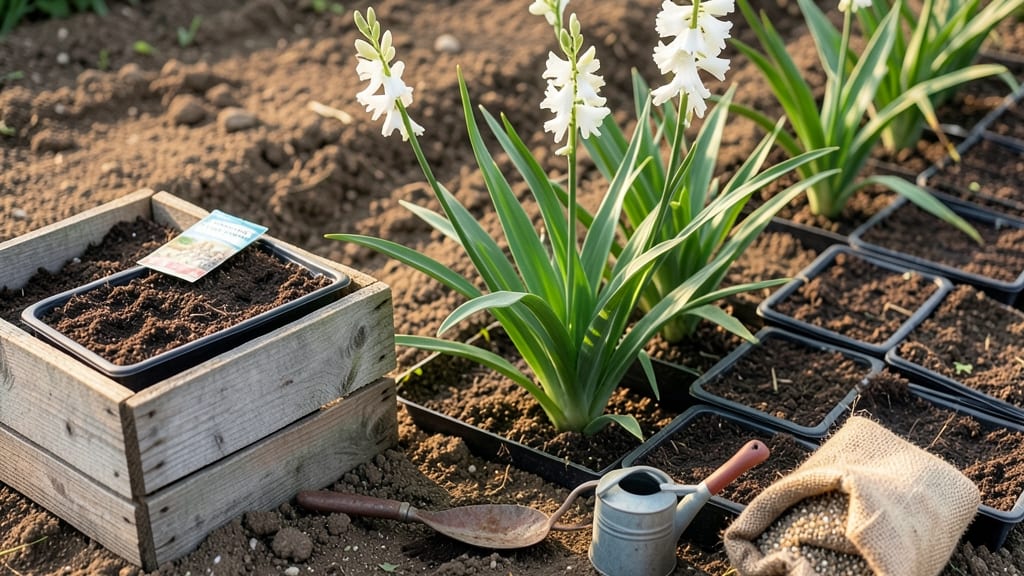
Growing tuberose flower seeds unlocks that intoxicating nighttime fragrance in your garden—something store-bought plants can’t match. 🌿 I’ve grown them from seed three times now, and each batch brings back memories of moonlit evenings filled with their sweet, jasmine-like scent.
The key isn’t just patience; it’s replicating their tropical roots’ exact conditions here at home.
You’ll need a warm spot (70–85°F), moist but well-draining soil, and a lot of sunlight—think 6+ hours daily. Tuberose seeds are tiny and slow to sprout, so start them indoors 8–10 weeks before last frost in small pots.
The real secret? Keeping them consistently damp without drowning them; these seeds need humidity to wake up, but too much water rots them before they even think about growing.
By month three, you’ll have tall, slender stems reaching for the sky, each topped with clusters of waxy white blooms that perfume the air at dusk. The plants climb aggressively, so provide 5–6 foot trellises early—they’ll need them by early summer.
Prune spent blooms to encourage more flowers, and watch as your garden becomes the talk of the neighborhood.
They thrive in zones 9–11, but with winter protection (mulch or containers), you can grow them almost anywhere. Just remember: tuberose seeds are temperamental, but once they bloom, they’re worth every bit of care. Let’s get those tiny seeds sprouting!
📚 In This Guide
- What you need
- Instructions
- Tips and common mistakes
- Wrapping up and next steps
What you need
- ● Tuberose flower seeds: 5–10 seeds (choose Polianthes tuberosa varieties for best results).
- ● Seed-starting pots: 2–4 small pots (3–4 inches deep) with drainage holes.
- ● Well-draining potting mix: 1–2 gallons of a lightweight, organic mix (e.g., 60% peat moss, 30% perlite, 10% compost).
- ● Grow lights or sunny windowsill: 6+ hours of indirect sunlight daily (or a full-spectrum LED grow light for 12–14 hours).
- ● Spray bottle: For gentle watering (avoid soaking seeds!).
- ● Humidity dome or plastic wrap: To retain moisture while seeds germinate.
- ● Fertilizer: Balanced liquid fertilizer (5-5-5 or 10-10-10, diluted to half-strength).
- ○ Thermometer (optional but helpful): Ideal germination temp: 70–75°F (21–24°C).
- ● A seedling heat mat (if your home runs cool).
- ● Misting fan for airflow (prevents fungal issues).
- ● Larger containers (5+ gallon pots) for transplanting after 3–4 months.
- ● Epsom salt (1 tsp/gallon of water) for magnesium boost during flowering.
- ● Fragrance-free gloves (tuberose pollen can be irritating for sensitive skin!).
Step-by-Step instructions for growing tuberose from seeds
Here's how to transform delicate seeds into fragrant, moonlit blooms—patient work that rewards with intoxicating perfume.
🌱 Step 1: Pre-Soak Seeds for Faster Germination
Tuberose seeds have a tough outer coating that slows germination. Fill a small bowl with lukewarm water and add the seeds. Let them soak for 24-48 hours—this softens the shell and kickstarts the process. I stir them gently once or twice daily so they don’t stick together.
After soaking, drain the water and lay the seeds on a paper towel. Fold the towel to create a damp, snug wrap. Place it in a sealed plastic bag and store in a warm spot (75-80°F) for 3-5 days. You’ll know they’re ready when tiny white roots sprout from the bottom.
🪴 Step 2: Plant in Well-Draining, Sterile Mix
Fill small pots (3-4 inches deep) with a mix of 50% potting soil and 50% perlite—this prevents rot, which tuberoses hate. Press the soil down lightly to remove air pockets but keep it loose enough for roots to penetrate. Plant the pre-sprouted seeds ½ inch deep, spacing them 2 inches apart.
Water gently until the soil is moist but not soggy. Tuberoses despise wet feet. Cover the pots with clear plastic wrap to retain humidity, then place them in a warm, bright spot with indirect light. Avoid direct sun at this stage—it can scorch the tender seedlings.
☀️ Step 3: Transition to Bright, Indirect Light Gradually
Once seedlings emerge (7-14 days), remove the plastic wrap and move them to a location with bright, indirect light for 4-6 hours daily. I start with a south-facing window but pull them back if leaves yellow—this signals too much sun. After 2 weeks, gradually increase light exposure to 6-8 hours.
Rotate the pots a quarter turn weekly so seedlings grow straight instead of leaning toward the light. You’ll see the first true leaves (not the initial seed leaves) emerge in 3-4 weeks. These will be long, narrow, and dark green—your cue to start fertilizing lightly with a balanced 10-10-10 solution.
⏰ Step 4: Harden Off and Prepare for Outdoor Transition
When seedlings reach 4-6 inches tall and have 4-5 true leaves, it’s time to harden them off. Place the pots outside in a sheltered spot for 1 hour the first day, increasing time by 1 hour daily until they can handle full sun for 6+ hours.
Tuberoses thrive in full sun but need time to adjust. Watch for leaves that droop or wilt in the afternoon heat—this means they need shade. Once hardened off, transplant them into the garden or larger containers (6-inch pots) with fresh, well-draining soil.
💧 Step 5: Maintain Moisture and Encourage Blooming
Water tuberoses at the base, keeping the soil evenly moist but never waterlogged. The scent intensifies when blooms open in the evening, so avoid overhead watering—wet flowers lose their fragrance. Feed every 4-6 weeks with a phosphorus-rich fertilizer (like 5-10-5) to promote flowering.
Deadhead spent blooms promptly to redirect energy into new growth. In cooler climates, tuberoses go dormant in winter—reduce watering and let the foliage die back naturally. With patience, your first fragrant blooms will appear in 3-4 months, filling the air with their signature intoxicating perfume.
Tips & tricks for growing tuberose from seeds
Patience and precision are your best friends when nurturing tuberose seeds into fragrant blooms. Here's what I've learned to maximize success with these delicate plants.
The Soak Factor: During the 24-48 hour soak in Step 1, I use a glass bowl rather than plastic—it lets me easily monitor water temperature and seed condition. The key is maintaining consistent lukewarm water (around 80°F) throughout the soaking period. I've found that adding a drop of mild dish soap to the water helps prevent seed sticking without harming germination. After soaking, I press the paper towel wrap just firmly enough to hold moisture—too tight and you risk suffocating the seeds before sprouting.
Light Transition Strategy: In Step 3, that gradual light increase is crucial. I start with a sheer curtain over the south-facing window to filter light during the initial 4-6 hours. After the 2-week mark when increasing to 6-8 hours, I position seedlings about 12 inches from the window to prevent leaf burn. The yellowing leaves warning sign is your body telling you to back off—don't ignore it! I've seen seedlings recover from mild sun exposure, but severe scorching can't be reversed.
Harden Off Smartly: For the hardening process in Step 4, I place pots on a shaded patio or under a tree rather than full sun. The gradual 1-hour daily increase works best if you start in the morning—this gives plants time to adjust before evening heat. I've had success using a small fan on low setting near the pots during hardening to simulate wind conditions they'll face outdoors. Watch for leaves that perk up after a few hours—this indicates successful acclimation.
Bloom Optimization: In Step 5, the 4-6 week fertilization schedule is perfect, but I've found that tuberoses respond even better to a slightly different approach. After the first bloom cycle, I switch to a higher-phosphorus fertilizer (like 10-20-10) to encourage more frequent flowering. The evening scent intensification is real—watering in the morning gives flowers time to dry before nightfall, preserving that intoxicating perfume.
Pro Tips for Tuberose Flower Seeds
- Patience and precision are your best friends when nurturing tuberose seeds into fragrant blooms.
- The Soak Factor: During the 24-48 hour soak in Step 1, I use a glass bowl rather than plastic—it lets me easily monitor water temperature and seed condition.
- Light Transition Strategy: In Step 3, that gradual light increase is crucial.
Frequently asked questions
Got questions about growing tuberose flower seeds? You’re not alone! Here are answers to the most common queries to help you cultivate these fragrant blooms with confidence.
How long does it take for tuberose seeds to germinate?
Tuberose seeds typically germinate in 14–21 days under ideal conditions (warmth, moisture, and indirect light). For faster results, soak seeds in lukewarm water for 24 hours before planting. Patience is key—some varieties may take up to 30 days to sprout!
Can I grow tuberose flowers from seeds indoors?
Start seeds indoors 8–10 weeks before your last frost using seed trays with well-draining soil. Place them near a sunny window or under grow lights (12+ hours/day). Once seedlings are 3–4 inches tall, transplant them outdoors after the soil warms up.
Why aren’t my tuberose seeds sprouting?
Common culprits include cold soil (tuberoses love warmth, ideally 70–80°F), dampness (overwatering can rot seeds), or low light. Try these fixes:
- Use a heat mat for trays.
- Cover seeds lightly with soil (¼ inch max).
- Move to a brighter spot or add grow lights.
Are tuberose flowers easy to grow from seeds?
While rewarding, tuberose seeds are trickier than cuttings—germination rates can be low (20–50%). For faster results, consider buying rooted cuttings or young plants from nurseries. If starting from seed, prioritize fresh seeds and use a seed-starting gel to boost success.
How do I care for tuberose seedlings once they sprout?
Once sprouted, keep seedlings in bright, indirect light and water gently (let soil dry slightly between waterings). Fertilize lightly with a balanced liquid fertilizer (diluted to half-strength) every 2–3 weeks. Harden off seedlings by gradually exposing them to outdoor conditions for 1–2 weeks before transplanting.
Pro Tip:
Tuberose seeds thrive in warm climates (Zones 9–11). If you’re in a cooler zone, grow them as annuals or overwinter pots indoors with minimal water. Their intoxicating fragrance makes the effort worth it!
Wrapping up and next steps
Growing tuberose flower seeds is a rewarding journey that brings exotic beauty and intoxicating fragrance to your garden in just three months! 🌸 With the right soil, sunlight, and care, you’ll enjoy velvety blooms that perfume the air like a tropical escape.
Whether you’re a seasoned gardener or a beginner, these fragrant flowers are well worth the effort.
Ready to transform your space? Start by ordering your seeds today and prepare your growing area—soon, you’ll be harvesting those dreamy, candle-like blossoms! 🌱✨