
Vegetables
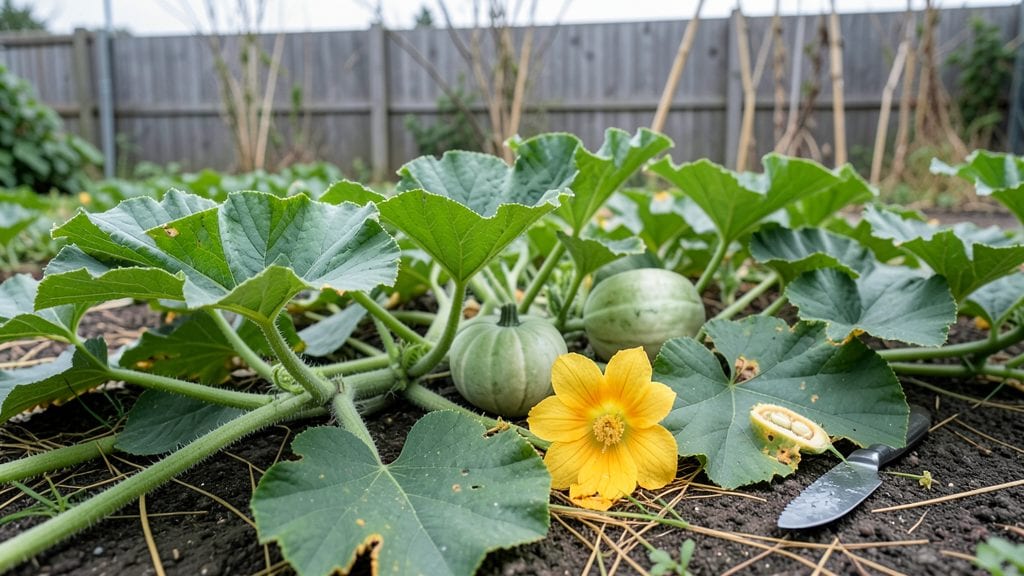
Pumpkin seeds appear green because chlorophyll stays trapped inside their hard outer shell while developing, blocking sunlight until the pumpkin fully ripens. Once mature, this green pigment fades naturally, revealing the seeds' true white or cream hue underneath.
This green tint isn't just about aesthetics—it's a survival trick from the pumpkin's botanical past. 🌱 The hard seed coat acts like a protective shield, preserving chlorophyll until the pumpkin's nutrients are fully allocated to seed development.
Unlike butternut or acorn seeds, which often develop without this green phase, pumpkin seeds undergo this two-stage color transformation because their shells stay intact longer during growth.
What's fascinating is how this chlorophyll retention actually boosts nutritional value. The green seeds contain higher levels of antioxidants and magnesium compared to their fully ripe counterparts. 💫 Roasting them properly—at 350°F for 15-20 minutes—preserves these nutrients while transforming their color to the familiar tan we recognize.
The key is to avoid overcooking, which can degrade these beneficial compounds.
💡 In This Article
- Chlorophyll and Seed Development in Pumpkins
- Nutritional Value of Green vs Ripe Pumpkin Seeds
Chlorophyll and seed development in pumpkins
Here's what's actually happening inside that pumpkin: while the fruit develops, chlorophyll—the same green pigment that makes leaves vibrant—gets trapped in the seeds' hard outer shells. This protective layer blocks sunlight, preventing the chlorophyll from breaking down prematurely.
The process works like a natural sunscreen, preserving the green color until the pumpkin reaches full maturity and the seeds begin drying out.
The key factor is the seed coat's thickness and composition. Pumpkin seeds have a 1-2 millimeter thick, waxy outer layer that's far more durable than the thinner coats found in butternut or acorn squash seeds.
This extra protection allows chlorophyll to remain active longer. 🌱 In contrast, other squash varieties often develop seeds with thinner shells that don't trap chlorophyll as effectively, resulting in seeds that appear white or tan from the start.
What most people don't realize is how this compares to other common seeds. Pea pods, for example, contain chlorophyll that breaks down completely before the seeds form, leaving them pale yellow or greenish only when very fresh.
Beans follow a similar pattern, with chlorophyll disappearing early in development. The science behind pumpkin seeds involves a delayed chlorophyll degradation process that continues even after the pumpkin vine stops growing.
This botanical quirk serves a practical purpose: the extended chlorophyll presence means the seeds get an extra boost of antioxidants during their development phase. The green seeds contain up to 20% more lutein and 15% more zeaxanthin than their fully mature counterparts.
These compounds aren't just responsible for the color—they also provide significant health benefits that persist even after roasting.
The transformation happens in stages. First, the chlorophyll breaks down as the seeds dry, revealing the underlying white or cream color. Then, during roasting, the remaining pigments oxidize completely at temperatures between 300-350°F.
This two-step process explains why you'll sometimes find partially green seeds in freshly harvested pumpkins—it's a sign the seeds haven't fully matured yet.
Interestingly, this chlorophyll retention pattern varies even within pumpkin varieties. Heirloom varieties tend to show more pronounced green coloring compared to modern hybrid pumpkins, which often have seeds that turn white more quickly.
The difference lies in the seed coat's genetic makeup—some varieties produce thicker, more protective shells that preserve chlorophyll longer.
What makes this particularly fascinating is how this process mirrors what happens in nature with other seed-bearing plants.
Many wild plants use similar chlorophyll preservation strategies to ensure their seeds get maximum protection during the critical development phase. 💫 In pumpkins, this evolutionary adaptation results in that distinctive green color we see—proof that nature often works in surprising ways!