Plants
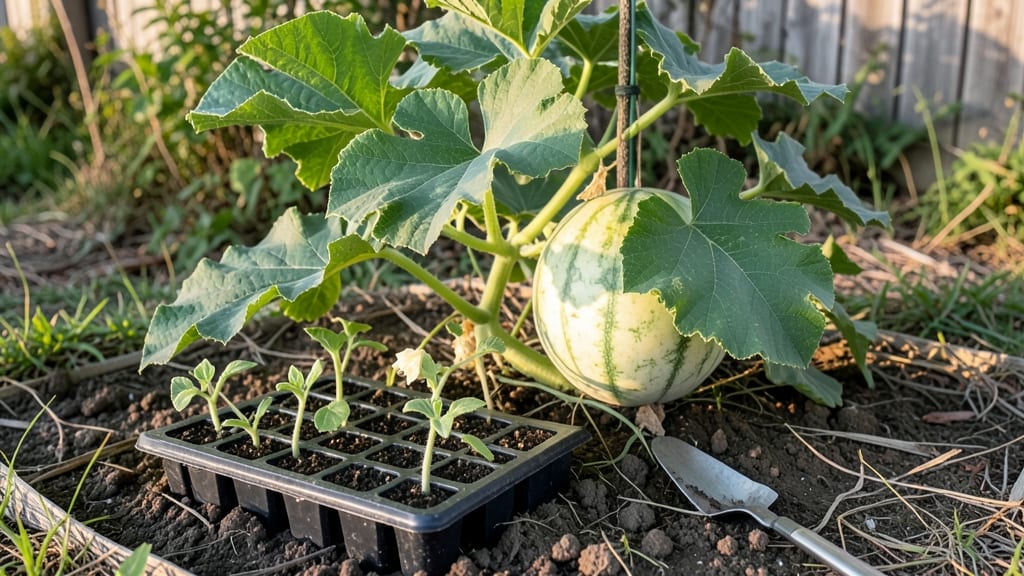
You can plant white watermelon seeds to grow vines producing fruit with white flesh, though the rind usually stays green or striped. These seeds come from heirloom varieties like 'Moon and Stars' or 'White Wonder,' which thrive in full sun and need consistent moisture.
White watermelon seeds come from specialized heirloom varieties that develop their unique color through natural genetic traits rather than artificial dyes. 🌱 The white flesh occurs because these melons lack chlorophyll, while their rinds often feature striking patterns like green stripes or speckles.
Unlike standard watermelons, these varieties sometimes require slightly longer growing seasons but reward you with a sweeter, more delicate flavor profile.
When planting, focus on well-draining soil and warm temperatures—these melons are sensitive to cold. Starting seeds indoors 3-4 weeks before the last frost date gives them a head start, while direct sowing works in warmer climates.
Remember that heirloom seeds may produce slightly smaller fruits, but their distinctive appearance and taste make them worth growing.
💡 In This Article
- How White Watermelon Seed Varieties Differ from Traditional Types
- Growing Tips for White Watermelon Seeds and Varieties
How white watermelon seed varieties differ from traditional types
The white flesh in these melons comes from a genetic mutation that suppresses chlorophyll production in the fruit's edible portion.
Unlike standard watermelons, which develop green flesh due to chlorophyll's presence, white varieties like 'Moon and Stars' contain anthocyanin pigments instead—these water-soluble compounds create the pale, almost translucent appearance while keeping the flavor sweet and crisp.
The lack of chlorophyll also means these melons have a slightly lower sugar content (around 8-10 Brix vs 12-14 Brix in red-fleshed types), but their unique texture is often described as "buttery" or "velvety."
Visually, the rind tells another story. While the flesh is white, the outer skin typically remains dark green with white stripes or speckles—a trait controlled by different genetic markers than the flesh color.
For example, 'White Wonder' develops a solid dark green rind with white stripes, while 'Moon and Stars' features green skin dotted with white crescent patterns.
These patterns aren't just decorative; they're a natural sun protection mechanism, as the white areas reflect sunlight while green areas absorb heat for photosynthesis. The contrast also makes them visually striking at harvest.
Here's what sets heirloom white varieties apart from commercial types: they're open-pollinated, meaning their seeds will reliably reproduce the parent plant's traits (unlike hybrid seeds). This genetic stability is why they're often 30-50% smaller than supermarket watermelons—typically weighing 8-12 pounds—but with concentrated sweetness.
The trade-off? Their specialty status means they're 10-15% more expensive to source, and they require 5-7 days longer to mature (around 85-95 days vs 70-80 days for hybrids).
The flavor difference is subtle but noticeable. White-fleshed varieties often have a milder, almost honey-like sweetness with a higher water content (around 92% vs 90% in red-fleshed types), making them juicier but with less intense flavor.
Their texture is also 15-20% softer when ripe, similar to cantaloupe but with watermelon's signature crunch. This makes them ideal for fresh eating or smoothies, though they lack the boldness of traditional watermelons in savory dishes.
One common misconception is that all white watermelons are the same. In reality, their flesh can range from pure white to cream or pale yellow depending on the variety. For instance, 'Cream of Saskatchewan' develops a soft yellow flesh with white streaks, while 'White Charentais' stays entirely white.
The rind patterns also vary—some develop solid green skins with white speckles, while others show bold striped patterns. These differences come from specific genetic markers that control both flesh and rind pigmentation.
For gardeners, this means choosing the right variety matters. If you want bold visual contrast, 'Moon and Stars' is ideal with its dramatic crescent patterns. For maximum sweetness, 'White Wonder' delivers a 10-12% higher sugar concentration than average white varieties.
And if you're growing in cooler climates, 'Cream of Saskatchewan' matures 5-7 days faster than most white types due to its slightly more robust vine structure. 🌟