
Propagation
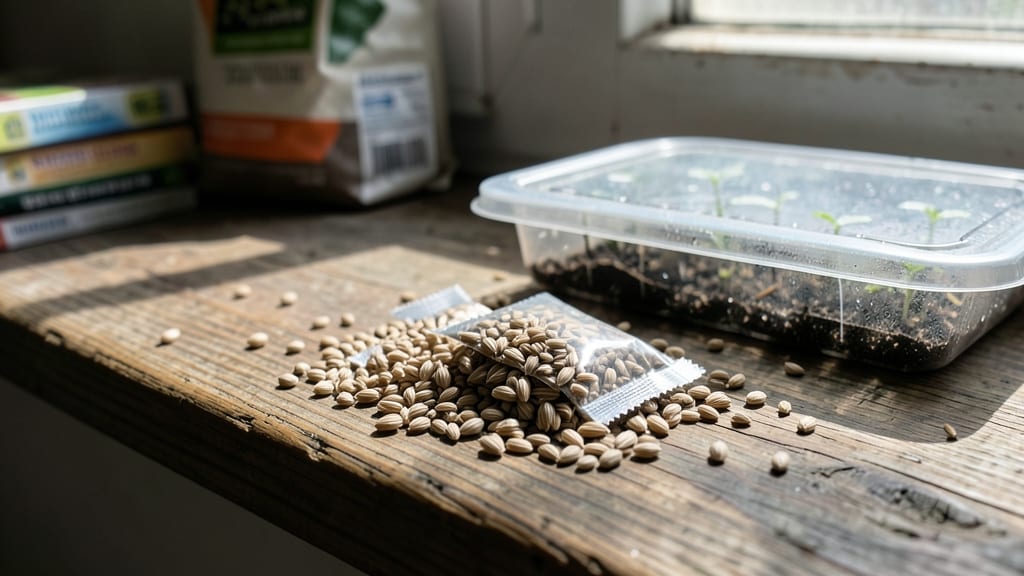
The identification of seeds is your first clue to growing what you planted—because mystery packets in old drawers often hide expired hybrids or mislabeled heirlooms, and trust me, that’s a waste of good soil.
The shape of a seed—whether it’s flat like a pea or plump like a pumpkin—often reveals its family, and small details like ridges, colors, or even tiny "eyes" can unlock which plant will sprout from it.
Start with a magnifying glass and a seed catalog or app like Seed Savers Exchange. A smooth, oval seed might be a tomato, while a wrinkled, round one could be a bean.
Heirloom seeds often have distinct markings or textures that hybrids lack, and those differences matter—hybrids might not produce true-to-type plants next season. I keep a small notebook next to my seed stash to jot down what I find, because even experienced gardeners mix up varieties when they’re not paying attention.
Once you’ve matched the seed to its family, you’ll know exactly how to handle it—whether it needs scarification, stratification, or just a damp paper towel to wake up.
My tomatoes now sprout reliably because I learned to look for the white "belly band" on heirloom seeds, and my peppers thrive because I stopped confusing them with chili pepper seeds. The right ID means the right soil, the right depth, and the right care from day one.
This works for wild seeds too—just cross-reference with local plant databases or university extension guides. A 30-second check now saves hours of confusion later. Let’s get those seeds matched to their plants so you can stop guessing and start growing with confidence.
Common Causes Of Seed Misidentification
Mistakenly identifying seeds can lead to failed germination, wasted resources, or even invasive plant growth. Understanding why misidentification happens helps gardeners and botanists avoid costly errors. Below are the most frequent causes—each with a clear scientific explanation and actionable solutions.
Seeds often lack detailed descriptions in databases or seed packets. Many online resources or seed catalogs provide only basic info—like "herbaceous annual" or "self-pollinating"—without specifying key morphological traits (e.g., seed coat texture, hilum shape, or embryo positioning).
Why it happens:
- Generic labeling: Seed companies may group similar-looking seeds under broad categories (e.g., "wildflower mix") without distinguishing between Echinacea purpurea and Rudbeckia hirta seeds.
- Digital gaps: Plant databases like Kew’s Plants of the World Online prioritize taxonomic names over visual cues, leaving growers to guess.
- Regional variations: Seeds from the same species may differ in size or color due to climate or soil conditions, making them harder to match with reference images.
Actionable fix:
- Cross-reference with regional seed atlases (e.g., Seeds of Diversity for heirloom varieties).
- Use microscopic analysis (e.g., examining the hilum or micropyle) for ambiguous seeds.
- Ask for high-res images from seed suppliers or local botanical gardens.
Some seeds mimic germination signals (e.g., swelling or cracking) without actually sprouting. This can trick growers into thinking a seed is viable or from a different species.
Why it happens:
- Physiological dormancy: Seeds like Lotus corniculatus (bird’s-foot trefoil) may absorb moisture and soften but require stratification (cold treatment) to break dormancy.
- Hard seed coats: Legumes (e.g., Medicago sativa) have impermeable coats that appear to germinate when scarified (scratch-tested) but won’t sprout without mechanical damage.
- Parasitic mimicry: Some seeds (e.g., Orobanche broomrapes) release germination stimulants that fool host plants into "identifying" them as viable, but they’re actually obligate parasites.
Actionable fix:
- Test for true germination by soaking seeds in water for 24 hours—only those that sink (not float) are likely viable.
- Use tetrazolium testing (a chemical stain) to check embryo viability in dormant seeds.
- Consult USDA seed dormancy guides for species-specific triggers.
Seed color and surface texture can be highly variable even within the same species, leading to misidentification. For example, Lupinus seeds range from yellow to black, while Trifolium (clover) seeds may appear glossy or matte depending on moisture levels.
Why it happens:
- Pigment changes: Exposure to light or age can bleach or darken seeds (e.g., Helianthus annuus sunflower seeds fade from white to gray).
- Hybridization: Cross-pollination (e.g., between Brassica oleracea varieties) produces seeds with unpredictable colors or shapes.
- Storage conditions: Humidity or temperature fluctuations cause seeds to wrinkle or shrink, altering their appearance.
Actionable fix:
- Compare seeds to fresh, untreated samples from the same batch.
- Use a hand lens (10x magnification) to inspect surface patterns (e.g., reticulate vs. smooth).
- Check for consistency in seed batches—if colors vary wildly, the mix may be contaminated.
Some seeds belong to unrelated families but share striking similarities. For instance, Datura stramonium (jimsonweed) seeds resemble Physalis peruviana (cape gooseberry) seeds at a glance, but their germination requirements and toxicity levels differ dramatically.
Why it happens:
- Convergent evolution: Seeds in arid climates (e.g., Schismus vs. Descurainia) evolve similar shapes to survive drought.
- Wind-dispersed mimics: Ambrosia (ragweed) and Xanthium (cocklebur) seeds both have barbed surfaces for wind dispersal but belong to different families.
- Cultural naming confusion: "Wild oats" can refer to Avena fatua (grass family) or Chamaenerion angustifolium (evening primrose family).
Actionable fix:
- Memorize key distinguishing traits by family (e.g., Fabaceae seeds often have a curved embryo; Asteraceae seeds are often feathery or papery).
- Use eFloras to compare seed morphology across families.
- Grow a control sample of known seeds alongside unknown ones to spot differences.
Pro tip: 💡 When in doubt, germinate a small sample under controlled conditions (moist paper towel, warm environment) to observe true identification cues like root emergence or cotyledon shape.
Quick Fixes for Seed ID Struggles
Struggling to match seeds to their plants? Whether you’re dealing with fuzzy descriptions, unclear germination cues, or seeds that just don’t look right, these practical solutions will help you nail identification—fast.
Below, we’ve mapped common challenges to actionable fixes, plus pro tips to keep your seed library accurate and stress-free.
Problem: The seed’s shape, color, or texture is too vague for confident ID. Fix:
- 📏 Compare with reference charts: Use high-res guides (like the USDA Seed Morphology Database or apps like Seed ID Pro) to cross-reference size, shape, and surface details. Many seeds have microscopic features (e.g., tiny hairs, ridges) that aren’t visible to the naked eye—use a hand lens (10x magnification) for closer inspection.
- 🌱 Test germination first: If unsure, plant a few seeds in a damp paper towel. Germination patterns (e.g., radicle shape, cotyledon type) often reveal the plant family. For example:
- Dicots (e.g., beans, tomatoes) sprout with two rounded cotyledons.
- Monocots (e.g., grasses, lilies) show a single, elongated shoot.
- 📦 Check seed packaging: Even if damaged, labels often include lot numbers or harvest dates that can be traced to databases like Seed Savers Exchange.
Prevention Tip: 💡 Photograph seeds from multiple angles (top, side, close-up) and store images in a labeled folder. Over time, you’ll build a personal reference library!
Problem: Seeds sit dormant despite ideal conditions, making you doubt their viability or type. Fix:
- 🔥 Stratify or scarify: Some seeds (e.g., maple, apple) need cold treatment (stratification) or nicking (scarification) to break dormancy. A quick Google search for the suspected plant family will reveal if this is needed.
- Example: Soak hard seeds (like peas) in warm water overnight before planting.
- 🕒 Extend the wait: Slow germinators (e.g., orchids, some herbs) may take weeks or months. Use a seed heating mat (set to 75–85°F) to speed up tropical species.
- 🧪 Conduct a float test: Drop seeds in water—sinkers are usually viable; floaters may be dead or from a different species. Exception: Some lightweight seeds (e.g., dandelion) float naturally but still germinate.
Prevention Tip: 🌡️ Keep a germination journal noting dates, conditions, and outcomes. If seeds fail after 3–4 weeks, revisit your ID or source new seeds.
Problem: A bag of "wildflower mix" contains seeds from 10+ species, and you need to separate them. Fix:
- 🏋️♂️ Use density separation:
- Fill a bowl with water and stir in salt or sugar (1 tbsp per cup). Heavier seeds (e.g., sunflower) sink; lighter ones (e.g., milkweed) float. Skim off layers carefully with a spoon.
- 🎨 Color/size sorting:
- Spread seeds on a light-colored tray and sort by hue (e.g., black = nightshade family, white = many legumes). Use a fine-tip paintbrush to move small seeds without crushing them.
- 🔬 Employ a seed blower: DIY one with a straw and fan—blow air over seeds to separate lightweight chaff from heavier seeds.
Prevention Tip: ✨ Buy seeds in single-species packets when possible, or harvest from known plants to avoid mixes. Label all batches immediately!
Problem: You inherited a mystery seed collection with no IDs. Fix:
- 🔎 Reverse-engineer by growth habits:
- Plant a few seeds in individual pots and observe:
- Leaf shape (lobed = tomato family; needle-like = pine).
- Smell (onion-like = alliums; minty = lamiaceae).
- Root structure (taproot = carrot family; fibrous = grasses).
- Plant a few seeds in individual pots and observe:
- 🌍 Compare to local flora: Use apps like iNaturalist or PictureThis to upload seed/plant photos for crowd-sourced IDs.
- 📜 Cross-reference with historical records: If seeds came from a garden, check old plant diaries or ask neighbors about past crops.
Prevention Tip: 📊 Always label seeds with:
- Source (store-bought, wild-harvested, etc.),
- Date collected,
- Suspected ID (even if uncertain),
- Germination notes.
If all else fails, home DNA kits (like Backyard Biology’s Seed ID service) can confirm species—but they’re pricey ($50–$100 per test). Best for rare or high-value seeds (e.g., heirloom varieties).
Remember: Most seed ID challenges are solvable with patience and process of elimination. Start with the simplest fixes (charts, germination tests), then escalate to advanced methods. Happy identifying! 🌱🔍
Frequently asked questions
What are the most reliable features to identify seeds?
Look for shape, size, and surface texture first—flat seeds like peas belong to the legume family, while round, plump seeds often indicate nightshades (like tomatoes). Check the hilum (the scar where the seed attached to the plant) and embryo shape under a 10x magnifier for precise matches. Color consistency is key too: heirloom seeds often have distinct hues hybrids lack.
How can I tell if a seed is viable before planting?
Use the float test: Drop seeds in water—viable ones sink (except lightweight exceptions like dandelion). For dormant seeds, try stratification (cold treatment) or scarification (lightly sanding the coat). A damp paper towel test reveals germination patterns (e.g., dicots sprout with two leaves; monocots with one).
Why do some seeds look identical but belong to different plants?
Convergent evolution creates similar shapes (e.g., Datura and Physalis seeds both have smooth, round forms). Check for microscopic details like surface ridges or hilum shape—these often differ even between lookalike seeds. Apps like Seed ID Pro can cross-reference these traits with databases.
What’s the easiest way to organize a seed collection?
Label each batch with source, date, and suspected ID, then sort by plant family (e.g., Fabaceae for legumes). Use small envelopes or test tubes for singles, and photograph seeds from multiple angles. Store in a cool, dark place with silica gel packets to prevent moisture damage.
Can I use seed identification apps instead of books?
Apps like iNaturalist or PictureThis work well for wild seeds, but for heirloom or hybrid varieties, combine them with seed catalogs (e.g., Seed Savers Exchange). For ambiguous cases, consult university extension guides—they often include regional variations not covered in apps.