
Vegetables
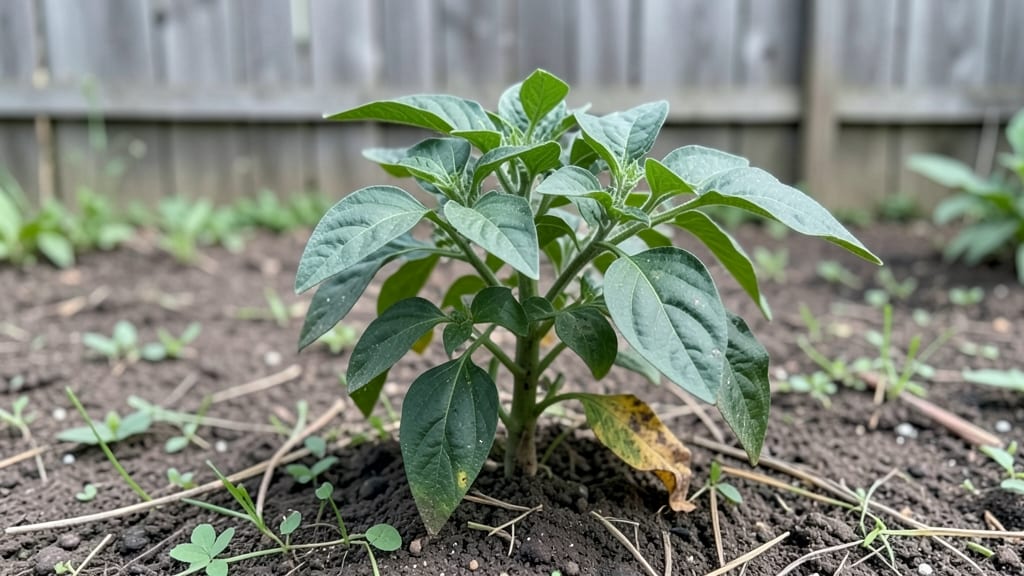
When pepper seedling leaves point upward, it’s a clear sign they’re stretching toward light or struggling with overcrowding. Adjust their position near a sunny window or under grow lights, and thin crowded seedlings to encourage stronger, upright growth.
This upward growth happens when seedlings don’t get enough light, causing them to stretch (a process called etiolation) in search of sunlight. 🌱 Without proper light, their stems grow weak and leaves become sparse.
I’ve found that rotating seedlings daily toward the brightest light source—whether natural or artificial—helps them grow straight and stocky. Even a few hours of direct sunlight can make a big difference in their development.
Overcrowding plays a role too—when seedlings compete for light and nutrients, the weaker ones will start reaching upward. Thinning them out to 2-3 inches apart gives each plant room to breathe and access sunlight, which prevents that leggy, weak growth pattern.
If you’re growing indoors, consider using small grow lights on a timer to mimic natural daylight cycles.
💡 In This Article
- Light Stress in Pepper Seedlings: Causes and Fixes
- Proper Spacing and Thinning for Healthy Pepper Seedlings
Light stress in pepper seedlings: causes and fixes
Here's what's actually happening when those pepper seedling leaves point upward: your plants are experiencing etiolation, a survival response triggered by insufficient light. This process occurs when seedlings stretch their stems toward light sources, weakening their cell walls and reducing chlorophyll production.
The science behind this involves phototropism, where plants grow toward light to maximize energy capture through photosynthesis. Without adequate light, seedlings prioritize vertical growth over leaf development, resulting in those telltale upward-pointing leaves.
The key factor is light intensity—pepper seedlings need 12-16 hours of light daily for optimal growth. Natural sunlight provides about 10,000 lux at midday, while typical indoor lighting might offer only 500-1,000 lux.
When light levels drop below 3,000 lux, seedlings start showing stress symptoms like pale stems and weak leaves. The chlorophyll in leaves absorbs blue and red light most efficiently, so if your seedlings aren't getting enough of these wavelengths, their growth becomes unbalanced.
You'll notice the stems develop a thin, rubbery texture and leaves become sparse and yellowish-green.
This light stress creates practical problems too. Seedlings grown in low light often develop weak cell walls, making them more susceptible to breaking when handled. The upward growth also means less leaf surface area for photosynthesis, creating a vicious cycle where the plant gets even less energy.
What most people don't realize is that this stress can actually delay flowering by up to 2-3 weeks, since the plant focuses all its energy on reaching for light rather than developing flowers and fruit.
The solution starts with evaluating your light source—whether it's a south-facing window or artificial grow lights.
For natural light, position seedlings within 6-12 inches of a sunny window, rotating them ¼ turn daily to ensure even growth. South-facing windows typically provide the most consistent light, while east or west windows may create uneven growth patterns.
If using grow lights, LED panels that emit full-spectrum light (especially with blue and red wavelengths) are ideal. Place lights 6-12 inches above seedlings and run them on a 14-16 hour timer to mimic summer daylight.
The light intensity should be strong enough that you can't read a book comfortably underneath it.
Consider these key factors when adjusting your light setup:
- Light spectrum: Full-spectrum LEDs (with 400-700nm wavelengths) promote balanced growth
- Distance: Maintain 6-12 inches between lights and seedlings to prevent burning
- Duration: 14-16 hours of light daily prevents elongation while allowing rest periods
- Movement: Rotate seedlings daily to prevent leaning toward one light source
The science behind this involves how plants perceive light through phytochrome pigments that detect red and far-red light ratios. When seedlings don't get enough light, these pigments trigger the production of gibberellins, hormones that promote stem elongation.
This is why your seedlings might grow 2-3 times taller than they should in just 1-2 weeks of insufficient light. The good news is that once you correct the light conditions, seedlings can often recover within 5-7 days by developing new, stronger growth patterns.
Remember this key insight: healthy pepper seedlings should have dark green, sturdy stems about ¼ inch thick and leaves that grow outward rather than upward. When you see those leaves pointing skyward, it's your plant's way of saying "I need more light!"
Acting quickly with proper lighting and spacing can turn those leggy seedlings into strong, productive plants ready for transplanting. 💫