Pruning
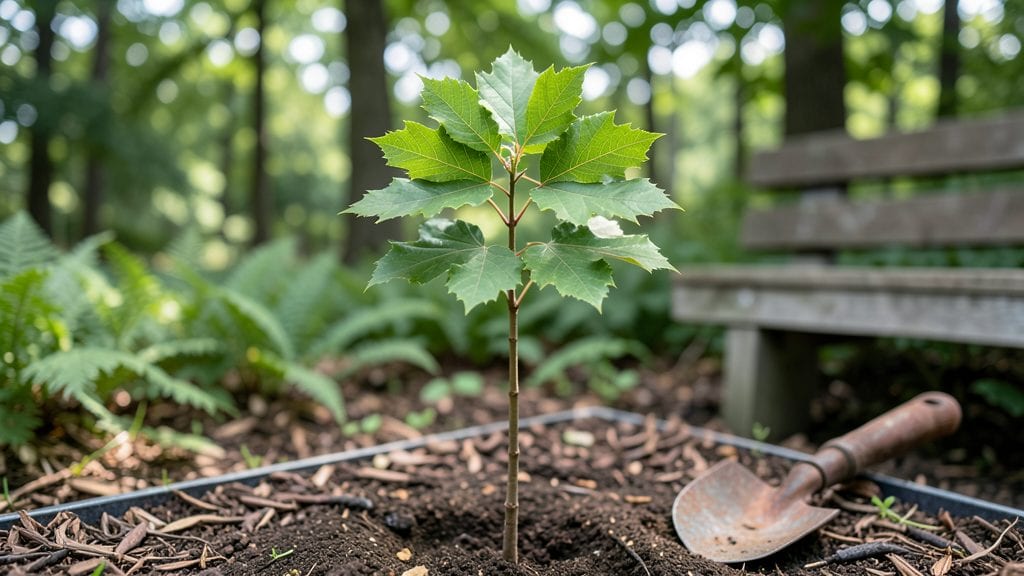
Mastering tree seedling identification early could save you years of regret—and a yard full of unwanted saplings. 🌱 I’ve spent years pulling up misidentified seedlings—oak saplings planted where they’d choke out shade-loving perennials, or maples that grew too fast for their spot.
A few simple clues in the leaf shape and bark texture save you years of frustration.
The secret is comparing what you see to three key traits: leaf edges (lobed like a dragon’s claws? Smooth as a butter knife?), bark texture (smooth as a baby’s skin or rough like sandpaper?), and how the seedling grows (straight as a ruler or twisted like a pretzel?).
With just these basics, you’ll spot oaks, maples, and pines before they outgrow their welcome.
You’ll end up with the right tree in the right place—no more crowding out neighbors’ foundations or shading out your vegetable garden. The payoff? A yard that grows with your vision, not against it. Let’s decode those seedlings before they get too tall to move.
Works for backyard plots, urban lots, or even container-grown saplings. Here’s how to match what you’ve got to what you need—no degree required.
Mistakes Behind Misidentification
Accurately identifying tree seedlings depends on more than just a quick glance—it requires understanding the why behind common errors. Misidentification often stems from oversights in visual cues, environmental factors, or even human bias.
Below, we break down the key reasons why seedlings get mixed up, so you can avoid these pitfalls like a pro.
Seedlings don’t stay static—they evolve rapidly, and their identifying features change as they mature. For example:
- Leaf shape shifts: A young oak seedling’s leaves may resemble those of a maple until they develop the lobed edges of maturity. Skipping the "baby" stage can lead to confusion with similar-looking species.
- Bark texture varies: Smooth bark in early growth (like on a birch) can mimic other species until it develops characteristic ridges or peeling patterns.
- Actionable fix: Compare seedlings to reference guides that include multiple growth stages. Snap photos of the seedling’s underside of leaves (venation patterns are a dead giveaway) and stem nodes.
Drought, poor soil, or pests can distort a seedling’s natural features, making it resemble an entirely different species. For instance:
- Stunted growth: A stressed pine seedling might develop twisted needles or shortened internodes, mimicking the look of a spruce or fir.
- Discolored bark: Fungal infections or sun scorch can turn bark an unnatural shade, obscuring its true texture (e.g., a healthy sycamore’s mottled bark vs. a diseased one).
- Pro tip: Isolate the seedling in ideal conditions (water, shade, and nutrient-rich soil) for 2–4 weeks. If traits revert to "normal," you’re likely dealing with stress, not misidentification.
No single feature—leaf shape, bark, or even flower color—is foolproof. For example:
- Leaf shape alone fails: A sweetgum seedling’s star-shaped leaves might trick you into thinking it’s a buckeye, but the hairy twigs and spiky seed pods give it away.
- Bark can be deceiving: Young hickory bark resembles birch, but the compound leaves and terminal buds are the real clues.
- Science-backed solution: Use a checklist of 3–5 traits (e.g., leaf arrangement, bud shape, and stem color). Cross-reference with a local field guide or USDA Plant Database.
Not all seedlings fit the "textbook" description—genetics and climate create natural variations. For example:
- Hybrids throw a wrench: A cross between a willow and poplar (e.g., Populus × canadensis) can have leaves that don’t match either parent, leading to guesswork.
- Climate-adapted traits: A seedling in the Pacific Northwest might have thicker leaves than its Eastern counterpart due to higher humidity.
- Action step: Narrow your search by geographic range. Tools like the iNaturalist app let you filter by location for verified sightings.
Our brains love patterns—and sometimes, we see what we expect to see. Common pitfalls include:
- Confirmation bias: If you’re planting oaks, you might overlook subtle differences in a maple seedling because you’re "looking for" oaks.
- Seasonal blindness: Ignoring the time of year (e.g., assuming a leafless seedling is dormant when it’s actually a broadleaf deciduous species in winter).
- Fix it: Blind-test yourself by covering the seedling’s name in your guide and forcing a fresh description. Or, ask a peer to identify it first—fresh eyes spot details you’ve overlooked.
Practical steps for accurate seedling ID
Mastering tree seedling identification doesn’t have to feel like solving a mystery—though it might take a little detective work! 🕵️♂️🌱 Whether you’re troubleshooting confusion between similar species or verifying a new addition to your garden, these step-by-step solutions will sharpen your skills.
Below, we’ll tackle common challenges (like misidentifying seedlings or overlooking key traits) with clear fixes and prevention tips to keep you on track.
🔍 Problem: Two seedlings share similar leaves or bark, making identification tricky.
💡 Fix It:
- 🍃 Examine Leaf Arrangement: Check if leaves alternate, spiral, or cluster around the stem. For example, maple seedlings have opposite leaves, while oak seedlings often have alternating ones.
- 🌡️ Measure Key Features: Use a ruler to compare leaf length, width, and vein patterns. Create a simple table to log measurements:
| Seedling Type | Leaf Shape | Leaf Size (inches) | Bark Texture |
|---|---|---|---|
| Birch | Oval, serrated | 1–3 | Smooth, papery |
| Pine | Needle-like | 2–6 (bundled) | Rough, scaly |
- 🔍 Zoom in on Bark: Young bark can reveal clues. Hickory has a ridged texture, while beech stays smooth even as a seedling.
💡 Prevention Tip: 📸 Take close-up photos of seedlings from multiple angles. Over time, you’ll train your eye to spot subtle differences.
🔍 Problem: You focus on leaves or bark but miss other key traits like bud shape, fruit, or root structure.
💡 Fix It:
- 🌿 Inspect Buds: Buds can be pointy (like hawthorn), rounded (like apple), or sticky (like sycamore). Use a magnifying glass if needed!
- 🍎 Check for Fruit or Seed Pods: Even if the seedling isn’t bearing fruit yet, look for seed pods (e.g., locust trees) or acorns (oak trees) nearby.
- 🌱 Dig Gently (If Safe): For stubborn cases, carefully expose the root system. Some trees, like willows, have deep taproots, while others, like maples, spread shallow, fibrous roots.
💡 Prevention Tip: ✨ Carry a small field guide or app (like iNaturalist or LeafSnap) while scouting. Apps can cross-reference traits instantly.
🔍 Problem: A seedling’s features evolve as it grows, making past notes unreliable.
💡 Fix It:
- 📅 Track Growth Stages: Label seedlings with waterproof tags and note their age (if known). For example:
- 1-year-old oak: Lobed leaves, smooth bark.
- 3-year-old oak: More pronounced lobes, rougher bark.
- 🌱 Compare to Mature Trees: Stand near adult trees in your area and match seedlings to their "parents." Use local nursery guides for reference.
- 🔄 Revisit Regularly: Check seedlings seasonally—spring brings fresh leaves, while winter reveals bud scales and bark texture.
💡 Prevention Tip: 📊 Keep a growth journal with dates, photos, and observations. Over time, patterns will emerge!
🔍 Problem: Sunlight, soil, or pests alter a seedling’s appearance, making ID harder.
💡 Fix It:
- ☀️ Adjust for Light Conditions: Shade-loving seedlings (like dogwood) may look different in full sun. Compare multiple specimens in the same environment.
- 🌍 Test Soil Impact: Sandy soil can make pine seedlings look stunted, while clay may darken birch bark prematurely. Note your soil type in your records.
- 🐜 Rule Out Pest Damage: Chewed leaves or sap oozing can distort traits. If a seedling looks "off," check for aphids, borers, or fungal spots before assuming misidentification.
💡 Prevention Tip: 🌡️ Water seedlings uniformly before inspecting to avoid stress-induced changes in leaf color or shape.
🔍 Problem: The seedling defies all your notes and doesn’t match any local species.
💡 Fix It:
- 🌍 Narrow Down the Region: Some seedlings (like redwood or sequoia) are rare outside their native zones. Check USDA plant hardiness maps.
- 🔬 Send a Sample: If all else fails, mail a leaf/bark sample to a local extension office or arboretum for expert analysis.
- 📱 Crowdsource Help: Post photos on gardening forums (like Gardeners.com) or social media groups dedicated to native plants.
💡 Prevention Tip: 🎯 Start with common species in your area before chasing rare finds. Build your confidence gradually!
For foolproof ID, combine three traits (e.g., leaf shape AND bark texture AND bud type). No single feature guarantees accuracy—triangulation is key!
Now that you’ve got the tools, grab your notebook and happy identifying! 🌳🔍 With practice, you’ll go from guessing to naming seedlings with confidence.
Frequently asked questions
What’s the quickest way to tell if a seedling is an oak or maple?
Look at the leaf arrangement first—maple seedlings have opposite leaves (directly across from each other), while oaks usually have alternating leaves. For oaks, also check for lobed edges (though young oaks may not show this yet). Maples often have smooth-edged or serrated leaves.
Can I identify a tree seedling from just its bark?
Yes, but it’s trickier than leaves! Smooth bark (like birch or beech) is easier to spot, while rough or peeling bark (like pine or sycamore) gives clues too. For young seedlings, focus on color and texture—smooth bark often means deciduous trees, while rough bark suggests conifers.
What if my seedling doesn’t match any guide I’ve seen?
Check for hybrids (like willow-poplar crosses) or pest damage—stressed seedlings can look completely different. Try comparing it to local mature trees or using apps like iNaturalist to filter by your region. If all else fails, consult a local extension office for expert help.
Do I need special tools to identify seedlings?
Not at all! A ruler (for leaf size), a magnifying glass (for buds), and a notebook (for notes) are all you need. Take photos from multiple angles—apps like LeafSnap can cross-reference traits instantly. No fancy equipment required!