
Watering
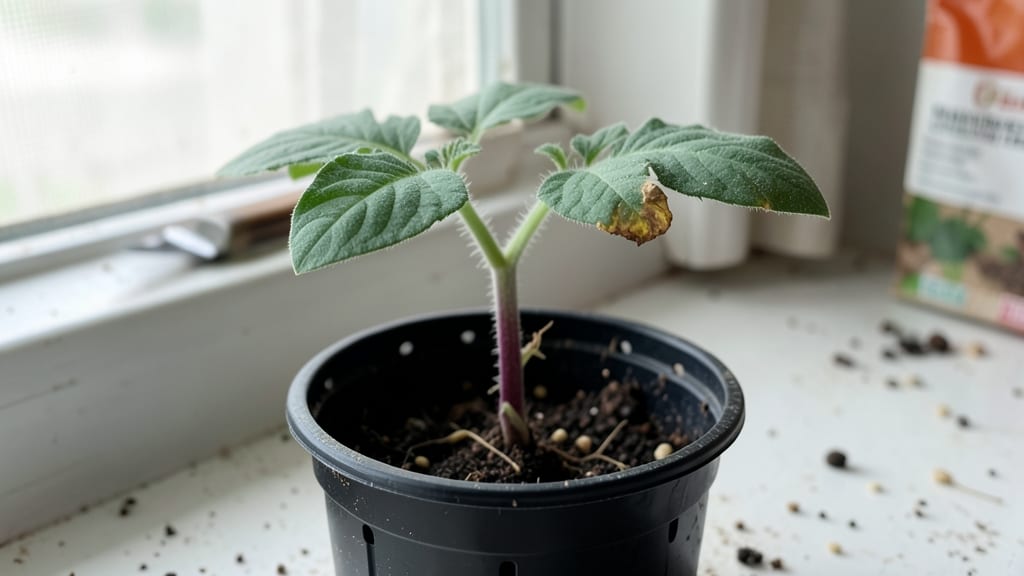
A seedling is essentially the bridge between a dormant seed and a fully grown plant. 🌱 Once the seed breaks through the soil, it develops its first leaves (called cotyledons), which begin the critical process of photosynthesis.
This early stage is fragile—seedlings need consistent moisture without becoming waterlogged, gentle light exposure (not direct sun), and temperatures between 60-75°F to prevent stress. Think of it as a tiny, delicate ecosystem where every condition matters for survival and growth.
What makes seedlings unique is their rapid transformation: those initial leaves soon give way to true leaves, marking the plant's shift toward independence. Without proper care during this phase, seedlings can become leggy, weak, or even die.
That's why gardeners often use seedling trays with drainage and grow lights to replicate ideal conditions until they're strong enough for transplanting.
💡 In This Article
- Seedling Development Stages Explained
- Essential Care Tips for Healthy Seedlings
Seedling development stages explained
The first stage of a seedling's life begins with the radicle emergence, where the embryonic root breaks through the seed coat. This delicate white root, often just 1-2 millimeters long at first, anchors the seedling and starts absorbing water and nutrients from the soil.
The radicle grows downward due to a process called gravitropism, where cells on the lower side elongate faster in response to gravity. This downward growth creates the primary root, which will later develop into the plant's root system.
Once the radicle establishes itself, the hypocotyl (the stem connecting the root to the shoot) pushes upward, often bending as it emerges from the soil. This is followed by the appearance of the cotyledons—the seedling's first leaves, which are actually modified leaves designed to store nutrients from the seed.
Unlike true leaves, cotyledons don't perform photosynthesis efficiently but act as temporary energy providers. For example, in a bean seedling, the two cotyledons unfurl within 5-7 days of germination, looking like tiny, rounded leaves.
The next critical phase involves the development of true leaves, which mark the seedling's transition to independent growth. These leaves contain chlorophyll and begin photosynthesis, converting sunlight into energy. True leaves typically appear 10-14 days after germination, depending on the plant species.
At this stage, the seedling's stem elongates, and the cotyledons often wither as the plant shifts its energy focus to the new leaves. For instance, a tomato seedling's true leaves are serrated and green, unlike its smooth, seed-stored cotyledons.
Light plays a pivotal role in this transformation. Seedlings grown in low-light conditions often develop long, weak stems (a condition called etiolation) as they stretch toward any available light source. This is why gardeners use grow lights to provide 12-16 hours of light daily, ensuring healthy, sturdy growth.
Temperature also affects development—most seedlings thrive at 65-75°F, but cooler temperatures can slow growth, while heat above 80°F may cause stress or disease susceptibility.
Comparing seedling anatomy to mature plants reveals fascinating differences. A mature plant's root system is complex, with secondary roots branching off the primary root, while a seedling's root is simple and focused on stability.
Similarly, true leaves in mature plants are more specialized—some are broad for maximum photosynthesis, while others are needle-like for water conservation. The seedling's true leaves, however, are a transitional phase, gradually taking over the plant's energy production as it matures.
What most people don't realize is how quickly seedlings can develop once conditions are ideal. For example, a fast-growing plant like radish can produce its first true leaves in just 7-10 days, while slower growers like oak trees may take 6-12 months to reach this stage.
This variability highlights why understanding your plant's specific needs is crucial for successful gardening. 🌱