Plants
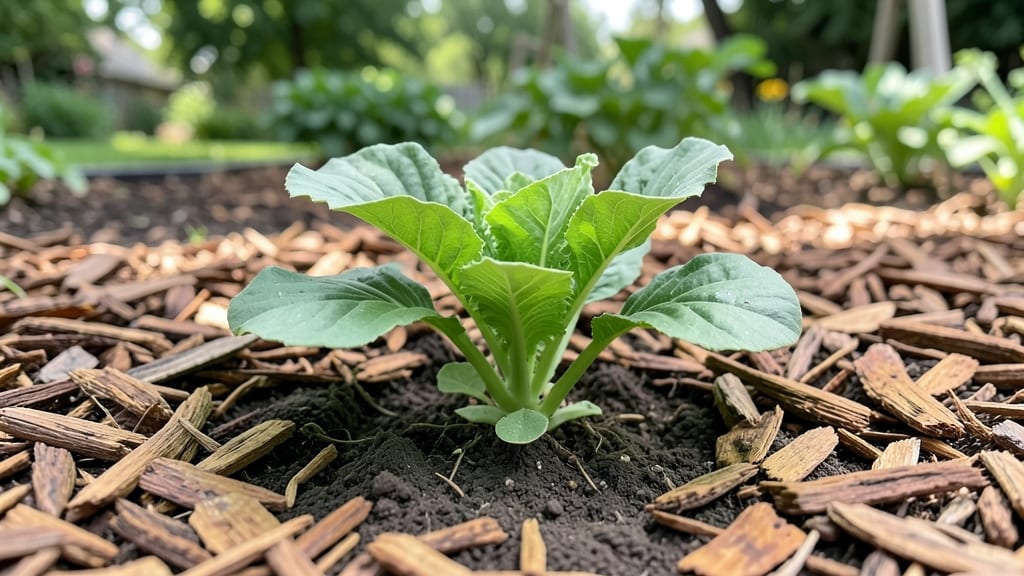
You shouldn't plant seeds directly in mulch because it disrupts soil contact, traps moisture against seeds, and can smother young sprouts. For best results, plant seeds in loose, well-draining soil first, then add a thin layer of mulch after germination.
Mulch serves as a protective layer for established plants, but its dense texture creates a barrier that prevents seeds from making proper contact with the soil.
This disruption can lead to uneven moisture distribution, where seeds either dry out too quickly or stay waterlogged—both conditions are deadly for germination. 🌱 Once your seedlings have sprouted and developed a few true leaves, you can safely add mulch to conserve moisture and regulate soil temperature without risking their growth.
For optimal seed starting, focus on creating a loose, aerated seedbed with fine soil that allows roots to penetrate easily. A light sprinkle of compost or vermiculite can improve drainage while providing essential nutrients.
After germination, when plants are about 2-3 inches tall, introduce mulch to protect them from temperature swings and weeds without smothering their development.
💡 In This Article
- How Mulch Affects Seed Germination and Root Growth
- Best Mulch-Free Seed Planting Techniques for Healthy Starts
How mulch affects seed germination and root growth
When you bury seeds in mulch, you're essentially creating a barrier that disrupts the critical soil-seed interface. Mulch—whether wood chips, straw, or leaves—is designed to protect established plants, but its dense, fibrous structure prevents seeds from making direct contact with the mineral-rich soil below.
This separation blocks essential nutrients and oxygen that seeds need to germinate. Think of it like trying to plant a seed in a thick blanket: the seed can't push through to reach the soil's moisture and warmth. 🌱
The moisture issue is particularly critical. Mulch holds water near the surface, creating a damp layer that can suffocate seeds by preventing proper airflow. Seeds require consistent moisture around them, not on them—excess surface water can cause fungal growth (like damping-off disease) while deeper soil stays too dry.
For example, straw mulch retains 30-50% more surface moisture than bare soil, but this trapped water prevents seeds from absorbing what they need through their tiny root hairs.
Temperature fluctuations also play a role. Mulch acts as an insulator, which can be great for mature plants but problematic for seeds. During the day, mulch keeps soil cooler than ambient air by 5-10°F, while at night it traps heat.
Seeds often need specific temperature ranges (like 65-75°F for many vegetables) to trigger germination—fluctuations beyond this range can delay or prevent sprouting entirely. The organic matter in mulch also decomposes over time, releasing heat that can further disrupt the delicate balance seeds require.
Microbial activity is another hidden factor. Mulch introduces decomposing organic material that alters soil chemistry. As microbes break down wood chips or straw, they consume oxygen and produce carbon dioxide, creating a micro-environment that's less hospitable to germinating seeds.
This process also raises soil pH slightly, which can inhibit nutrient uptake in young seedlings. For instance, wood chip mulch can take 6-12 months to fully decompose, during which time it continuously alters the seedbed's conditions.
What most gardeners don't realize is that mulch's texture matters just as much as its composition. Coarse mulches like bark chips create air pockets that might seem beneficial, but these same gaps prevent seeds from settling into the soil's structure.
Even fine mulches like shredded leaves can form a compacted layer that resists root penetration. The ideal seedbed should have a loose, crumbly texture—something mulch simply can't provide until it's fully decomposed and mixed into the soil. ✨
There's one exception where mulch can work for seeds: when using a very thin layer (¼ inch or less) of fine, composted material like leaf mold. This type of mulch breaks down quickly and doesn't create the same physical barrier.
However, even in these cases, it's safer to plant seeds first and then apply mulch after germination to avoid any risk of suffocation.