Light Requirements
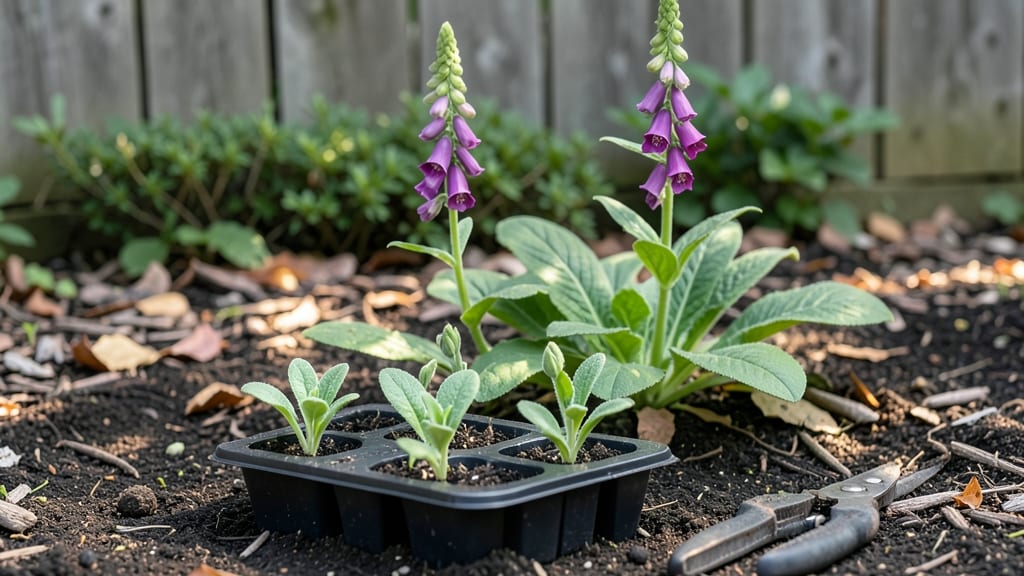
Foxglove seeds need cold stratification to germinate properly, requiring 6-8 weeks in moist, cold conditions (33-40°F) before planting for the best 50-70% success rate.
Cold stratification mimics nature's winter cycle, which foxglove seeds (Digitalis purpurea) rely on to break dormancy.
The process weakens the seed coat while stimulating internal chemical signals that prepare the seed for growth. 🌱 Without this step, germination rates can drop below 30%, leaving you with sparse or uneven seedlings.
I've found that using a mix of moist sand and peat moss in a sealed container works best—just place it in your refrigerator's crisper drawer for consistent cold exposure.
Timing matters too: starting too early risks mold, while delaying can reduce viability. Once stratified, plant seeds immediately in well-draining soil and keep them moist until sprouts appear. This method ensures your foxglove plants emerge strong and healthy, ready to thrive in your garden.
💡 In This Article
- How Cold Stratification Breaks Foxglove Seed Dormancy
- Step-by-Step Foxglove Seed Stratification Guide
How cold stratification breaks foxglove seed dormancy
Cold stratification tricks foxglove seeds (Digitalis purpurea) into thinking winter has passed by mimicking nature's temperature fluctuations. The process begins when seeds experience consistent 33-40°F temperatures for 6-8 weeks, which triggers two key biological responses.
First, the cold weakens the seed's hard outer coat through a process called scarification, creating microscopic cracks that allow water to penetrate. This is crucial because foxglove seeds have naturally thick, impermeable shells that would otherwise block moisture needed for germination.
The real magic happens internally where cold temperatures regulate hormone levels. During stratification, seeds produce abscisic acid (ABA), a growth inhibitor that maintains dormancy, while simultaneously breaking down gibberellins (GA3), hormones that promote growth.
This hormonal shift creates a delicate balance—just enough ABA to prevent premature sprouting, but reduced levels that signal "it's safe to grow." Studies show seeds stratified for 4 weeks may germinate at 20-30%, but extending to 8 weeks can push rates to 70% or higher.
The cold also hydrates the seed's embryo, preparing it for rapid growth once planted.
What most gardeners don't realize is that stratification also synchronizes germination. Without this process, foxglove seeds might sprout sporadically over months, but proper cold treatment ensures most seeds germinate within 2-3 weeks after planting. This synchronization is particularly valuable for gardeners who want neat rows of seedlings.
The cold period also helps break seed coat dormancy that's been enforced by the plant's natural survival mechanisms—foxgloves evolved this way to prevent germination during unfavorable conditions like early frost.
Duration matters significantly: 4-6 weeks of stratification yields decent results (around 40-50% germination), but 8 weeks maximizes potential by fully conditioning the seeds. Beyond 10 weeks, however, viability begins to decline as seed reserves deplete.
The ideal moisture level during stratification is 40-50% humidity—too dry and the seeds won't soften properly; too wet and they risk mold. This balance is why using a mix of sand and peat moss (kept damp but not soggy) works so well.
Here's what's actually happening at the cellular level: Cold temperatures reduce enzyme activity that would otherwise break down seed storage compounds too quickly. This controlled environment allows the seed to "charge" its energy reserves while maintaining structural integrity.
When you finally plant stratified seeds, the warm soil triggers a rapid metabolic shift—enzymes activate, cell division accelerates, and roots emerge within days. Without stratification, these processes happen haphazardly, leading to weak, uneven seedlings that struggle to establish.
The stratification process also mimics foxglove's natural lifecycle in temperate climates. In the wild, seeds fall in late summer/autumn, experience winter's cold, then germinate in spring when soil warms. By replicating this cycle, gardeners give foxglove seeds the exact environmental cues they've evolved to respond to.
This is why refrigerator stratification works so effectively—it provides the consistent 33-40°F range without the temperature swings of an outdoor winter.
For best results, I recommend using a plastic container with ventilation holes filled with dampened vermiculite or a 50/50 mix of sand and peat. Place it in your fridge's crisper drawer where temperatures stay stable.
After 8 weeks, the seeds will be ready to plant—just sow them ¼ inch deep in well-draining soil and keep the surface moist. You'll typically see sprouts within 2-4 weeks after planting, with the strongest seedlings emerging first.
This method ensures you're not just breaking dormancy, but giving your foxglove seeds the perfect head start for vigorous growth. 🌱